
AR-15 Basics, AR-15 Bolt Carrier Groups, AR-15 Parts
Best BCG Coating for AR-15s: Nitride, Chrome, DLC & More
Oct
Table of contents
TL;DR- Too Long Didn’t Read
The best BCG coating depends on how you shoot, how often you clean, and what you want to spend. Bolt steel, heat treat, and testing still matter more than any finish.
- Phosphate is the proven mil-spec baseline. It is inexpensive and runs well wet but needs regular oil.
- Black nitride is the best value for most builds. It is hardened into the steel, so it will not chip or flake.
- Hard chrome and nickel boron are slick and easy to clean, but research the maker before buying nickel boron.
- DLC and other premium finishes are the hardest and slickest options at the highest price.
The best BCG coating for your AR-15 depends less on the color of the carrier and more on how you shoot, how you clean, and what you want to spend. We hear the coating question from buyers every day at AR15Discounts. It usually comes right after someone notices that two carriers with the same steel differ in price by a hundred dollars or more. After walking so many builders through that choice, our answer is clear. Nitride is the best value for most rifles, and phosphate is the proven mil-spec baseline. Chrome, nickel boron, and DLC buy easier cleaning and a slicker action at a higher price. Every BCG below is one we carry in our bolt carrier group collection, and we checked each coating against its listing.
Best BCG Coating at a Glance
The short version comes first, before we dig into each finish. Phosphate is the mil-spec baseline: proven, inexpensive, and oil-hungry. Black nitride is the best value, a hardened surface treatment that cleans up easily for little more money. Hard chrome is a very tough, non-porous upgrade with a long track record. Nickel boron is slick and bright and wipes clean easily, though it is worth researching the maker. DLC is the premium choice, with the lowest friction and the lightest cleaning routine. Titanium nitride, a gold PVD coating, shows up on a few premium carriers and sits in the same class as DLC.
| Coating | Slickness | Corrosion resistance | Ease of cleaning | Price tier | Best for |
|---|---|---|---|---|---|
| Phosphate | Low | Fair | Hard | $ | Mil-spec clones, budget builds |
| Black nitride | Medium | Very good | Easy | $ | Best value for most builds |
| Hard chrome | High | Excellent | Very easy | $$$ | Low maintenance, high round counts |
| Nickel boron | High | Very good | Very easy | $$ | Easy cleaning and looks |
| DLC | Very high | Excellent | Very easy | $$$ | Premium and competition builds |
| Titanium nitride | High | Very good | Easy | $$ | Looks with some added lubricity |
One point matters more than any finish. The bolt steel, heat treat, and testing are what keep a rifle running. Look for a Carpenter 158 or 9310 bolt that is shot peened and magnetic particle inspected (MPI), ideally high pressure tested (HPT) as well, plus an 8620 carrier and a gas key with staked Grade 8 screws. Our sister store Dirty Bird puts it well: the finish is secondary to build quality. A well made phosphate BCG will outlast a poorly made one with a premium finish, so check the basics first and let the coating break the tie. If your current bolt is getting tired, our guide on how to tell when an AR-15 bolt needs replacing covers what to look for.
Best BCG Coating Options by Type
Phosphate: The Mil-Spec Baseline
Manganese phosphate, often called Parkerizing, is the dark gray matte finish the military has used on the M16 for decades. It is a conversion coating that soaks up and holds oil. That is a big part of why it runs so reliably when kept wet. On a true mil-spec carrier, the exterior is phosphate while the bolt carrier bore and gas key are lined with hard chrome. The tradeoff is cleaning. Phosphate is porous, so carbon grabs onto it, and it wants more lubrication and more scrubbing than any other finish here. Our guide on how to clean an AR-15 walks through the full process for any finish.
For a mil-spec setup, look at the AO Precision True Mil-Spec SP/HPT/MPI 5.56 BCG. It pairs a manganese phosphate finish with a hard chrome bore and a C158 bolt that is individually test fired and MPI inspected. The Dirty Bird Phosphate/Chrome-Lined BCG follows the same recipe. The Obsidian Arms M16 Phosphate BCG uses a 9310 bolt. KAK takes phosphate further with the KAK DBC Phosphate/Chrome-Lined BCG and the KAK K-SPEC Phosphate BCG, which adds dual ejectors, angled rail cuts, and downward gas ports for suppressed use. Phosphate is best for duty-style rifles, clone builds, and shooters who lubricate generously and do not mind cleaning.

Black Nitride: The Best BCG Coating for Most Builds
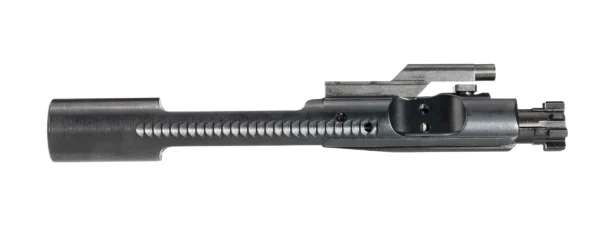
Nitride is not really a coating at all. Salt bath nitriding, also called QPQ or Melonite, diffuses nitrogen and carbon into the surface of the steel, so the hardened layer becomes part of the part. As Dirty Bird explains, that means it will not chip or flake, and it holds the original dimensions of the carrier. The surface comes out hard, slick, and corrosion resistant, and carbon wipes off far more easily than it does from phosphate. Nitride costs little more than phosphate, which makes it the best BCG coating for the money. That is why so many of the carriers we stock wear it.
On a budget, the BCA M16 Black Nitride BCG is a low-cost entry. Note that its listing shows a nitrided carrier with a parkerized 9310 bolt. The One Horse M16 Black Nitride BCG, the NBS .223/5.56 Black Nitride BCG, and the AO Precision C158 Black Nitride BCG all stay under $90. Left-handed shooters can grab the NBS Left-Handed Black Nitride BCG.
In the middle of the market, the Faxon M16 Nitride BCG adds a superfinished carrier and a 9310 bolt. The Microbest C158 HPT/MPI Black Nitride BCG, the Rosco Bloodline Nitride BCG, and the Battle Arms M16 Nitride BCG are all strong choices. From our own house brand, the Dirty Bird Industries Enhanced BCG uses a black nitride finish and a 9310 bolt ground after heat treat. The Dirty Bird Industries Sand-Cut BCG uses H&M Blacknitride+.
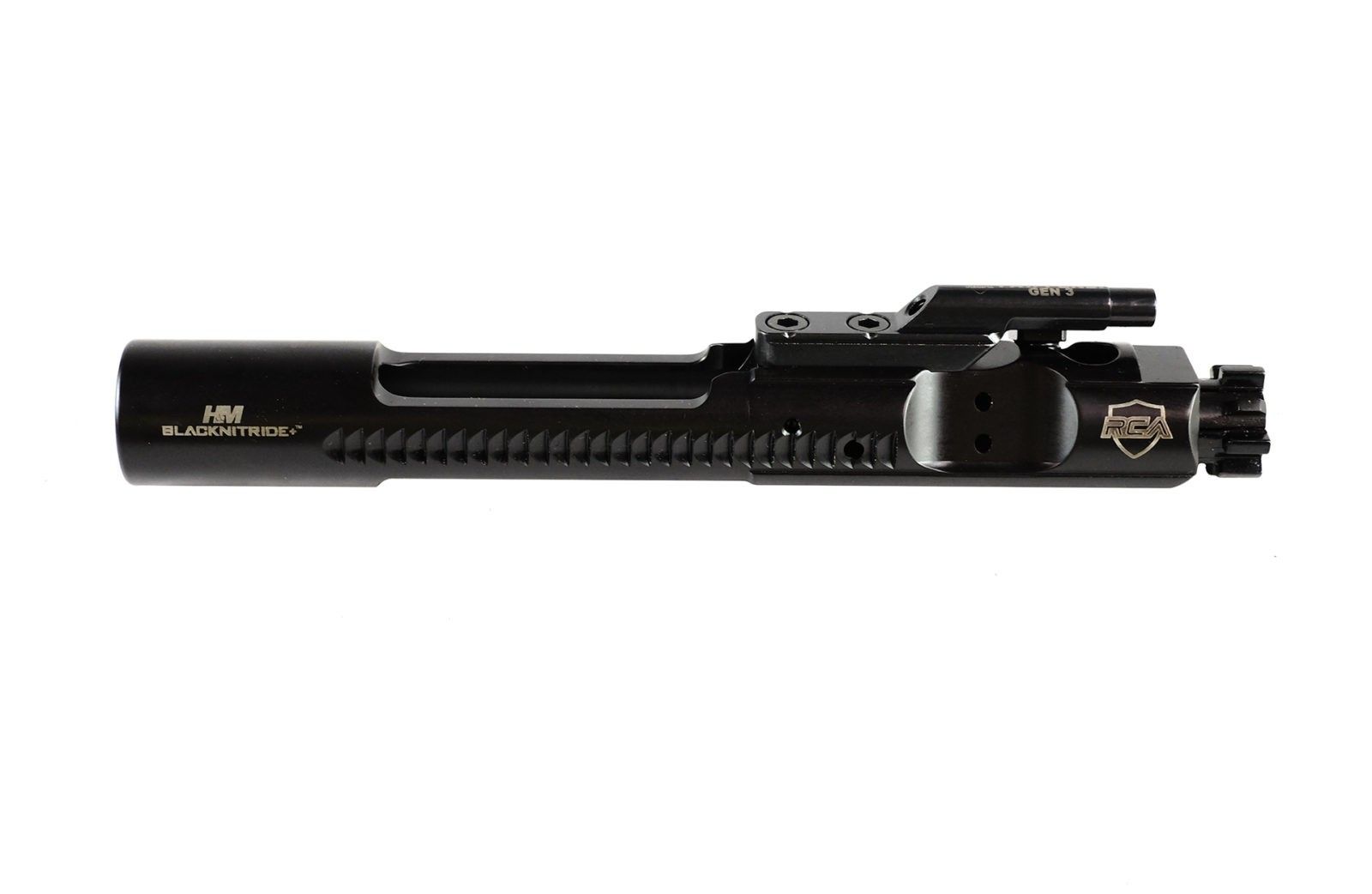
Rubber City Armory deserves its own mention. RCA describes BlackNitride+ as a polish followed by an H&M QPQ nitride process, plus a bonded fluoropolymer layer meant to cut friction. ARBuildJunkie covered the process in a Q&A with Rubber City Armory, and you can read RCA’s own explanation on its BlackNitride+ process page. The RCA Blacknitride+ M16 BCG with Adjustable Gas Key is a great pick for suppressed rifles that need gas tuning. For more nitride options, the CMC Enhanced Black Nitride BCG, the Lantac Enhanced QPQ BCG, and the SLR Rifleworks Premium Black Nitride BCG are worth a look.
Hard Chrome: Chrome Exterior vs Chrome-Lined
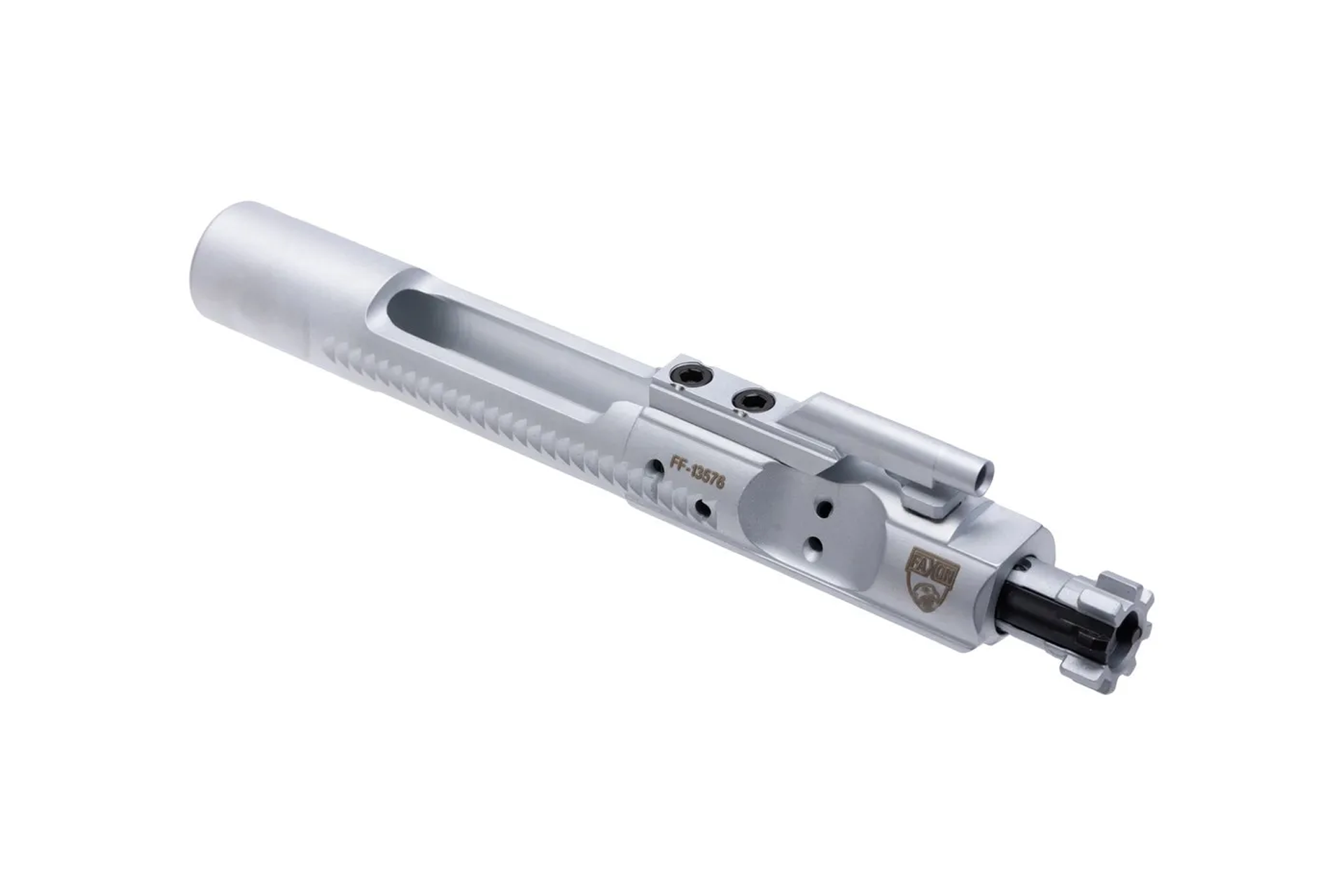
Chrome shows up on BCGs in two ways, and they get mixed up all the time. A chrome-lined BCG has hard chrome only inside the carrier bore and gas key, which is the mil-spec standard under a phosphate or nitride exterior. A full chrome BCG plates the outside of the bolt and carrier too. That gives you a bright, very hard, non-porous surface that carbon struggles to stick to, so cleanup is often a quick wipe. Chrome usually costs more than nitride, and the silver look is not for everyone.
Faxon is one of the few makers that publishes a hardness figure for its chrome. Faxon rates the hard chrome on its Superfinished 5.56 M16 Chrome BCG at 68 to 72 HRC on the wear surfaces, per Faxon’s product page. The Microbest C158 HPT/MPI Chrome BCG is one of the most affordable chrome options we carry. The KAK K-SPEC C158 Chrome BCG chromes both the carrier and the C158 bolt. If you only want a chrome bolt, the Centurion Arms V2 Chrome Bolt is hard chrome with dual ejectors.
Nickel Boron: Slick and Easy to Clean, but Do Your Research
Nickel boron is an electroless nickel plating with boron added, and it is easy to recognize by its bright silver look. Fans like it for good reason. It feels very slick out of the box, it resists corrosion well, and fouling tends to wipe off easily, especially early in its life. Many buyers who move from phosphate to nickel boron notice the difference at the first cleaning.
There is another side worth knowing before you buy. In an ARBuildJunkie interview on bolt carrier group basics, an experienced BCG maker raised two concerns. The first is that carbon can stain the plating over time, so it may not stay as clean looking as the marketing suggests. The second is the ongoing debate over hydrogen embrittlement in the plating process. Neither concern means a nickel boron BCG is a bad buy. It just means you should choose a maker that tests its bolts and plates them properly, and judge the steel first.
From our house brand, the Dirty Bird Polished Nickel Boron BCG coats the bolt, carrier, and gas key inside and out over a 9310 bolt and 8620 carrier. The NBS Nickel Boron BCG pairs the finish with a 9310 MPI bolt. The RISE Armament RA-1010 Low-Mass Nickel Boron BCG suits a lighter, faster-cycling build. For a deeper look, see our post on the best nickel boron BCGs for sale in 2026.

DLC and Other Premium Finishes
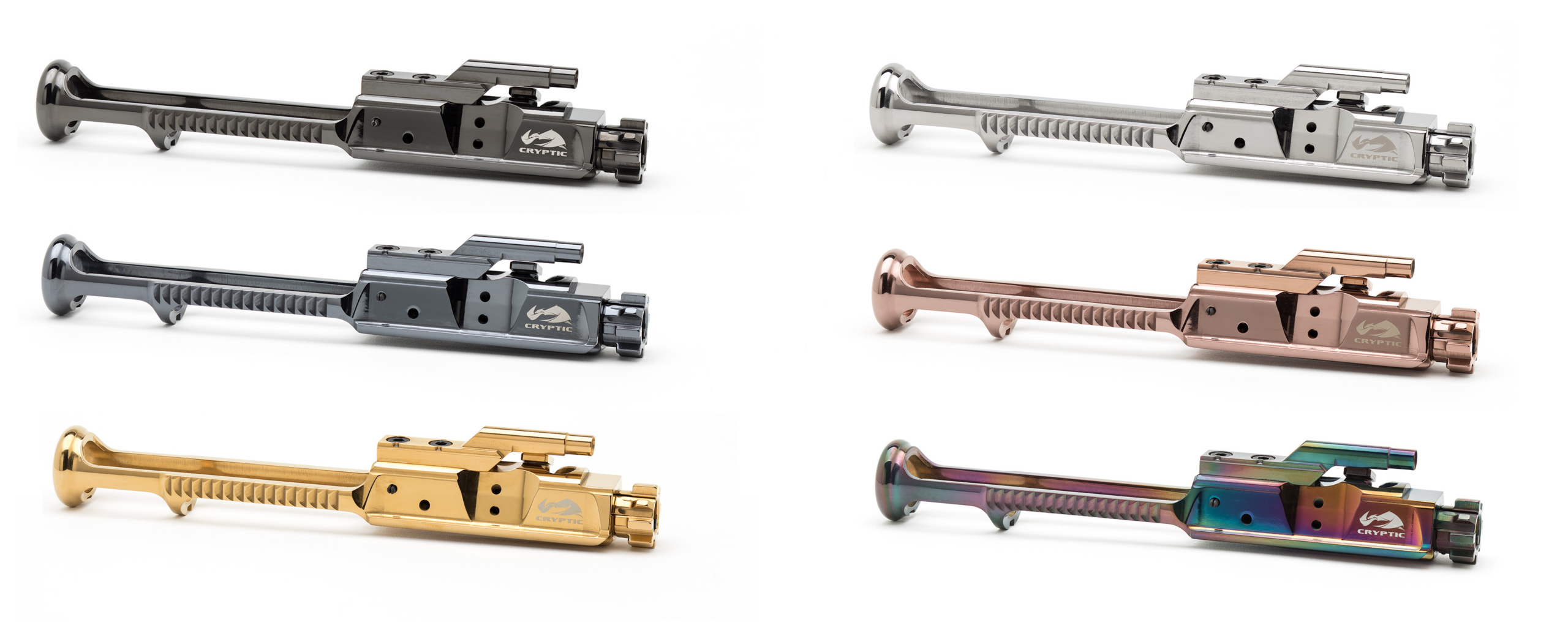
Diamond-like carbon, or DLC, is a thin layer of hard amorphous carbon applied by vapor deposition in a vacuum chamber. It is the premium end of BCG coatings. The surface is extremely hard, very low friction, and so smooth that carbon has little to hold onto. DLC is also only a few microns thick, so it adds almost nothing to dimensions. On the downside, it costs more than any finish above, and like any coating, it depends on good steel underneath. That combination makes DLC the best BCG coating for shooters who want the least maintenance and the smoothest action, as long as the budget allows. No coating lets you skip lubrication, though. Even Cryptic and Forward Controls Design still recommend lubricating the carrier.
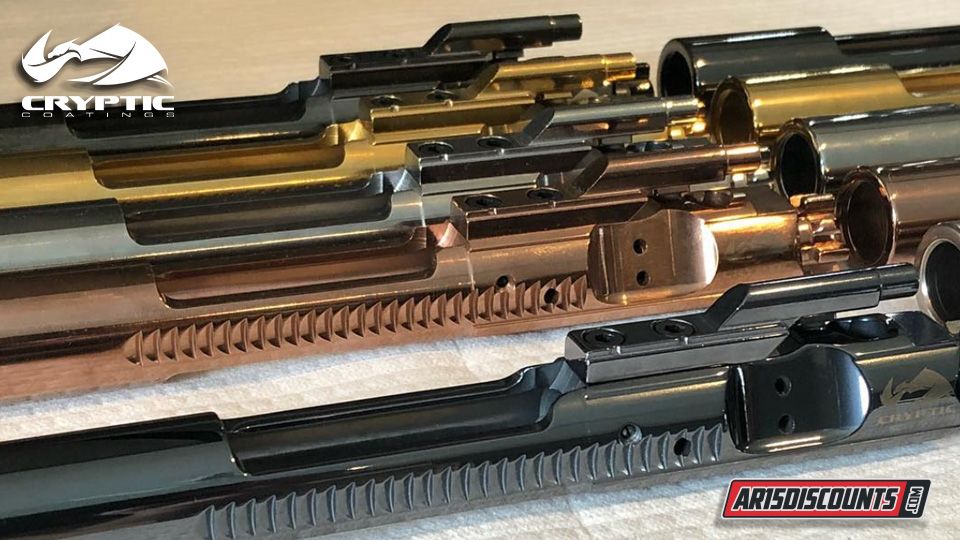
Cryptic Coatings is the name most buyers ask us about. Cryptic says its carriers use DLC or PVD finishes on the outside and Thin Dense Chrome inside the bolt bore and gas key. Per Cryptic, chrome goes on more evenly in small inner diameters. Cryptic lists its Mystic Black as a CVD amorphous carbon coating with a coefficient of friction of 0.01 and a hardness of 3,000 Vickers, per the Mystic Black page. It lists Mystic Bronze, a PVD coating, at 0.2 and 3,200 Vickers. The Cryptic Coatings .223/5.56/.300BLK BCG uses a 9310 bolt and comes in the Mystic finishes. The Cryptic Low Mass BCG and the Cryptic Left Hand BCG cover lighter and left-handed builds. We break down the upgrade in standard BCG vs. Cryptic Coatings BCG.
JP Enterprises takes a mixed approach. The JP Full Mass Operating System BCG pairs a QPQ stainless carrier with the JP EnhancedBolt in black DLC. JP says the DLC gives extreme surface hardness and lubricity while keeping a ductile core, per its EnhancedBolt page. JP also sells DLC bolt groups for larger calibers, such as the .224 Valkyrie/6.8 SPC.
A few other premium finishes belong in this group. Titanium nitride is a gold PVD coating. Faxon uses it on the carrier and gas key of the Faxon TiN M16 BCG and the Faxon Gunner Lightweight TiN BCG, with a salt bath nitrided bolt in each. The Faxon Chameleon M16 BCG adds a color-shifting PVD layer over nitride. NP3 is an electroless nickel with PTFE particles mixed in. Forward Controls Design says the FCD NP3 M16 BCG exposes fresh PTFE as it wears, and it still recommends lubricating the carrier. Geissele coats its Reliability Enhancement Kit BCG in Nanoweapon, a chrome-nitride finish.
Head-to-Head: Narrowing Down the Best BCG Coating
Nitride vs Phosphate BCG
Both are proven and affordable. Nitride is harder on the surface, resists corrosion better, and cleans up much faster. Phosphate holds oil well and is what the military specifies, but it collects carbon and needs more maintenance. The price gap is small enough that nitride is the better buy for almost every civilian build. Pick phosphate if you want a true mil-spec clone or prefer the classic finish, and pick nitride for everything else.
Nitride vs Nickel Boron BCG
Nickel boron feels slicker when new and has the bright look many buyers want. Nitride is part of the steel, so it cannot wear through or flake, and it costs less. Nitride is the safer all-around choice, while nickel boron rewards shooters who value easy cleaning and like the look. Pick nickel boron if appearance and a slick feel matter most to you and you are buying from a maker that tests its bolts. Pick nitride if you want the best value and the fewest questions.
Chrome vs Nickel Boron vs DLC
These are the three slick, easy-clean premium options. Hard chrome is very tough and has a long track record. Nickel boron is the most affordable of the three and has the brightest look. DLC is the most advanced, with the lowest friction claims and a thin layer that holds tight tolerances. Pick chrome for a durable, proven upgrade, nickel boron for value and appearance, and DLC if you want the best BCG coating money can buy and the lightest cleaning routine.
How to Choose the Best BCG Coating for Your Rifle
On a budget build, nitride gives you the most for your money. The BCA, One Horse, and NBS carriers make that easy. An everyday range rifle is well served by a mid-priced nitride carrier like the Faxon, Microbest, or Dirty Bird Enhanced. Suppressed rifles foul quickly, so lean toward an easy-clean finish such as RCA Blacknitride+ with an adjustable gas key, chrome, or DLC.
Duty and hard-use rifles should stick with phosphate or nitride on a properly tested bolt. If low maintenance is the goal, look at Cryptic, JP DLC, or the Faxon chrome. When looks matter, nickel boron, titanium nitride, and the Cryptic Mystic colors stand apart. Whatever you choose, browse the full BCG collection to compare. If you want to know how full-auto profile carriers fit into this, read our full auto BCG guide. If you also own a .308, our comparison of AR-10 vs AR-15 BCGs covers the differences.
After years of helping customers choose bolt carrier groups, we have learned that the best BCG coating is the one that fits your rifle, your budget, and your cleaning habits. Get the steel right first, then pick the finish that matches how you shoot. Shop every option in our bolt carrier group collection, and call us if you want help matching a coating to your build.
FAQ
For most shooters, nitride is the best value. It is hard, corrosion resistant, and easy to clean, and it costs little more than phosphate. Chrome, nickel boron, and DLC cost more but make cleaning even easier.
Nitride is better for most civilian rifles because it is harder on the surface, resists corrosion better, and cleans up faster. Phosphate is still the mil-spec standard and works very well when kept lubricated.
Not across the board. Nickel boron feels slicker and is easy to clean, while nitride is part of the steel and costs less. Both work well on a quality carrier, so choose based on your priorities and buy from a maker that tests its bolts.
Yes. Nickel boron needs less lubrication than phosphate, but you should never run it dry. A light coat of quality gun oil on the carrier rails and bolt keeps it running smoothly.
A chrome BCG is worth it if you want a very hard, easy-to-clean surface with a long track record. It costs more than nitride, so it makes the most sense for high round counts or shooters who want less time at the cleaning bench.
A DLC BCG uses a diamond-like carbon coating, a thin layer of hard amorphous carbon applied by vapor deposition. It is extremely hard, very low friction, and easy to clean, which puts it at the premium end of BCG coatings.
DLC and hard chrome are usually the easiest to clean, followed by nickel boron and nitride. Phosphate takes the most work because carbon sticks to its porous surface.
Suppressors add a lot of fouling, so an easy-clean finish like nitride, chrome, or DLC is a smart choice. Pairing it with an adjustable gas key or gas block helps more than the coating alone.
A coating has little effect on accuracy. It can help reliability by reducing friction and making carbon easier to remove, but the bolt steel, heat treat, testing, and gas key staking matter much more.
Yes. A properly made mil-spec phosphate BCG with a tested bolt and staked gas key is good enough for nearly any use. It just needs more lubrication and cleaning than the newer finishes.