
AR-15 Bolt Carrier Groups
Best AR-15 Bolt Carrier Groups 2026: Nitride vs. Chrome vs. Nickel Boron
Oct
Table of contents
AR-15 Bolt Carrier Groups are among the hardest-working components in the rifle. Every time an AR-15 cycles, the BCG unlocks the bolt, extracts and ejects the fired case, resets the hammer, strips the next round from the magazine, chambers it, and locks the action back into battery. Because it handles so many critical functions, bolt carrier group quality can directly affect reliability, maintenance, corrosion resistance, and long-term service life.
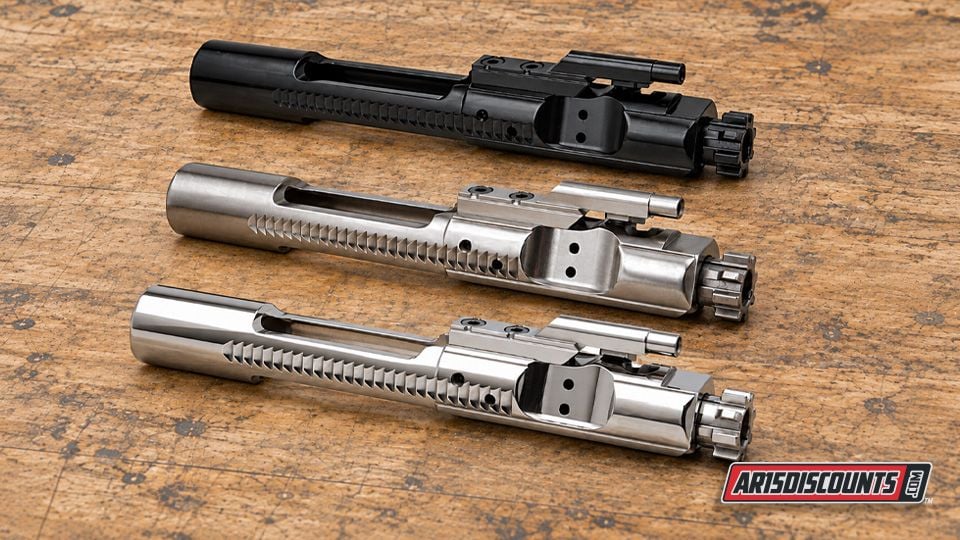
One of the biggest differences between BCGs is the finish. Black nitride, hard chrome, and nickel boron are three of the most popular choices, with each offering a different balance of durability, lubricity, corrosion resistance, cleaning ease, appearance, and price.
No single finish is best for every AR-15. Black nitride is an excellent choice for many general-purpose builds because of its durability and value. Hard chrome appeals to shooters looking for proven wear resistance and easier cleanup, while nickel boron remains popular for its slick surface and low-friction characteristics.
Understanding how these finishes differ will help you choose the right AR-15 bolt carrier group for your rifle, shooting habits, maintenance routine, and budget.
Why the AR-15 Bolt Carrier Group Matters
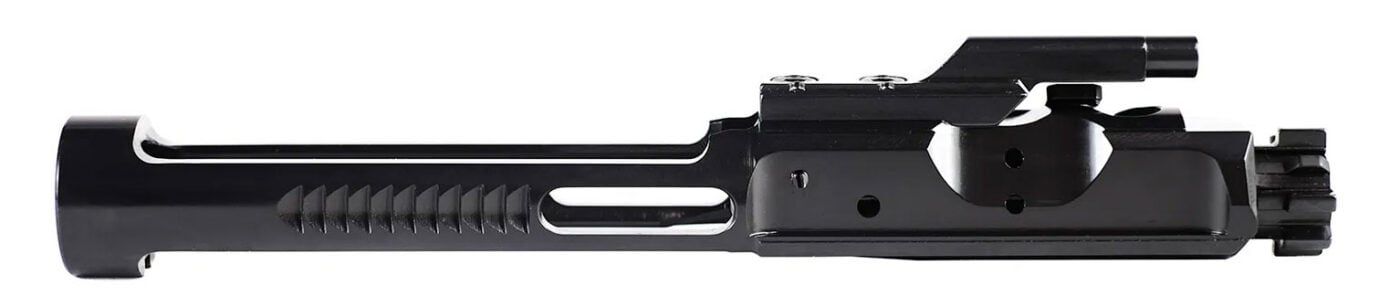
The AR-15 bolt carrier group operates directly in the center of the rifle’s firing cycle. Heat, fouling, friction, carbon deposits, and high-pressure gas all affect the BCG during operation.
A complete BCG generally includes the carrier, bolt, gas key, firing pin, cam pin, and firing pin retaining pin. While these parts work together as a system, the carrier and bolt receive much of the attention because their materials, machining, heat treatment, testing, and surface finish can influence how the rifle performs.
The finish matters, but it should never be considered more important than the component’s underlying quality. A premium coating cannot compensate for poor machining, incorrect dimensions, inadequate gas key staking, or an improperly manufactured bolt.
When comparing AR-15 bolt carrier group parts, start with manufacturing quality, then evaluate the finish based on your maintenance preferences and shooting conditions.
Black Nitride BCGs
Black nitride has become one of the most common finishes found on modern AR-15 bolt carrier groups.
Unlike a traditional coating deposited on top of the metal, nitriding is a surface treatment that changes the steel’s outer layer. QPQ, or quench-polish-quench, is a commonly used nitriding process that produces a hard, smooth, corrosion-resistant surface.
That distinction is important because there is no conventional plated coating to chip or peel away.
Advantages of Black Nitride
One of the biggest advantages is value. Nitride BCGs can offer excellent surface hardness and corrosion resistance while remaining relatively affordable.
The smooth surface also reduces friction compared with rougher traditional finishes and generally cleans more easily than phosphate. Carbon can still accumulate, particularly when shooting suppressed, but routine cleaning is usually straightforward.
Nitride also produces the dark black appearance many shooters prefer for a conventional AR-15.
For someone searching for the best AR15 bolt carrier group without spending premium money purely on the finish, a properly manufactured nitride BCG is difficult to overlook.
Potential Drawbacks
Nitride doesn’t necessarily feel as slick as nickel boron, especially when dry. It can also require slightly more effort to remove stubborn carbon than a highly polished chrome surface.
However, those differences are relatively minor when the rifle is properly lubricated.
For most recreational, defensive, hunting, and general-purpose rifles, black nitride provides an excellent combination of price, durability, corrosion resistance, and low maintenance.
Hard Chrome BCGs
Hard chrome has a long history in firearm components and remains one of the most durable finishes available for AR-15 bolt carrier groups.
Don’t confuse hard chrome with decorative chrome. Proper firearm-grade hard chrome is an industrial plating applied specifically to improve surface hardness, corrosion resistance, wear resistance, and ease of cleaning.
Chrome surfaces are generally smooth and highly resistant to carbon adhesion.
Advantages of Hard Chrome
Cleaning is one of the strongest reasons to consider chrome.
Carbon fouling generally wipes away more easily from a polished hard chrome carrier than it does from many darker finishes. This can be especially valuable on rifles that see high round counts or frequent suppressed shooting.
Chrome also offers excellent corrosion resistance and has proven reliable in demanding firearm applications for decades.
Another advantage is visibility. The bright finish makes carbon deposits, dirt, and lubricant easier to see during inspection.
For shooters who value durability and low-effort maintenance, hard chrome can be one of the strongest premium BCG AR15 options.
Potential Drawbacks
Cost is the primary disadvantage.
Quality hard chrome BCGs typically cost more than comparable nitride models because plating requires additional manufacturing steps and precise quality control.
Chrome also has a bright silver appearance, which may not appeal to shooters looking for a traditional black rifle aesthetic.
The added cost may be unnecessary for a rifle used only occasionally at the range. For high-round-count shooters, however, the easier cleaning and proven durability can justify the premium.
Nickel Boron BCGs
Nickel boron, commonly abbreviated NiB, became popular for its extremely smooth feel and distinctive silver-gray appearance.
The finish has a low coefficient of friction, which allows moving surfaces to slide against each other more easily. This is often marketed as allowing a rifle to operate with less lubrication.
While nickel boron can provide excellent lubricity, shooters should still lubricate the BCG normally. An AR-15 benefits from lubrication regardless of finish.
Advantages of Nickel Boron
Cleaning is one of NiB’s strongest characteristics.
Its smooth surface makes carbon buildup easier to remove than with many traditional finishes. In some areas, fouling may wipe away with relatively little effort.
Nickel boron also offers good corrosion resistance and provides a slick surface that can help reduce friction during cycling.
For shooters comparing premium bolt carrier group AR15 parts, NiB remains attractive when ease of cleaning is a high priority.
Potential Drawbacks
Quality varies significantly between manufacturers.
Poorly applied nickel boron finishes can discolor, stain, wear unevenly, or potentially experience adhesion problems. Surface discoloration does not necessarily indicate functional failure, but it can reduce the clean silver appearance that attracts many buyers to NiB in the first place.
For this reason, purchasing from a reputable manufacturer is especially important when selecting nickel boron.


Nitride vs. Chrome vs. Nickel Boron
The differences become easier to understand when you compare the three finishes side by side.
| Feature | Black Nitride | Hard Chrome | Nickel Boron |
|---|---|---|---|
| Durability | Excellent | Excellent | Very Good to Excellent |
| Corrosion Resistance | Excellent | Excellent | Excellent |
| Ease of Cleaning | Very Good | Excellent | Excellent |
| Lubricity | Very Good | Excellent | Excellent |
| Typical Cost | Low to Moderate | Moderate to High | Moderate to High |
| Finish Appearance | Black | Bright Silver | Silver/Gray |
| Risk of Flaking | None from plating | Very Low with quality plating | Possible with poor application |
| Best Use | General-purpose builds | High round count / suppressed | Easy-clean premium builds |
For most shooters, black nitride represents the best overall value.
Hard chrome becomes especially attractive for rifles that accumulate heavy fouling or require frequent cleaning.
Nickel boron remains a strong option for shooters who want an exceptionally slick surface and easy maintenance, but it should come from a trusted manufacturer.
Which BCG Finish Is Best for a Suppressed AR-15?
Suppressed rifles introduce substantially more fouling into the action because additional gas and carbon are pushed back through the operating system.
That makes cleaning characteristics particularly important.
Hard chrome performs extremely well in this environment because carbon has difficulty bonding aggressively to the smooth plated surface. Nickel boron also cleans easily, although discoloration can become more noticeable with heavy suppressed use.
Nitride remains completely suitable for suppressed rifles and can be the better choice when budget is a consideration.
If frequent suppressed shooting is the rifle’s primary purpose, chrome may offer the strongest combination of durability and cleaning ease. For occasional suppressor use, a quality nitride BCG can perform exceptionally well.
Don’t Choose a BCG Based on Finish Alone
Finish receives plenty of attention because it is easy to see and easy to market, but several other factors matter just as much when choosing the best AR15 bolt carrier group.
Look for a properly manufactured bolt made from an appropriate steel, correct heat treatment, dimensional consistency, a securely installed gas key, and proper staking.
Many buyers also look for magnetic particle inspection, high-pressure testing, or individual component testing, depending on the rifle’s intended use.
Carrier profile is another consideration. Full-auto or M16-profile carriers are extremely common in civilian AR-15s because their additional mass and conventional geometry work well across a wide range of rifle configurations.
A quality carrier with a relatively basic finish will usually outperform a poorly manufactured carrier with an expensive coating.
Choosing the Best AR-15 Bolt Carrier Group
For most builds, black nitride is one of the easiest finishes to recommend. It is durable, corrosion-resistant, attractive, easy to maintain, and available at a wide range of price points.
Hard chrome is particularly appealing to shooters who put significant round counts through their rifles, run suppressors regularly, or simply want an extremely easy-to-clean surface.
Nickel boron occupies a similar premium category but emphasizes slick operation and low-friction characteristics.
Ultimately, the right BCG AR15 setup depends on how you’ll use the rifle.
A recreational shooter may gain little practical benefit from paying substantially more for a premium coating. A high-volume or suppressed shooter may appreciate the easier cleanup enough to justify the cost.
The most important factor remains purchasing a well-manufactured bolt carrier group from a reputable source.
Shop AR-15 Bolt Carrier Groups
Whether you prefer black nitride, hard chrome, nickel boron, or another proven finish, BCG options fit nearly every AR-15 configuration and budget.
When comparing AR-15 bolt carrier group parts, focus on manufacturing quality first, then choose the finish that best fits your shooting frequency, cleaning routine, environment, and budget.
For shooters ready to upgrade or replace their current BCG, you can buy AR-15 bolt carrier groups at AR15Discounts.com, with options from trusted manufacturers across a wide range of finishes, configurations, and price points.
The right bolt carrier group should provide dependable cycling, consistent lockup, corrosion protection, and years of service with proper maintenance.
Frequently Asked Questions About AR-15 BCG Finishes
Choosing between nitride, chrome, and nickel boron often comes down to durability, maintenance, corrosion resistance, and price. The answers below cover some of the most common questions shooters have when comparing AR-15 bolt carrier group finishes.
A quality nitride BCG can be extremely durable because nitriding modifies the steel’s surface rather than applying a separate plated layer. Nickel boron can also be very durable, but coating quality varies more between manufacturers.
It can be for high-volume or suppressed shooters. Hard chrome is extremely durable and easy to clean. For a typical recreational rifle, however, black nitride generally provides excellent performance at a lower cost.
Hard chrome and nickel boron are generally the easiest to clean because their smooth surfaces resist carbon adhesion. Nitride is also considerably easier to maintain than many traditional phosphate finishes.
Nickel boron has excellent natural lubricity, but that does not mean an AR-15 should be operated without lubricant. Proper lubrication improves reliability and reduces wear regardless of BCG finish.
Poor-quality nickel boron applications can potentially stain, discolor, wear unevenly, or experience coating problems. Quality manufacturing and proper surface preparation greatly reduce these risks.
Nitride, hard chrome, and quality nickel boron all provide excellent corrosion resistance. For most shooters, the practical difference is relatively small when the rifle is properly cleaned and maintained.
Hard chrome has an advantage in cleaning ease because suppressed rifles generate significant carbon fouling. Nitride is still highly durable and may offer better overall value for shooters who use a suppressor only occasionally.
It can affect friction, corrosion resistance, cleaning, and wear, but manufacturing quality matters more. Prioritize proper dimensions, materials, heat treatment, gas key installation, and staking before finish.
QPQ black nitride is a surface treatment that hardens and protects the steel itself. Hard chrome is a plated surface applied over the underlying metal. Both provide strong wear and corrosion resistance, but chrome generally offers a smoother surface and easier carbon removal, while nitride usually costs less and cannot flake like a plated coating.
For additional resources, check out our sister site at www.dirtybirdusa.com.