
NFA, Suppressors
How to Buy Suppressors Online in 2026: A Step-by-Step Guide
May
Table of contents
- NFA Registration Ends for Suppressors and SBRs – October 2026 Update
- Buy Suppressors Online – The Buying Process, Step by Step
- State Legality and Travel Rules
- Are Suppressors Worth It for AR-15 Builds?
- Using One Suppressor on Multiple Firearms
- What Happens If Your Application Is Denied?
- Ready to Get Started?
If you’ve been considering a suppressor, the 2026 federal changes have simplified the buying process. The federal suppressor transfer tax is now $0, and under ATF’s current guidance, prior NFA approval and registration are no longer required at the federal level. State requirements still apply. This guide from AR15Discounts.com walks you through choosing a suppressor, ordering online, and completing the transfer through your local dealer.
NFA Registration Ends for Suppressors and SBRs – October 2026 Update
The federal side of suppressor ownership has changed dramatically this year. The One Big Beautiful Bill Act cut the NFA tax on suppressors from $200 to $0 effective January 1, 2026. On August 5, 2026, a federal court in Texas ruled in Silencer Shop Foundation v. ATF that NFA registration and approval rules cannot be enforced for untaxed items like suppressors, and the Justice Department chose not to appeal. On October 9, 2026, ATF went a step further with an open letter that applies the ruling nationwide. ATF no longer requires prior approval or registration to make or transfer a suppressor. A suppressor now transfers like any other firearm, with a Form 4473 and a NICS background check at a dealer in your home state. Anyone who wants federal registration can still file a Form 4.
State law is a separate matter, and ATF’s change does not touch it. Some states only allow suppressors that are registered under federal law, so a voluntary Form 4 may still be the right path there. Suppressors also remain illegal for civilians in California, Delaware, Hawaii, Illinois, Massachusetts, New Jersey, New York, Rhode Island, and Washington, D.C. Centurion will not ship to those jurisdictions. Before ordering a suppressor, confirm the current rules where you live.
Buy Suppressors Online – The Buying Process, Step by Step
Ordering a suppressor from AR15Discounts.com is straightforward. Choose your suppressor, arrange a transfer with a qualified local dealer, and complete the required paperwork when it’s ready for pickup.
Start by browsing our suppressor collection and selecting a model compatible with your firearm and intended use. Before placing your order, confirm that suppressors are legal where you live and choose a receiving dealer in your state who holds the appropriate federal firearms license and Special Occupational Tax (SOT) status. Contact the dealer to confirm they accept suppressor transfers and ask about transfer fees and state requirements.

After you place your order and we receive your dealer’s required information, we ship your suppressor directly to that dealer for the transfer.
Under ATF’s nationwide guidance effective October 9, 2026, prior federal NFA approval and registration are no longer required for suppressor transfers. Some states still require federal registration, so your dealer may need to assist you with a Form 4 before completing the transfer. The federal suppressor making and transfer tax is $0.
When your suppressor is ready for pickup, visit your dealer to complete ATF Form 4473 and a NICS background check, unless an exemption applies. Once any required approvals, waiting periods, and other transfer requirements are satisfied, you can take your suppressor home.

State Legality and Travel Rules
Suppressors are legal for civilian ownership in 42 states, subject to applicable requirements. If you move to another state, you do not need ATF Form 20 approval to transport your suppressor across state lines. Before moving, confirm that the destination state allows suppressors and check whether it requires federal registration. State and local laws also apply along your travel route.

Are Suppressors Worth It for AR-15 Builds?
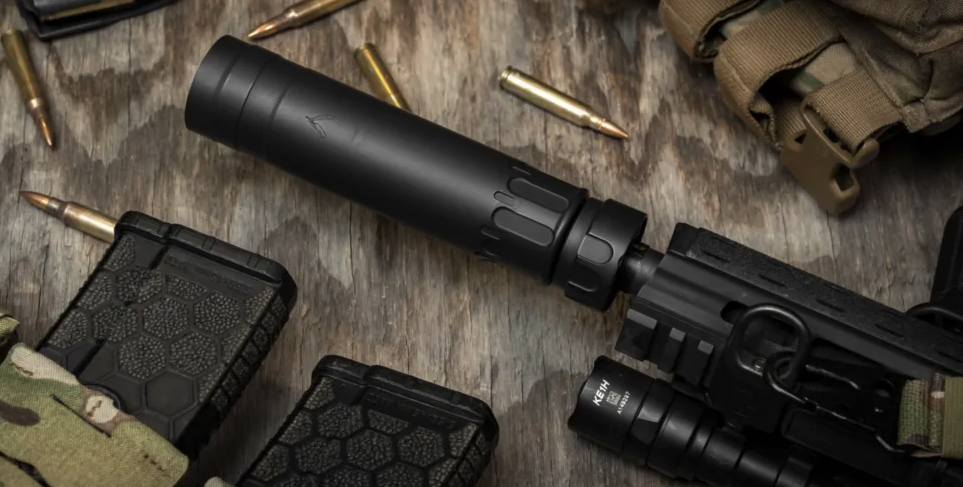
For most AR-15 builds, yes. Suppressors reduce noise and recoil, protect hearing, and make shooting noticeably more comfortable over the course of a range session. On .300 Blackout rifles with subsonic ammunition, the results are especially impressive. Even on 5.56 rifles, the reduction in blast and felt recoil improves control and makes extended shooting more enjoyable. For most owners, the benefits are well worth the paperwork.
Using One Suppressor on Multiple Firearms
Many suppressors are multi-caliber. A 30-caliber model can safely be used on 5.56, .300 Blackout, and .308 rifles as long as the threads match and the suppressor is rated for the pressure involved. This makes them a smart long-term investment if you own multiple firearms. Always check the manufacturer’s specifications before switching hosts.

What Happens If Your Application Is Denied?
If your dealer receives a denial during the background check, the transfer cannot proceed. Ask your dealer how to obtain the denial information and request a review through the agency that issued it if you believe it was an error.
If your transfer requires a Form 4 and ATF disapproves the application, work with your dealer to review the stated reason and determine the appropriate next steps. Correcting an application error may require a new submission. Complete, accurate paperwork can help prevent avoidable delays, but approval depends on eligibility and applicable legal requirements.
Ready to Get Started?
Want to buy suppressors online? Browse the suppressor collection at AR15Discounts.com, select your model, and we’ll handle shipping to your SOT dealer. Our team is available to answer questions and walk you through every step. Quieter, more comfortable shooting is more accessible in 2026 than it’s ever been.
Yes, eligible buyers can order suppressors online where state and local laws allow ownership. Under ATF’s nationwide guidance effective October 9, 2026, the agency is no longer enforcing prior NFA approval or registration requirements for suppressor transfers. Some states still require federal registration, so confirm your receiving dealer’s requirements before ordering.
Browse our suppressor collection and choose a compatible model. Arrange the transfer with a licensed dealer in your state who holds Special Occupational Tax (SOT) status, then place your order. We ship to your receiving dealer once the required dealer information is provided. Your dealer handles the transfer paperwork and contacts you when the suppressor is ready for pickup.
For orders placed through AR15Discounts.com, your suppressor ships to your chosen licensed dealer with SOT status for the transfer. Confirm that the dealer accepts suppressor transfers and ask about their fees before placing your order.
Dealer transfers generally require ATF Form 4473, identification, and a NICS background check unless an exemption applies. If federal registration is needed under your state’s laws or you choose to register voluntarily, your dealer can help with Form 4 and its supporting documents.
Timing depends on order processing, shipping, your dealer’s schedule, background-check results, and state waiting periods. Transfers requiring Form 4 registration also depend on ATF processing. Ask your receiving dealer for an estimate based on your circumstances.
ATF’s current policy no longer requires a federal NFA tax stamp for suppressor transfers. The federal making and transfer tax is $0. State registration requirements may still apply, and dealer transfer fees are separate.
Yes. Eligible buyers can purchase a suppressor as individuals. A trust or LLC is optional, and the appropriate ownership arrangement depends on your needs and applicable laws.
An individual purchase places ownership in your name. A properly established trust can provide a framework for shared ownership and estate planning. It does not override eligibility, transfer, or state-law requirements. If you plan to use a trust, confirm the process with your dealer and an attorney familiar with firearm trusts.
Our suppressor orders ship to your selected receiving dealer for transfer. You pick up your suppressor there after completing the applicable paperwork, background check, and any required approvals or waiting periods.
Civilian suppressor ownership is permitted in 42 states, subject to applicable requirements. It is generally prohibited in California, Delaware, Hawaii, Illinois, Massachusetts, New Jersey, New York, Rhode Island, and Washington, D.C. Confirm current state and local requirements before ordering, including whether federal registration is necessary.
Yes. Suppressors reduce noise, recoil, and flash, making AR-15 shooting more comfortable and enjoyable. They are especially effective with subsonic .300 Blackout and provide noticeable benefits even on 5.56 rifles.
Yes. Multi-caliber suppressors, such as 30-caliber models, can be used on 5.56, .300 Blackout, and .308 rifles as long as the threads match and the suppressor is rated for the pressure.