
Ammo
5.56 Ammo: A Buyer’s Guide
May
Table of contents
The right 5.56 ammo can make a big difference in how your rifle performs. Whether you need ammo for range days, training, competition, hunting, or defensive use, 5.56 NATO gives shooters several bullet weights, projectile styles, and tip colors to choose from. Each type serves a specific purpose, and understanding those differences helps you buy smarter.
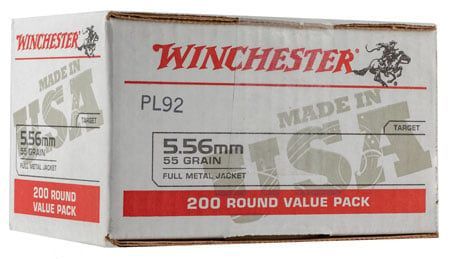
AR-15 owners often choose 5.56 NATO ammo because it delivers low recoil, strong velocity, reliable feeding, and dependable performance from lightweight sporting rifles. Manufacturers also offer it in bulk, making it a practical choice for shooters who train often or want to keep extra ammunition on hand.
Below, we break down the 5 most common 5.56 ammo types, explain bullet tip colors, cover green-tip 5.56, and show you what to look for when shopping for 5.56 ammo for sale.
What Is 5.56 Ammo?
5.56 ammunition, also known as 5.56x45mm NATO, started as a military rifle cartridge and later became one of the most popular options for civilian AR-15 shooters. While it looks similar to .223 Remington, the two cartridges do not always share the same pressure levels or chamber specifications.
A rifle chambered in 5.56 NATO can usually fire both 5.56 NATO ammo and .223 Remington ammo. However, shooters should not use 5.56 NATO ammo in a rifle marked only for .223 Remington unless the manufacturer confirms it is safe. Always check your barrel markings or manufacturer information before loading your rifle.
Shooters choose 5.56 NATO ammo because it offers a strong balance of speed, accuracy, and manageable recoil. It works well for target practice, training, competition, varmint hunting, and certain defensive applications. Since manufacturers produce it in so many variations, shooters can choose everything from affordable full-metal-jacket range ammo to premium bonded soft points and match-grade loads.
Common Types of 5.56 Ammo
Not all 5.56 rounds perform the same. Bullet design affects how the cartridge behaves after firing, how accurately it shoots, and which role it serves best.
Full Metal Jacket 5.56 Ammo
The full metal jacket (FMJ) is the most common type of 5.56. It usually features a lead core surrounded by a copper jacket. Shooters choose FMJ rounds for range use because they are affordable, reliable, and widely available.
Most bulk 5.56 ammo uses FMJ projectiles because they work well for training and high-volume shooting. If you are looking for bulk deals, FMJ usually offers the best value. Common examples include 55-grain M193-style ammunition and 62-grain FMJ loads.
FMJ is not usually the best choice for hunting or self-defense because manufacturers design it more for penetration and reliable feeding than controlled expansion. Still, it remains the go-to option for general practice.
Green Tip 5.56 Ammo
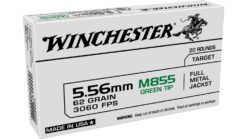
Green tip 5.56 ammo usually refers to M855-style ammunition. Manufacturers commonly load this round with a 62-grain bullet, a steel penetrator core, and a green-painted tip. The green tip helps shooters more easily identify the projectile type.
Shooters often choose M855-style ammo when they want a heavier general-purpose round than standard 55-grain FMJ. Many AR-15 rifles handle it well, especially those with faster twist rates such as 1:7 or 1:8. However, some indoor ranges and steel-target ranges prohibit green-tip 5.56 ammo because the steel penetrator can damage backstops or targets.
A green tip does not automatically mean the round qualifies as dedicated armor-piercing ammunition, but it does focus more on penetration than standard FMJ. Always check your local range rules before bringing green tip ammo.
Soft Point 5.56 Ammo
Soft-point 5.56 ammo uses an exposed lead tip designed to expand more than an FMJ when it hits a target. This makes it a common choice for hunting, especially for varmints and small- to medium-game, where legal.
Soft-point ammunition is also popular among shooters who want better terminal performance than basic range ammo. It can be a strong option when controlled expansion matters. Federal 5.56 ammo, Hornady, Winchester, and other major brands often offer soft-point or bonded soft-point loads designed for more serious use.
For defensive purposes, some shooters prefer bonded soft point ammunition because it is designed to hold together better through barriers while still expanding. This can make it a more practical choice than basic FMJ for those looking into 5.56 self-defense ammo.
Hollow Point and Open Tip Match 5.56 NATO
Hollow-point and open-tip match, often called OTM, are sometimes confused, but they are not always built for the same purpose. Match-style open-tip bullets are usually designed for accuracy, not necessarily for expansion. The small opening at the tip is often part of the manufacturing process that helps improve bullet consistency.
OTM 5.56 ammo is popular for precision shooting and competition. It often comes in heavier bullet weights, such as 69-, 75-, or 77-grain. These loads usually perform best in rifles with faster twist rates.
For shooters looking for the best 5.56 ammo for accuracy, match-grade OTM loads are worth considering. They are usually more expensive than bulk FMJ ammo, so many people save them for serious range work instead of high-volume training.
Ballistic Tip 5.56 Ammunition
Ballistic tip ammo uses a polymer tip that helps improve aerodynamics and may assist with expansion. These rounds are commonly used for hunting, varmint control, and specialized performance.
The colored polymer tip is not always a universal code, unlike the green-tipped M855. Different manufacturers use different colors for branding or bullet identification. A red, blue, black, or orange tip may mean different things depending on the brand and product line.
Ballistic tip 5.56 ammo is often more expensive than standard FMJ, but it can provide excellent accuracy and terminal performance for the right application.
5.56 Ammo Color Tip Explained
When shooters search for “5.56 color tip explained,” they usually want to know what a painted bullet tip means. Tip colors can help identify certain projectile types, but manufacturers do not always follow one universal color system.
Here are some common examples:
The term green tip usually refers to M855-style 62-grain ammunition with a steel penetrator.
Orange or red tips may identify tracer-style, polymer-tip, or specialty projectiles, depending on the manufacturer.
The term black tip often refers to armor-piercing ammunition in military contexts, but civilian availability and legal restrictions can vary.
Blue tip can sometimes identify training, frangible, or specialty rounds, depending on the brand.
Polymer-tipped hunting rounds may use different colors for brand identity or bullet style rather than a military-style identification system.
The most important rule is simple: do not rely on color alone. Always read the box, product description, and manufacturer specifications. A colored tip can give you a helpful clue, but the actual ammunition label gives you the information that matters most.
Best 5.56 Ammo by Use
The best 5.56 ammo depends on what you plan to do with it. There is no single load that is perfect for every rifle and every purpose.
For range training, 55-grain FMJ is one of the most practical options. It is affordable, widely available, and works well in most 5.56×45 mm ammo guns, such as AR-15 rifles.
For bulk storage, look for reliable brass-cased FMJ from reputable brands. Bulk 5.56 ammo is commonly sold in 500-round or 1,000-round cases. Some serious shooters may search for 10,000 rounds of 5.56 ammo when buying large quantities, but most buyers will find that smaller cases are easier to store, rotate, and manage.
For accuracy, match-grade 69-grain, 75-grain, or 77-grain OTM loads are popular choices. These are usually better suited to rifles with faster-twist barrels.
For hunting, soft-point, bonded soft-point, or ballistic-tip ammunition is usually a better choice than FMJ. Always check local hunting regulations before using 5.56 NATO on game.
For self-defense, many shooters prefer bonded soft-point, controlled-expansion, or purpose-built defensive loads over basic FMJ. 5.56 self-defense ammo should be selected carefully, tested for reliability in your rifle, and stored properly.
Buying 5.56 In Bulk.
Buying bulk 5.56 can be a smart move if you shoot often. Bulk purchases usually lower the cost per round and make it easier to keep ammunition available for training.
When shopping for 5.56 ammo, compare more than just the price. Look at the bullet weight, case material, primer type, brand reputation, and intended use. Brass-cased ammo is usually preferred for reliability and reloadability. Steel-cased ammo may be cheaper, but it can be dirtier and may not be allowed at some ranges.
Also, pay attention to shipping rules and local restrictions. Ammunition laws vary by state and sometimes by city or county. Before ordering 5.56 ammo bulk online, make sure the seller can legally ship to your location.
Popular 5.56 Ammo Bullet Weights
The most common 5.56 bullet weights include 55 grain, 62 grain, 69 grain, 75 grain, and 77 grain.
Shooters commonly use 55-grain ammo for M193-style FMJ range ammunition. It delivers strong velocity, stays affordable, and works well in many AR-15 rifles.
62-grain ammo is often associated with M855-style green tip 5.56. It gives shooters a common general-purpose weight and may perform well in faster-twist barrels.
Shooters usually choose 69-grain and heavier match loads for accuracy and longer-range shooting. These rounds may need a faster twist rate to stabilize properly.
75-grain and 77-grain loads appeal to shooters who want improved performance at distance or premium defensive-style options. They typically cost more than standard range ammo, but they can offer excellent consistency.
Federal 5.56 and Other Trusted Brands
Federal 5.56 ammo remains one of the most recognized options on the market, especially for reliable training, defensive, or duty-style use. The brand offers a wide variety of loads, including FMJ, soft-point, bonded, and premium-performance options.
Other well-known ammunition brands include Winchester, Hornady, PMC, IMI, Speer, Remington, Fiocchi, and Sellier & Bellot. The right brand often depends on your rifle, your budget, and your intended use.
For best results, test a few loads in your rifle before buying a large quantity. Even quality ammunition can perform differently from one barrel to another.
FAQ’s About 5.56 Ammo
Before buying 5.56 ammo, it helps to understand how different bullet types, weights, and loads affect performance. These FAQs answer common questions about 5.56 NATO ammo, bulk buying, green tip rounds, and choosing the right option for your rifle.
For most range use, 55-grain FMJ 5.56 ammo is one of the best choices. It is affordable, reliable, and commonly available in bulk. It works well for general training, zeroing, and high-volume shooting.
Green tip 5.56 ammo usually refers to M855-style 62-grain ammunition with a steel penetrator. It is commonly used as a general-purpose rifle round, but many indoor ranges and steel-target ranges do not allow it.
They are similar, but they are not always the same. 5.56 NATO is generally loaded to different pressure specifications than .223 Remington. A 5.56 NATO rifle can usually fire both, but a .223-only rifle should not fire 5.56 unless the manufacturer says it is safe.
Many shooters prefer bonded soft point, controlled-expansion, or premium defensive 5.56 ammo for self-defense. These loads are generally designed to perform better than basic FMJ. Always test your chosen ammo for reliable function in your rifle.
Yes, bulk 5.56 ammo is worth buying if you shoot often. Buying in bulk can lower the cost per round and help you keep enough ammunition available for training. Just make sure you store it in a cool, dry place.
Tip color can indicate the projectile type, but it is not always universal. Green tip usually means M855-style steel penetrator ammunition, while other colors may vary by manufacturer. Always read the product label instead of relying on color alone.
55-grain FMJ is great for general range use. 62-grain ammo is a popular, heavier option. Match shooters often use 69-grain, 75-grain, or 77-grain loads for better accuracy, especially in rifles with faster twist rates.
Yes, 5.56 ammo can be used for certain types of hunting where legal, especially with soft point, bonded soft point, or ballistic tip loads. Always check your state and local hunting regulations before using 5.56 NATO for game.
Final Thoughts on Choosing 5.56 Ammo
Choosing the right 5.56 ammo starts with knowing how you plan to use your rifle. FMJ gives shooters a dependable option for affordable range training and high-volume practice. Green tip 5.56 offers a heavier penetrator-style projectile, though some ranges do not allow it. Soft-point, bonded, and ballistic-tip loads perform better for hunting and defensive applications, while match-grade OTM ammunition supports shooters seeking greater accuracy and consistency.
When shopping for 5.56 ammo, compare bullet type, bullet weight, case material, brand, and price per round. Whether you need a few boxes for your next range trip or bulk 5.56 ammo for long-term training, AR15Discounts.com gives you a convenient place to buy 5.56 ammo and stock up on rounds that fit your rifle, budget, and shooting goals.
For additional resources, check out our sister site at www.dirtybirdusa.com.