
NFA, Suppressors
Buying Your First Rifle Suppressor: A Complete Guide

Jun
Table of contents
Purchasing your first rifle suppressor is an exciting step toward transforming your shooting experience, whether you’re at the range, hunting, or enjoying time in the field. At AR15Discounts.com, we’re dedicated to guiding you through every aspect of choosing and acquiring a suppressor, ensuring you understand its benefits, legal requirements, and practical expectations. This page is tailored for first-time buyers in states where suppressors are legal, with a focus on rifle suppressors for platforms like the AR-15, particularly when shooting 5.56 or .300 Blackout. We’ll explore why a dedicated 5.56 can might offer the quietest performance for a 5.56 rifle, while a 30-caliber suppressor provides greater versatility for future use, and we’ll set realistic expectations for sound reduction, emphasizing the role of subsonic ammunition for achieving a quieter rifle with .300 Blackout. Let’s dive in to help you make an informed decision for your first suppressor purchase.
What Does a Suppressor Do?
A suppressor is a device that attaches to your rifle’s muzzle to reduce the noise and flash produced when firing. Contrary to Hollywood portrayals, they don’t make a rifle silent; they lower the gunshot’s intensity to safer, more comfortable levels, protecting your hearing and enhancing your overall experience. For first-time users, the difference is remarkable—shooting feels smoother, less disruptive, and more enjoyable, allowing you to concentrate on precision and technique. Suppressors also reduce recoil, enabling faster follow-up shots, stabilize the barrel for improved accuracy, and minimize muzzle flash, which is particularly useful in low-light conditions like dusk hunting. Additionally, they reduce noise pollution, making them considerate for range neighbors or wildlife-rich environments.The terms “suppressor” and “silencer” are often used interchangeably, but “suppressor” is more accurate, as it reduces, rather than eliminates, sound. “Silencer” was a marketing term coined by inventor Hiram Maxim, yet both refer to the same device. Regulated under the National Firearms Act (NFA), suppressors are a valuable addition for rifle owners in permitted states. Our suppressor collection at AR15Discounts.com offers a variety of models to suit your first purchase.

Realistic Expectations
When buying your first can, understanding what it can realistically achieve is crucial, especially for rifles like the AR-15 shooting 5.56 or .300 Blackout. A suppressor significantly reduces the muzzle blast—the loud explosion from escaping gases—but it cannot eliminate all sound. For 5.56 rifles, which typically use supersonic ammunition, the bullet’s sonic crack, caused by breaking the sound barrier, remains audible even with a suppressor. A dedicated 5.56 can, designed specifically for 5.56 NATO or .223 Remington, provides the best sound reduction for this caliber, typically lowering noise to around 130 to 140 decibels. This level is safer for hearing but still requires ear protection for extended shooting sessions to prevent long-term damage. These suppressors are often lighter and more compact, improving maneuverability on 5.56 AR-15s, particularly for short-barreled rifles used in tactical or home defense scenarios.
For shooters aiming for a significantly quieter rifle, subsonic ammunition is essential, particularly with .300 Blackout. Subsonic rounds travel slower than the speed of sound, eliminating the sonic crack, resulting in a much quieter shot—often in the range of 120 to 130 decibels with a high-quality suppressor. This level can sometimes allow shooting without ear protection for brief moments, such as a single hunting shot, though hearing protection is still recommended for safety during prolonged range use.
The .300 Blackout was designed with suppression in mind, making it a favorite for hunters seeking minimal noise to avoid startling game or disturbing the environment. For example, subsonic .300 Blackout is ideal for close-range hunting within 100 to 150 yards, where its lower velocity and energy compared to supersonic rounds are less impactful. However, for longer ranges or precision shooting, supersonic .300 Blackout or 5.56 may be preferred, though the sonic crack will make shots noticeably louder.A 30-caliber (7.62mm) suppressor, compatible with 5.56, .300 Blackout, and .308, offers greater versatility but may not suppress 5.56 as effectively as a dedicated 5.56 suppressor, resulting in slightly louder shots, perhaps 3 to 5 decibels more.
The trade-off is often worthwhile for first-time buyers who value flexibility. If you later acquire a .300 Blackout for quiet hunting or a .308 for long-range shooting, a 30-caliber can adapts seamlessly, eliminating the need for additional purchases and paperwork. With subsonic .300 Blackout, a 30-caliber suppressor can deliver near-silent shots, ideal for hunting, while still providing solid sound reduction for 5.56 or .308, even with supersonic ammo.
Beyond sound, cans reduce recoil by approximately 20 to 30 percent, improving control and follow-up shot speed. They also minimize muzzle flash, crucial for night shooting or hunting with night vision, ensuring better visibility. Maintenance needs vary—many sealed suppressors can go thousands of rounds without cleaning, making them low-maintenance for casual shooters, while user-serviceable models allow periodic cleaning for those who shoot frequently or use high-fouling ammunition. Weight and length impact handling; lighter, shorter suppressors enhance portability but may offer slightly less sound reduction. Your first suppressor should balance these factors with your shooting goals, whether prioritizing maximum quietness with a 5.56 suppressor or versatility with a 30-caliber model.
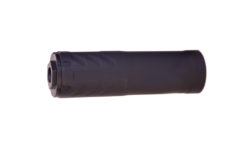
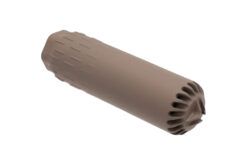
The Importance of Customer Service
When purchasing your first can, selecting a company with excellent customer service is critical, particularly in the rare event of a baffle strike. A baffle strike occurs when a bullet contacts the suppressor’s internal baffles, often due to improper alignment between the can and firearm or a mismatched setup, such as using an incompatible caliber. This can damage the suppressor, requiring repair or replacement, which can be costly and time-consuming. A reputable company with responsive customer service ensures quick resolution, whether the issue arises from a manufacturing defect or user error, such as incorrect mounting. Choosing a brand with a strong track record for addressing baffle strikes provides peace of mind, protecting your investment and minimizing downtime. At AR15Discounts.com, we partner with top brands known for their reliability and support, ensuring your first purchase is backed by exceptional service.

Legal Considerations for Ownership
Before ordering, confirm that suppressor ownership and use are permitted under your state and local laws. ATF’s October 9, 2026, guidance stops enforcement of suppressor NFA approval, registration, and tax-stamp requirements nationwide. The federal making and transfer tax is $0. Dealer transfers still require Form 4473 and a NICS background check unless exempt, and other applicable federal requirements remain. Voluntary Form 4 registration is available and may still be needed under state law. The NFA remains law, and the enforcement policy could change. See ATF’s official NFA transfer guidance for details.
How to Purchase Your First Suppressor
Here’s how to order your first suppressor from AR15Discounts.com under ATF’s current guidance, where state and local laws permit ownership:
1. Select Your Suppressor
Choose a can that aligns with your rifle and shooting goals. For rifles, options include rimfire suppressors for .22 LR, ideal for low-cost shooting or small-game hunting; centerfire suppressors for larger calibers like 5.56 or .308, suited for tactical or hunting rifles; or multi-caliber suppressors, such as 30-caliber models, for flexibility across 5.56, .300 Blackout, and .308. Evaluate weight, length, sound reduction, and barrel threading compatibility. Our suppressor collection offers options for your first purchase.
2. Find an SOT Dealer
Choose a licensed dealer in your home state with the required Special Occupational Tax (SOT) status to receive your online order. AR15Discounts.com ships directly to that dealer for the transfer. Your dealer must confirm that the transfer complies with federal, state, and local requirements.
3. Complete the Dealer Transfer Paperwork
At your dealer, complete ATF Form 4473 and provide the identification required for the transfer. The dealer conducts a NICS background check unless an exemption applies. Under ATF’s current policy, a mandatory Form 4 application, photos, and fingerprints are no longer part of the federal suppressor transfer process.
4. Check State Registration Requirements
The federal making and transfer tax is $0, and ATF’s current policy stops enforcement of mandatory suppressor tax-stamp and registration requirements. Some states still require federal registration. If that applies to your purchase, your dealer can help with a voluntary Form 4 and its required photos and fingerprints.
5. Confirm the Transfer Is Ready
There is no mandatory federal Form 4 approval wait under ATF’s current policy. Pickup timing depends on shipping, dealer processing, the background check, and any state requirements. If you choose or need voluntary registration, allow time for ATF to process that application.
6. Pick Up Your Suppressor
Your dealer contacts you when the suppressor is ready for pickup. Take possession once the dealer confirms the background check and all other applicable transfer requirements have been met.
Understanding Suppressor Trusts
A trust is optional and can help organize ownership and estate planning. Under ATF’s current enforcement policy, a trust is not required to buy a suppressor. If you choose or need federal registration, a properly drafted trust can allow eligible trustees to possess the registered suppressor under its terms and applicable law. Consult a qualified attorney about your state’s requirements and whether a trust fits your plans.
Why Choose AR15Discounts.com?
At AR15Discounts.com, we’re the builder’s choice for AR-15 parts, kits, accessories, and suppressors, offering unmatched value and service. Benefits include competitive pricing for budget-friendly, high-quality suppressors; a diverse suppressor catalog with rimfire, centerfire, and multi-caliber models; fast shipping to your SOT dealer; and expert support to guide you from selection to ATF paperwork. Pair your suppressor with our muzzle devices for a complete setup.
Suppressors are permitted under federal law and in many states, subject to applicable restrictions. ATF’s current policy stops enforcement of mandatory suppressor NFA approval and registration requirements. Dealer transfers still require Form 4473 and a NICS check unless exempt. State and local laws remain in effect, so confirm the rules where you live before ordering.
Under ATF’s October 9, 2026, policy, a mandatory federal tax stamp is no longer part of a suppressor transfer, and the federal making and transfer tax is $0. Voluntary Form 4 registration remains available and may still be necessary under state law.
Under ATF’s current policy, suppressor purchases do not require a mandatory Form 4 approval wait. Delivery and pickup timing depend on shipping, dealer processing, the background check, and state requirements. If voluntary registration is needed or chosen, ATF processing time still applies.
Direct-thread suppressors screw directly onto the barrel and are ideal for rifles or fixed-barrel pistols. Boosters, also known as Nielsen devices, are required for most semi-automatic pistols to help cycle the action by temporarily decoupling the suppressor during recoil.
Yes, many suppressors are designed to be used on multiple firearms, as long as the thread pitch and caliber are compatible. Swapping pistons or mounts may be necessary for proper fit and function.
Suppressors can slightly increase velocity and often improve accuracy by reducing recoil and muzzle rise. However, improper alignment can negatively impact performance.
.22LR and 9mm are two of the most popular and beginner-friendly calibers. They offer excellent noise suppression, affordable ammo, and broad compatibility with popular firearms.
No. While suppressors significantly reduce noise, they don’t make firearms completely silent. The term “silencer” is misleading—there’s still a noticeable sound, especially with supersonic ammunition.
No, but subsonic ammo helps reduce noise even further by eliminating the sonic crack. It’s especially beneficial in .300 Blackout, 9mm, and .22 LR setups where quiet performance is a priority.
We’d look for a company with a great warranty and customer service. Lots of companies are doing great work, but if pressed our personal experience is Rugged and their Rugged Razor cannot be beat.