
AR-15 Basics, AR-15 Triggers
Forced Reset Trigger vs. Standard Trigger: What’s the Difference?
Aug
Table of contents
- Understanding Forced Reset Technology
- How Forced Reset Systems Operate
- Forced Reset Trigger Versus Selector Designs
- Focusing on Atrius and Partisan Options
- Being Prepared for the Faster Rate of Fire
- Why Forced Reset Systems Are Not Ideal for Defensive Rifles
- Legal Considerations
- Purchasing and Pricing
- Installation Overview for the Atrius Super Selector
There’s a reason forced reset triggers have become so popular among AR-15 owners who want to have more fun at the range. A regular mil-spec trigger gets the job done, but the reset always feels like a speed bump once the rounds start flying. You pull, you have to let go all the way forward, then you pull again. Forced reset technology removes most of that pause by letting the bolt carrier group shove the trigger back into place for you. The result is a rifle that still fires one round per trigger pull yet feels lively and addictive when you’re running drills or just burning through a few magazines for pure enjoyment. Two of the clearest ways to get that experience are the Atrius Super Selector and the Partisan Triggers Disruptor. Understanding how each one works (and how they differ from a stock trigger) makes it easier to pick the right one for your build.

TL;DR- Too Long Didn’t Read
Forced reset triggers have gained popularity among AR-15 enthusiasts, offering a modified shooting experience by speeding up the trigger reset process. This blog examines the forced reset technology, focusing on products like the Atrius Super Selector and Partisan Disruptor, outlining their operation, benefits, and legal considerations.
- Forced reset triggers enhance shooting speed by using the bolt carrier to reset the trigger.
- Atrius and Partisan offer distinct mechanisms, affecting installation and feel.
- Not ideal for defensive rifles due to reliability concerns under stress and possible legal implications.
- Federal laws do not classify these systems as machine guns, but state regulations may vary.
- Purchasing available through AR15Discounts.com, with pricing and compatibility considerations.
Understanding Forced Reset Technology
A forced reset trigger uses the rearward movement of the bolt carrier group to shove the trigger back into its reset position after each shot. On a normal AR-15 you have to let the trigger go far enough forward for the disconnector to catch the hammer and hand it back to the sear. That release is what sets your pace. With forced reset gear the carrier does the work instead. It contacts a cam or lever and forces the trigger ahead against your finger. When the carrier comes home the system clears and you’re ready for the next pull. Because every round still needs its own trigger pull, these devices are not machine guns under federal law.
How Forced Reset Systems Operate
Once the hammer drops and the round leaves the barrel, gas drives the carrier back. On a Partisan Disruptor the underside of a full-profile carrier hits the internal cam and drives the trigger forward. On an Atrius Super Selector the same carrier motion pushes a solid lever cam inside the selector body. That lever presses the rear of the trigger bar and resets the trigger while the hammer stays held. When the carrier returns the mechanism releases and the next pull can fire. You keep pressure on the trigger; the rifle handles most of the reset. Split times shrink to whatever the gun’s cyclic rate allows instead of depending on how fast your finger can move.
Forced Reset Trigger Versus Selector Designs
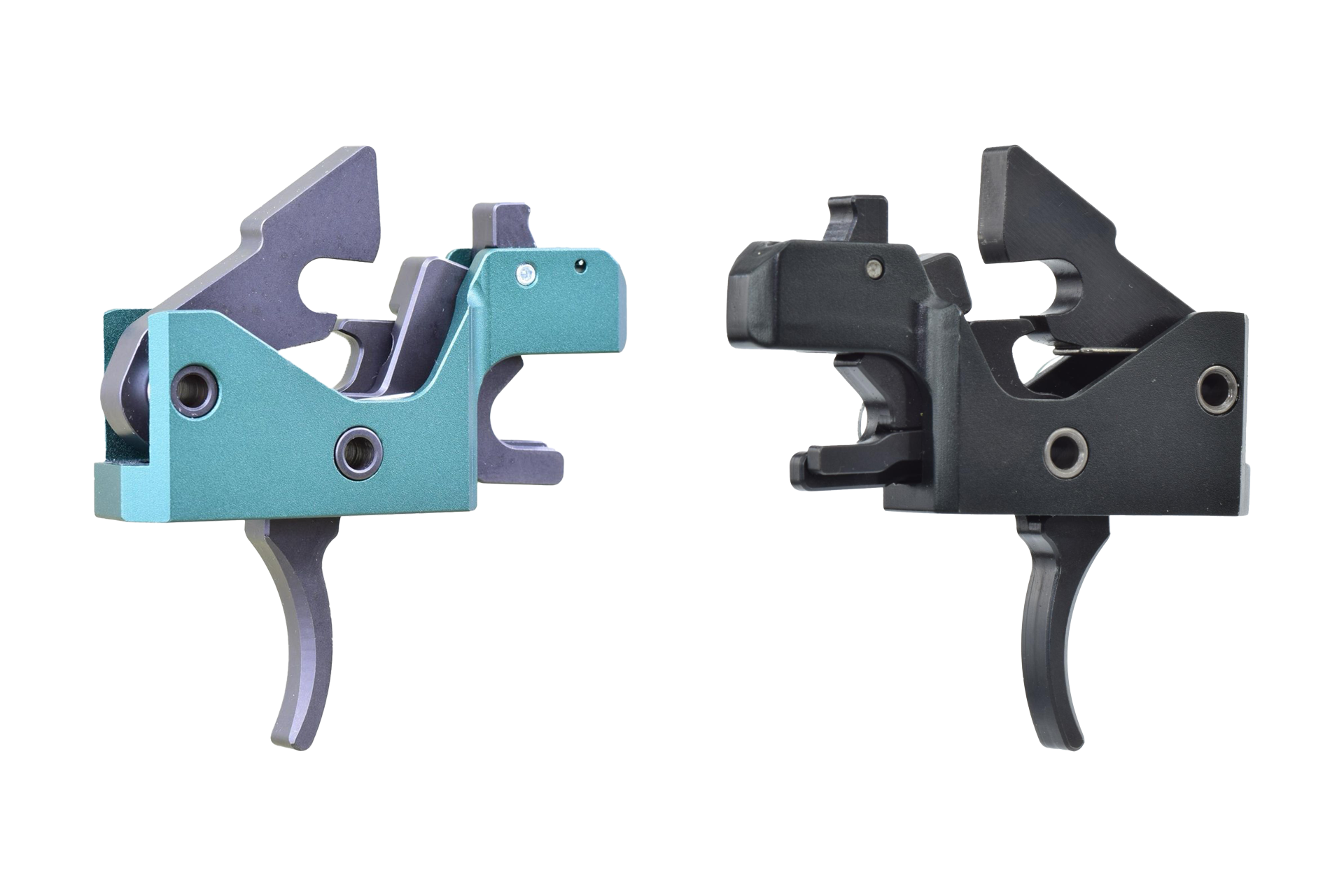
The biggest split is where the reset mechanism lives. A full forced reset trigger like the Partisan Disruptor is a complete drop-in cassette that swaps out the whole fire-control group. Everything is engineered together. A selector-based setup like the Atrius Super Selector only replaces the safety selector and leaves your existing trigger alone. The cam stays inactive in safe and regular semi. It only comes into play when you move the lever to the third position.
That changes the feel and the install. The Disruptor gives you a consistent 3.75 to 4.1 pound pull and factory-set tolerances. Wear surfaces are tool steel and 4140 chromoly. The Atrius unit keeps whatever break your current trigger already has in normal semi mode and tends to be easier on the original parts. It’s cut from heat-treated 4140 steel with a black nitride finish.
Focusing on Atrius and Partisan Options
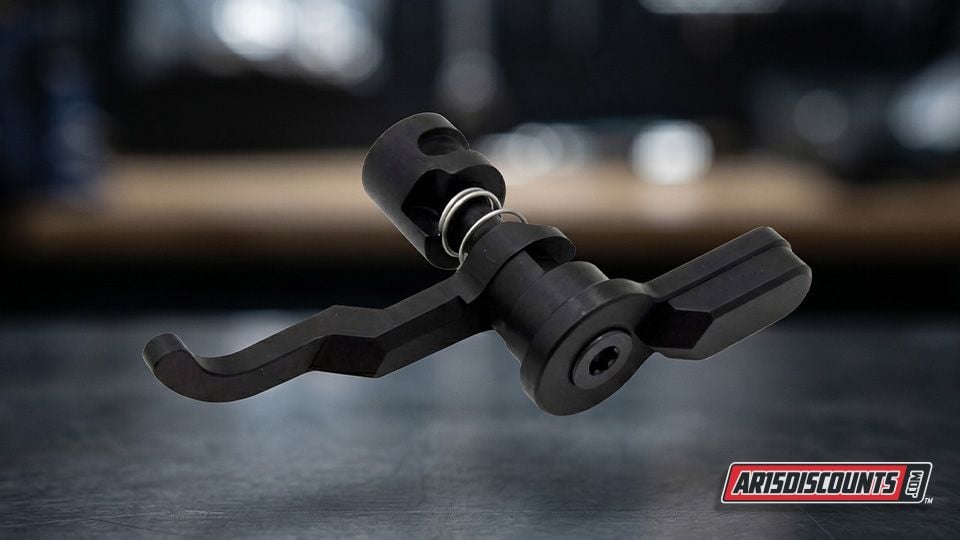
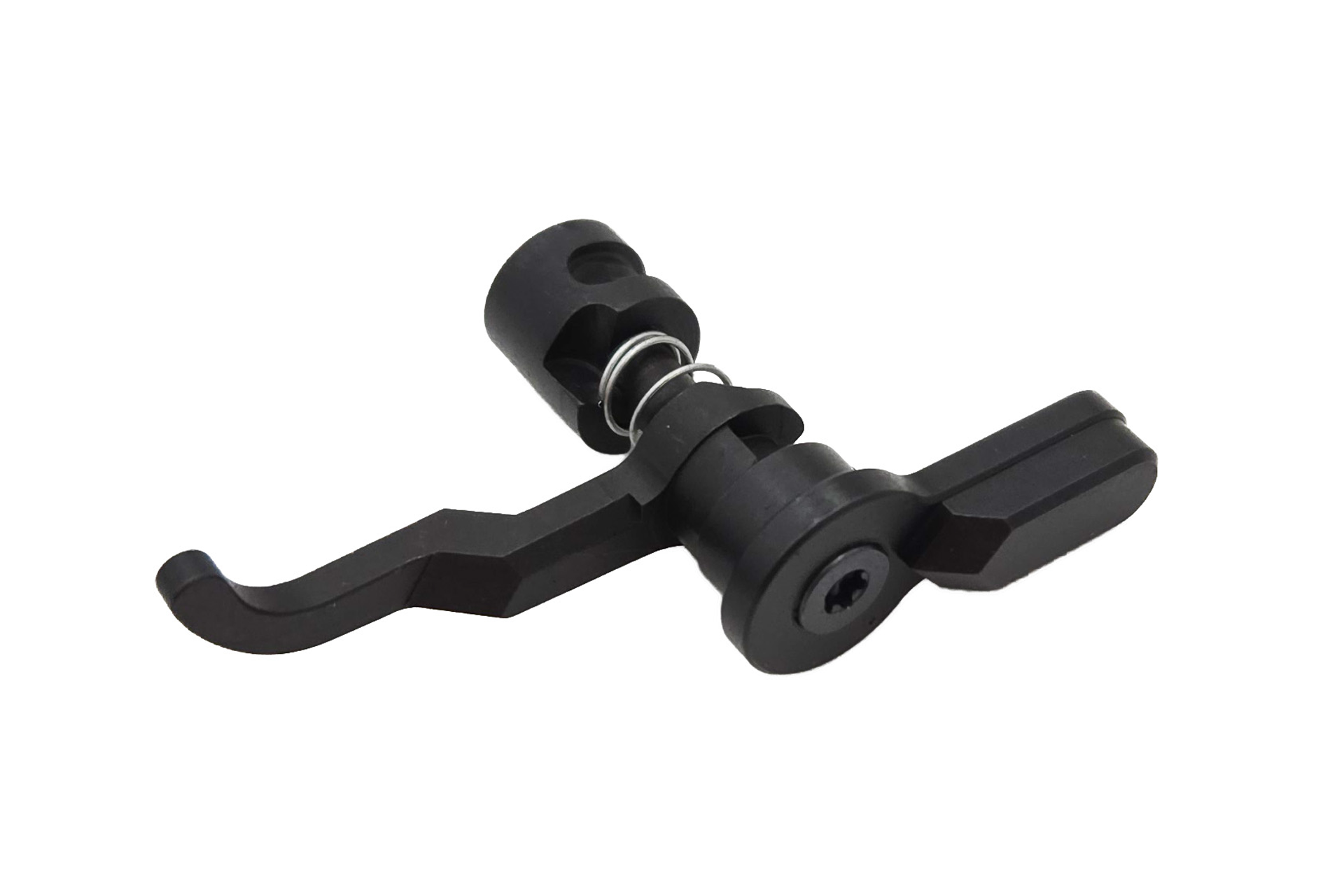
Atrius built the Super Selector so you can keep the trigger you already like. The solid lever cam inside the selector engages the full-profile carrier on the way back and pushes the trigger bar forward to reset. Safe and semi feel exactly like a normal selector. The third position (super-semi) is where the forced reset kicks in. The levers are textured and chamfered for a solid thumb purchase. You can get the single-side version, an ambidextrous one, or the G-Lever made specifically for Geissele two-stage triggers like the SSA, SSA-E, and G2S. That G-Lever version adds a lever blocker to handle the different geometry.
It needs a low-shelf or full-profile trigger pocket, a full-profile BCG, an H2 or H3 buffer (tungsten weights on the H3), and a mil-spec single-stage trigger with a squared-off rear bar—no U-notches or relief cuts. Install uses the original selector spring and a T10 screw torqued to 15 inch-pounds with blue Loctite. Atrius keeps an updated compatibility list that is worth checking before you buy.
Partisan went the other direction with the Disruptor. It’s a complete cassette that replaces the whole fire-control group and comes with its own three-position selector (safe, semi, enhanced). In the enhanced mode the carrier drives an internal cam that forces the trigger forward after every shot. Pull weight sits between 3.75 and 4.1 pounds. Critical surfaces are tool steel and 4140 chromoly. Install is a simple pin swap once the old parts are out; anti-walk pins are a good idea. It also wants a full-profile M16-style BCG and at least an H2 buffer (H3 is better on shorter barrels). The company has run it past six thousand rounds under tough testing protocols. Because everything is built as one unit you skip the variables that can show up when you mix a selector with an aftermarket trigger. Both the Atrius Super Selector and the Partisan Disruptor are made in the United States and are easy to find at AR15Discounts.com, often in bundles that already include matching triggers or other parts.
Being Prepared for the Faster Rate of Fire
A forced reset system can change the way a rifle behaves in your hands, so the first time using one should not be treated like shooting a standard semi-auto trigger. The faster cadence can increase muzzle movement, make ammunition disappear surprisingly quickly, and give the shooter less time to recognize and correct a loss of control. Before using the enhanced mode, make sure you are already comfortable with the rifle in ordinary semi-auto operation.
Start from a stable, balanced shooting position that allows you to control recoil without leaning excessively backward or putting yourself off balance. Maintain a secure grip on the rifle, keep the stock firmly positioned, and concentrate on keeping the muzzle safely oriented throughout the entire string. The goal is not simply to hold the rifle tighter, but to maintain enough control that you can immediately stop firing without losing your stance or allowing the muzzle to move somewhere it should not.
Trigger discipline becomes especially important. Until you are actually on target and prepared to fire, keep your finger completely outside the trigger guard just as you would with any other firearm. Do not assume the system will feel exactly like a conventional trigger once firing begins. Learn its behavior gradually rather than immediately attempting long strings of fire.
For the first range session, use a controlled environment with a proper backstop and plenty of room around the target. Begin with the rifle in standard semi-auto mode, then familiarize yourself with the enhanced mode using only a small number of rounds in the magazine. This limits the consequences of an unexpected reaction or loss of control. Stop immediately if the rifle behaves differently than expected, fails to reset properly, or continues firing in a manner you did not intentionally command.
The most important rule is that speed comes after control. A shooter should be able to maintain a safe muzzle direction, remain balanced, and deliberately stop firing before increasing the number of rounds loaded or attempting longer strings. Forced reset equipment can make a range rifle considerably more entertaining, but the faster firing cadence also leaves less margin for careless handling than a conventional trigger.
Why Forced Reset Systems Are Not Ideal for Defensive Rifles
These setups shine at the range or for high-volume practice, but they bring real drawbacks for a defensive rifle. Reliability under stress is the main job of a home-defense or personal-protection gun. Both the Atrius Super Selector and the Partisan Disruptor need a full-profile carrier and a heavier buffer to run right. Change the gas system, the ammo, or the buffer weight and you can get short-stroking, light primer strikes, or incomplete resets. Dirt, cold, or whatever ammo you grab in a hurry only makes those issues more likely.
The technique is different too. You learn to keep steady rearward pressure for fast strings. Under adrenaline that habit can produce extra rounds after the threat is already down. A regular semi-auto trigger forces a full release between shots and naturally slows you down. That extra control matters when every round has to be accounted for. Magazines also empty faster, which is the last thing you want if the situation drags on.
Then there’s the legal side. Even though the devices are federally legal, a prosecutor can still point to a “rapid-fire” selector or cassette and argue intent to use excessive force. That argument is harder to make with a plain mil-spec trigger. Most instructors keep forced reset gear on range guns and leave defensive rifles with simple, proven triggers that prioritize predictability over speed.
Legal Considerations
The May 2025 Department of Justice settlement settled the federal question. Forced reset triggers and selectors that still require a separate pull for every round are not machine guns under the National Firearms Act. No tax stamp or registration is needed at the federal level.
State laws are a different story. A number of states ban or restrict devices that speed up semi-automatic fire. Atrius and Partisan both publish no-ship lists, and AR15Discounts.com only ships to places that allow them. Restricted jurisdictions usually include California, Connecticut, Delaware, Florida, Hawaii, Illinois, Maryland, Massachusetts, Minnesota, Nevada, New Jersey, New York, Oregon, Rhode Island, Washington, and the District of Columbia. Laws change, so check your own state and local rules and talk to a qualified attorney if anything is unclear. This is not legal advice.
Purchasing and Pricing
You can get both the Atrius Super Selector and the Partisan Disruptor straight from AR15Discounts.com. The standard Atrius unit usually sits around 199 dollars; ambi and G-Lever versions cost more. The Disruptor typically falls in the low-to-mid two-hundred range depending on color and any extras. Bundles that already pair either one with a compatible trigger or buffer are often the smarter buy because they remove a lot of the guesswork.
Installation Overview for the Atrius Super Selector
Start with a clear, unloaded rifle. Loosen the pistol grip, pull the detent and spring, and take out the old selector. Slide the Atrius unit in, get the cam lever and spring seated correctly, and make sure any ambi levers match positions. Put the detent, spring, and grip back. Torque the T10 screw to 15 inch-pounds with blue Loctite only. Run function checks in all three positions before you load anything. Atrius also has a binding test with the upper off so you can confirm the cam moves freely. If you feel resistance you may need a light touch-up on the rear of the trigger bar. Once those checks pass, do a careful live-fire run in a safe place. Follow the latest instructions from Atrius and double-check that your carrier, buffer, and trigger meet the requirements.
When everything is matched and legal, an Atrius Super Selector or Partisan Disruptor can make rapid semi-auto strings feel noticeably smoother and a lot more enjoyable at the range. Keep a separate, conventional trigger setup for anything that might have to defend a home or a life. AR15Discounts.com stocks both brands and the supporting parts that make them run right, so the shopping side is straightforward once you know what you need.
The trigger itself does not inherently make the rifle more or less mechanically accurate. The practical difference comes from firing cadence. When shots are fired more rapidly, the shooter has less time to recover from recoil and reestablish the sights between rounds, so groups can open up compared with slower, deliberate fire from a standard trigger.
It does not significantly change the recoil produced by an individual cartridge, but the recoil impulses can arrive much closer together. That can make the rifle feel more energetic and make muzzle rise more difficult to manage during rapid strings. A stable stance and good control become more important as firing speed increases.
Potentially. The mechanism itself does not automatically cause excessive wear, but shooters commonly fire considerably more rounds in a shorter period of time with an FRT. Higher round counts and increased heat can accelerate normal wear on barrels, bolts, gas-system components, springs, and other parts compared with the same rifle fired less frequently.
The mechanism does not necessarily require a dramatically different cleaning schedule, but the higher round counts associated with FRT use can mean the rifle reaches its normal maintenance intervals much sooner. Regular inspection, lubrication, and cleaning become especially important on a rifle that sees frequent high-volume range sessions.
They can be. Forced reset systems depend on the timing and cycling of the rifle, so ammunition, gas-system configuration, suppressor use, buffer weight, and spring setup can affect reliability. Atrius specifically notes that ammunition type and other system variables can affect bolt bounce and cycling.
There is a learning curve because the trigger is mechanically driven forward during the firing cycle rather than relying solely on the shooter to release it for reset. More importantly, the potentially faster cadence means shooters should emphasize a stable position, muzzle control, trigger discipline, and the ability to stop firing deliberately. New users should become thoroughly familiar with the rifle’s normal semi-automatic operation before using a forced-reset mode.
They generally make more sense for shooters who are already comfortable operating an AR-15 safely. A new owner is better served first learning basic manipulation, loading and unloading, malfunction procedures, trigger discipline, recoil control, and ordinary semi-automatic fire before introducing a system capable of a much faster firing cadence.
That depends on the particular system. Three-position designs that retain a conventional semi-automatic mode allow the shooter to select ordinary semi-auto operation for slower, deliberate shooting. The Atrius selector, for example, retains normal semi-auto operation while adding its separate forced-reset position.
There is no universal FRT pull weight because designs differ substantially. Some complete FRT assemblies have their own specified pull weights, while selector-based systems such as the Atrius work with compatible conventional triggers and therefore retain characteristics of the installed trigger in normal semi-auto operation. Even among complete FRTs, pull weight can change depending on the selected firing mode.
Forced reset systems generally cost considerably more than basic mil-spec AR-15 fire-control components because they incorporate additional parts and more specialized mechanisms. Exact prices vary significantly by manufacturer, design, and sales, so current product pricing should be compared rather than assuming a fixed premium.