
AR-15 Lower Receivers, AR-15 Parts, Uncategorized
Best 5 AR-15 Lower Receivers for 2026: Forged vs. Billet vs. Polymer Compared
Jun
Table of contents
- 1. Forged AR-15 Lower Receiver: Best Overall Value
- 2. Billet AR-15 Lower Receiver: Best for Premium Builds
- 3. Ambidextrous AR-15 Lower Receiver: Best for Modern Controls
- 4. Complete AR-15 Lower Receiver Assembly: Best for Convenience
- 5. Polymer AR-15 Lower Receiver: Best for Lightweight Budget Builds
- What about 80% and 90% AR-15 Lower Receivers?
- Dimensions of an AR-15 Lower Receiver
- FAQ: AR-15 Lower Receivers
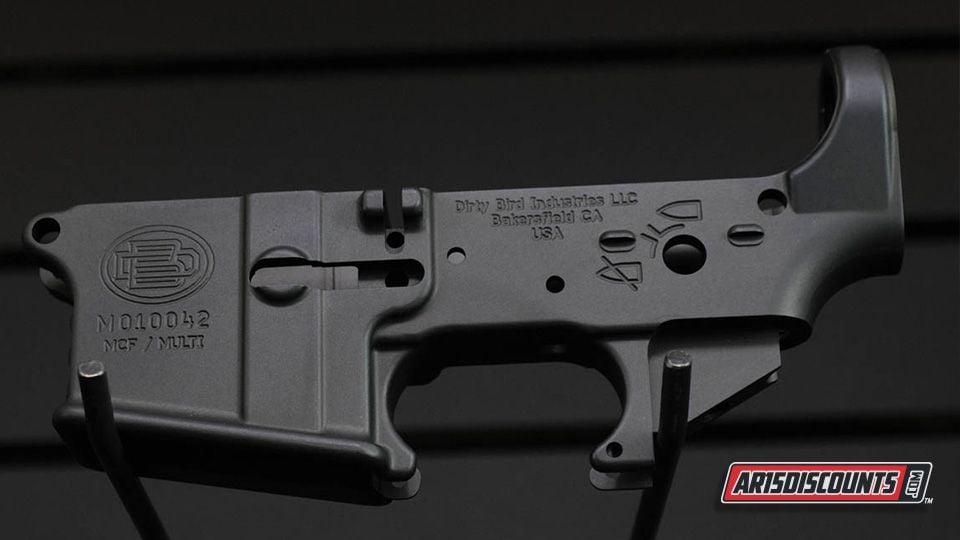
AR-15 Lower Receivers are one of the most important parts to consider in any rifle build. The lower receiver is the serialized foundation of the firearm and determines how your trigger, safety, grip, buffer system, magazine, and stock come together. It also affects the overall feel of the rifle, especially when you start comparing standard lowers to complete, billet, or ambidextrous options. Whether you are looking for the best AR 15 lower receiver for a premium build, a cheap AR 15 lower receiver for a budget project, or an ambidextrous AR 15 lower receiver with upgraded controls, the material and design matter.
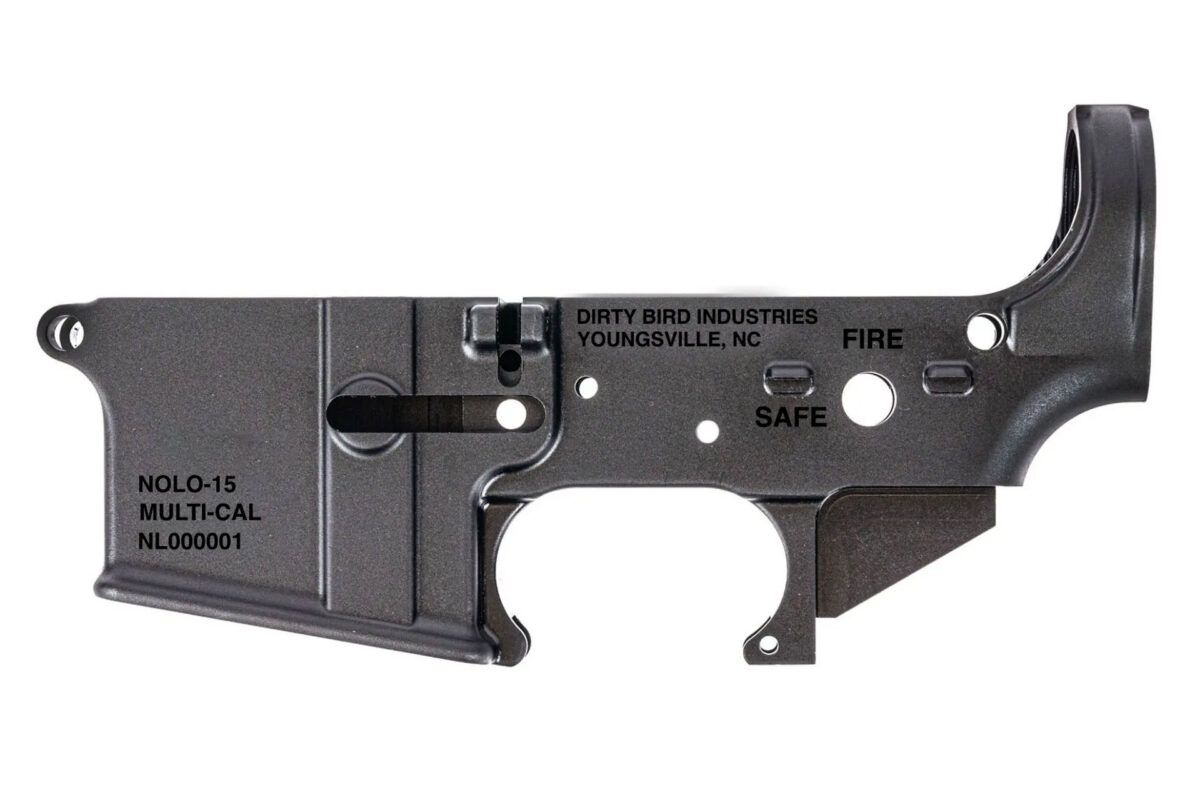
For 2026, most builders are still choosing between three main options: forged aluminum, billet aluminum, and polymer. Each has a place, but they are not equal in strength, cost, weight, parts compatibility, or long-term durability.
1. Forged AR-15 Lower Receiver: Best Overall Value
A forged AR-15 lower receiver is still the standard for most serious builds. Forged lowers are usually made from 7075-T6 aluminum, which is strong, lightweight, and proven across hard-use rifles. The forging process compresses the aluminum under pressure, creating a dense, durable receiver that can withstand years of regular use.
For most buyers, this is the safest choice. A forged lower is usually more affordable than a billet lower, stronger than most polymer options, and compatible with standard mil-spec AR-15 parts. If you want a dependable lower for range use, home defense, training, or a general-purpose rifle, forged is hard to beat.
It is also the best route if you are shopping for a discount AR 15 lower receiver or the cheapest AR 15 lower receiver that still makes sense for a quality build.
2. Billet AR-15 Lower Receiver: Best for Premium Builds
Billet lowers are machined from a solid block of aluminum. This allows manufacturers to add unique styling, flared magazine wells, integrated trigger guards, tension screws, enhanced contours, and ambidextrous controls.
A billet lower is a great choice if you want a more refined rifle with upgraded features right out of the box. Many premium billet lowers look better, feel more custom, and offer useful upgrades that are not always found on basic forged receivers.
The tradeoff is cost. Billet lowers are usually more expensive and not inherently stronger or more accurate than forged lowers. Their main advantage is design flexibility, not magical performance.
3. Ambidextrous AR-15 Lower Receiver: Best for Modern Controls
Ambidextrous lowers have become more popular in 2026 because they make the AR-15 easier to run from either side. Depending on the design, an ambidextrous lower may include a right-side bolt release, ambi magazine release, ambi safety compatibility, or enhanced control placement.
This is especially useful for left-handed shooters, competition shooters, and anyone who wants faster manipulation during reloads or malfunction clearing. For a premium defensive or competition rifle, an ambidextrous AR-15 lower receiver can be worth the extra cost.
Just make sure the lower is compatible with the parts you plan to use. Some ambi designs use proprietary components, while others work with standard lower parts kits.
4. Complete AR-15 Lower Receiver Assembly: Best for Convenience
An AR-15 complete lower receiver assembly is ideal if you want to skip the parts-matching process. These lowers usually come assembled with the trigger, safety, grip, buffer tube, stock or brace setup, and internal lower parts already installed.
For newer builders, buying a complete AR-15 lower receiver assembly can save time and reduce mistakes. It also makes it easier to pair with a complete upper receiver and finish a rifle without having to source every small spring, pin, and detent separately.
A complete lower may cost more than a stripped lower, but the convenience can be worth it, especially if the installed components are parts you would have purchased anyway.
5. Polymer AR-15 Lower Receiver: Best for Lightweight Budget Builds
Polymer lowers attract attention because they are lightweight and often inexpensive. For casual range builds, lightweight rifles, or experimental projects, they can be appealing. However, polymer does not have the same long-term reputation as forged 7075-T6 aluminum.
The biggest concern is durability around stress points such as the buffer tower, takedown pin areas, and fire control pocket. Some reinforced polymer lowers are better than older designs, but for a serious rifle, most builders still prefer forged or billet aluminum.
If you are choosing polymer, use it for the right application. It may be fine for a lightweight recreational build, but it would not be my first choice for a hard-use defensive rifle.
AR-15 Lower Receiver Comparison Chart
| Lower Receiver Type | Best For | Main Advantages | Tradeoffs | Best Buyer Fit |
|---|---|---|---|---|
| Forged Aluminum Lower | Most AR-15 builds, home defense, training, hunting, and budget-friendly rifles | Strong, proven, lightweight, affordable, widely compatible with mil-spec parts | Usually less flashy and may not include premium features like ambi controls or flared magwells | The builder who wants the best mix of price, strength, and reliability |
| Billet Aluminum Lower | Premium builds, custom rifles, competition setups, and feature-rich ARs | Clean machining, unique styling, flared magwells, integrated trigger guards, and possible ambidextrous controls | Usually costs more and is not automatically stronger or more accurate than forged | The builder who wants upgraded features, custom looks, and a more refined lower |
| Polymer Lower | Lightweight range builds, budget projects, and casual-use rifles | Lightweight, affordable, corrosion-resistant, and easy to handle | Not as proven as aluminum for hard use; stress points can be a concern depending on design | The builder focused on saving weight or cost for a recreational rifle |
| Complete Lower Assembly | First-time builders or anyone who wants a faster build process | Comes assembled with trigger, grip, buffer system, stock or brace setup, and internal parts | Less customization upfront compared to choosing every part individually | The buyer who wants a simple path to finishing an AR-15 build |
| Ambidextrous Lower | Competition, defensive rifles, left-handed shooters, and premium builds | Faster controls, easier manipulation from either side, modern feature set | Higher cost, and some designs may use proprietary parts | The shooter who wants upgraded handling and faster control access |
What about 80% and 90% AR-15 Lower Receivers?
Searches for an 80 AR 15 lower receiver or 90 percent AR-15 lower receiver are still common, but laws and regulations can vary by state and change over time. Always follow federal, state, and local laws before buying, transferring, machining, or assembling any lower receiver. For most shoppers, buying a serialized AR-15 lower receiver for sale from a reputable retailer is the simplest and most straightforward option.
Dimensions of an AR-15 Lower Receiver
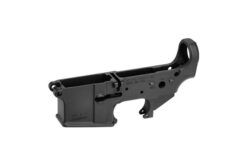
The dimensions of AR-15 lower receiver components are based around the AR-15 pattern, but tolerances can vary slightly by manufacturer. This is why buying from a reputable brand matters. Properly made lowers should accept standard AR-15 triggers, grips, receiver extensions, magazines, selectors, and takedown pins without fitting issues.

FAQ: AR-15 Lower Receivers
AR-15 lower receivers can bring up a lot of questions, especially when comparing forged, billet, polymer, complete, and ambidextrous options. The answers below cover the most common questions buyers have before choosing the right lower for their next build.
Forged lowers offer the best mix of strength, cost, and reliability. Billet lowers offer more design features, while polymer lowers mainly save weight and cost.
No. The lower receiver has very little direct effect on mechanical accuracy. Barrel quality, ammunition, optics, trigger, and upper receiver fit matter much more.
Usually only a few ounces compared to aluminum. That can help on an ultralight build, but it is not always worth the durability tradeoff.
Forged aluminum lowers are strong, consistent, cost-effective, and proven under hard use. That makes them ideal for duty-style rifles.
The lower does not contain chamber pressure the way the barrel and bolt do, but recoil impulse and long-term stress still matter. For higher-use builds, aluminum is usually the safer choice.
Not always. Some billet lowers are highly compatible, while others use proprietary features. Check compatibility before buying.
Look for clean machining, a flared magwell, tight upper fit, quality anodizing, ambidextrous controls, a built-in trigger guard, and proven parts compatibility.
Yes. For most builders, a forged lower remains the best balance of price, strength, availability, and compatibility.
A quality aluminum lower can last for many years and thousands of rounds when properly maintained and paired with compatible parts.
Competition shooters often prefer billet or ambidextrous lowers. Hunters usually benefit from forged lowers because they keep cost and weight reasonable. For home defense, a quality forged or ambidextrous aluminum lower is the best choice.
Final Thoughts
For most builders in 2026, a forged AR-15 lower receiver is still the best all-around choice. It is strong, affordable, widely compatible, and proven. Billet lowers are excellent for premium builds with upgraded features, while polymer lowers are best reserved for lightweight or budget-focused projects.
Whether you are shopping for a stripped lower, a complete lower receiver assembly, or a premium ambidextrous setup, start with quality parts from a trusted source. Browse AR-15 lower receivers for sale today at AR15Discounts.com and find the right foundation for your next build.
For additional support, check out our sister site at www.dirtybirdusa.com.