
AR-15 Accessories, Vertical Foregrips
Vertical Forward Grip for AR-15: What It Is & When to Use
Feb
Table of contents
- Vertical Forward Grip for AR-15: What It Is, How It Works, and When You Need One
- What Is a Vertical Forward Grip (VFG) for an AR-15?
- What Does a Vertical Forward Grip Do? (Control, Comfort, Heat Management)
- Vertical Grip Mounting: M-LOK vs Picatinny (and Handguard Fit)
- When You Actually Need a Vertical Grip (and When You Don’t)
- How to Choose the Best Vertical Forward Grip for Your Build
- Vertical Forward Grip Legality: Rifles vs Pistols (High-Level Overview)
- Vertical Grip vs Angled Foregrip vs Hand Stop (Quick Comparison)
- FAQs about Vertical Forward Grips

TL;DR- Too Long Didn’t Read
The blog discusses vertical forward grips (VFGs) for AR-15 firearms, explaining their uses, benefits, and how to choose the right one for your setup. It covers the ergonomics of VFGs and addresses their legality under varying firearm configurations and laws.
- VFGs enhance control, comfort, and hand placement on AR-15s.
- Key benefits include improved indexing, leverage, comfort, and heat management.
- Compatibility depends on mount types like M-LOK or Picatinny.
- Usefulness is dictated by shooting style and specific user needs.
- Choosing a VFG involves considering hand size, texture, and desired mount type.
- AR-15 pistols may face legal scrutiny when using VFGs.
Vertical Forward Grip for AR-15: What It Is, How It Works, and When You Need One
A vertical forward grip (aka vertical grip or AR-15 vertical grip) is one of those accessories that looks simple—until you start shopping and realize there are a dozen shapes, lengths, mounting styles, and “best practices” floating around.
Here’s the practical truth: a VFG can make an AR-15 feel more controllable, more comfortable, and easier to manage during longer range sessions—but only if it matches your handguard, your grip style, and the way you actually shoot. Some shooters use a vertical forward grip for an aggressive “pull” into the shoulder. Others treat it more like a reference point or mini hand stop. And for anyone running lights, switches, or slimmer handguards, a VFG can be as much about consistent hand placement as it is about recoil control.
In this guide, we’ll break down what a vertical forward grip for AR-15 setups really does, how it “works” from an ergonomics standpoint, when it makes sense (and when it doesn’t), and what to know before you buy an M-LOK vertical grip or Picatinny model. We’ll also cover legality at a high level—because that question matters, especially for pistol configurations.
What Is a Vertical Forward Grip (VFG) for an AR-15?
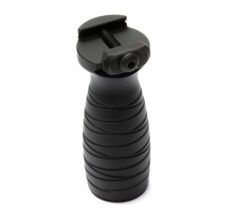
A vertical forward grip is a grip surface mounted to the front portion of an AR-15’s handguard (the support-hand area). Unlike the pistol grip at the rear of the rifle, this one is meant to give your support hand a more vertical purchase point—either to grasp fully or to index against.
Most VFGs fall into a few common styles:
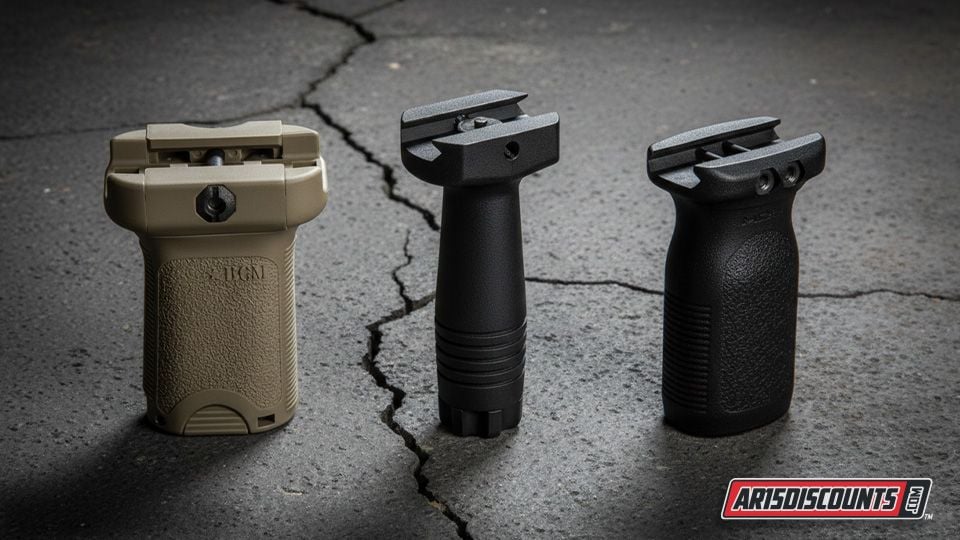
- Full-size vertical grips: more length to wrap a full hand around—often chosen for comfort, leverage, or gloved use.
- Stubby/compact grips: shorter grips designed for a modern “thumb-forward” hold, where the grip is used more as a stop than a handle.
- Hybrid grips: shapes that split the difference (often slightly angled or contoured), giving you multiple ways to drive the gun.
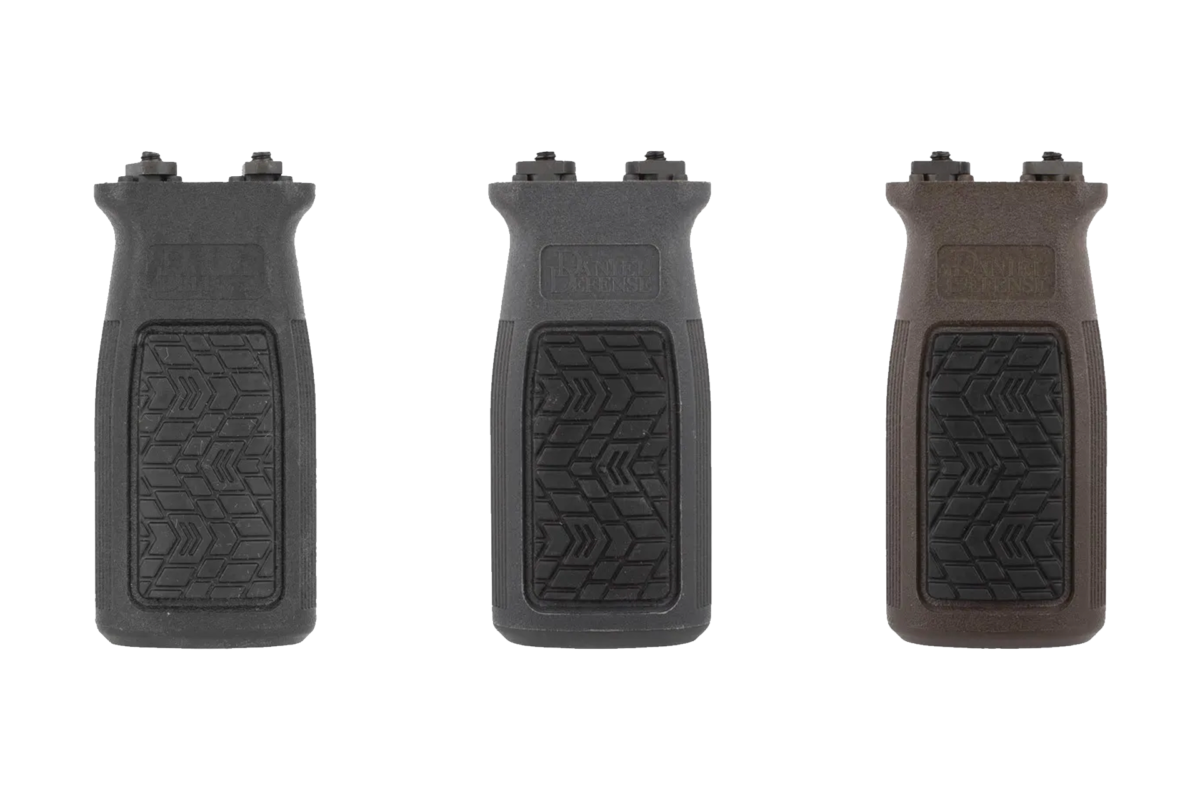
You’ll also see VFGs described by mount type, especially AR-15 forward grip M-LOK models or Picatinny rail models. M-LOK grips tend to keep things lighter and lower-profile, while Picatinny options are widely compatible with quad rails and top- and bottom-rail sections.
And yes—brand matters. A B5 vertical grip, BCM vertical grip, or Magpul vertical grip will each feel different in the hand because of differences in angle, thickness, texture, and overall length. The “best” option is rarely universal—it’s the one that fits your hand size, rail space, and shooting style.
What Does a Vertical Forward Grip Do? (Control, Comfort, Heat Management)
A vertical forward grip primarily helps with repeatable support-hand placement and better leverage—but the benefits depend on how you run the gun.
1) More consistent indexing
On slick or slim handguards, it’s easy for your support hand to drift—especially when you’re moving between positions or shooting faster strings. A VFG can act like a “home base” that your hand finds the same way every time, which can help your rifle feel more predictable.
2) Better leverage for “driving” the rifle
Many shooters use a VFG to create forward-and-back tension: pushing slightly forward with the support hand while pulling the rifle into the shoulder. That leverage can make the rifle feel steadier during transitions and follow-up shots—especially on shorter, lighter setups where the front end moves quickly.
3) Comfort and fatigue reduction
Even if you’re not chasing speed, a vertical grip can reduce wrist strain for some shooters by changing the angle of the support hand. Over longer sessions, that matters.
4) Heat management
This one is underrated. Handguards can get uncomfortably hot during sustained firing. A VFG gives you another way to keep your hand off the hottest surfaces (or at least reduce contact).
Bottom line: a vertical forward grip is less about “tactics” and more about ergonomics—how you control the rifle, manage comfort, and keep your setup consistent.
Vertical Grip Mounting: M-LOK vs Picatinny (and Handguard Fit)
Before you pick a grip, match it to your rail interface—because the wrong mount type is the fastest way to turn “quick upgrade” into “wrong parts bin.”
M-LOK vertical grip
If you’re running an M-LOK handguard (common on modern ARs), an M-LOK vertical grip typically bolts directly into M-LOK slots. Benefits usually include:
- cleaner profile (no extra rail section needed)
- lower weight and fewer snag points
- flexible positioning (where your slot spacing allows)
Picatinny vertical grip
If you have a quad rail or a Picatinny section on the bottom of your handguard, Picatinny grips clamp onto the rail. Benefits:
- broad compatibility across many handguards
- easy swap-on/swap-off with rail standardization
- common on legacy setups and some duty builds
Are vertical forward grips compatible with all AR-15 handguards?
Not automatically. Compatibility comes down to:
- mount type (M-LOK vs Picatinny)
- available space (some short-handguards get crowded fast)
- clearance for lights, switches, sling mounts, bipods, etc.
Also, some “vertical grips” are actually better treated as hand stops or index points, especially on very short rails. If your goal is a consistent reference point rather than a full-hand grip, don’t overlook compact options in the same shopping category.
Safety note: Installation should always follow the manufacturer’s instructions and proper torque guidance. If you’re unsure, a qualified gunsmith can help.
When You Actually Need a Vertical Grip (and When You Don’t)
A VFG is most useful when it solves a specific problem. Here are the most common “yes, this makes sense” scenarios:
You want better control during faster shooting or transitions
If you’re shooting drills, competition, or just practicing quicker follow-ups, a vertical grip can give your support hand a more repeatable leverage point.
Your setup gets hot or uncomfortable over longer sessions
If you’re doing extended range time, a VFG can reduce discomfort from hot rails and reduce fatigue from gripping a thin handguard the same way for hours.
You run lights/switches and need consistent hand placement
When a weapon light and pressure pad enter the picture, consistency matters. A vertical grip can help your hand land where you need it—especially if you’re trying to avoid crowding your rail space.
You’re building around comfort (hand size, gloves, wrist angle)
Some shooters simply find a vertical grip more natural—particularly for larger hands or when shooting with gloves.
When you might skip it:
- You prefer a minimalist front end and already love your current grip style
- You mostly shoot from supported positions where a hand stop or bare rail works fine
- You want maximum rail space for other accessories, and a grip would crowd things
The real test is simple: if your support hand position is already consistent and comfortable, a VFG might be optional. If it isn’t, a good grip can be a surprisingly meaningful upgrade.
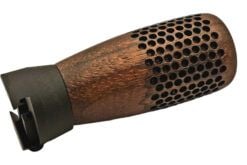
How to Choose the Best Vertical Forward Grip for Your Build
There’s no single “best,” but there is a best match for your handguard and use case. Here’s how to narrow it down without overthinking it.
Pick your mount first
- M-LOK vertical grip if you run an M-LOK handguard and want a clean, modern setup
- Picatinny, if you already have a bottom rail or a quad rail
Decide: full grip vs “stubby.”
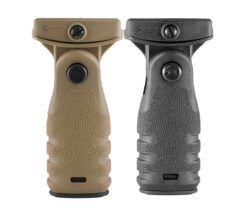
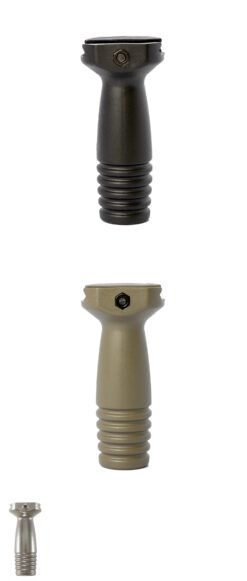
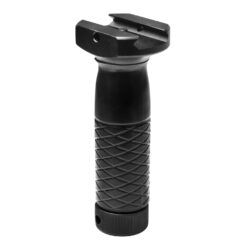
- Choose full-size if you want maximum comfort, more surface area, or a true vertical grip.
- Choose stubby if you run a thumb-forward hold and mainly want an index point and leverage without extra bulk.
Consider texture and shape
Grips vary a lot in:
- aggressiveness of texture
- thickness (important for hand size)
- contour (some “vertical” grips are slightly angled by design)
Brand callouts shoppers search for
If you’re comparing common options:
- BCM vertical grip styles are often chosen for compact, modern control-oriented setups.
- Magpul vertical grip / Magpul vertical front grip options are known for durability and broad compatibility in multiple mount standards.
- B5 vertical grip options are popular for comfort-focused builds with classic styling.
If you’re unsure, start with a compact vertical grip or a vertical grip/hand stop hybrid—both tend to work well across a range of shooting styles.
Vertical Forward Grip Legality: Rifles vs Pistols (High-Level Overview)
Important: This is not legal advice. Firearm laws can be nuanced and vary by jurisdiction.
Is a vertical forward grip legal on an AR-15 rifle?
Generally, adding a vertical foregrip to a rifle configuration is widely treated as lawful under federal law, assuming the firearm is otherwise compliant (barrel length, overall configuration, and state laws). Always check your state/local rules.
Can I install a vertical forward grip on an AR-15 pistol?
This is where things get complicated. The ATF has long taken the position that adding a vertical fore grip to a handgun/pistol can change its classification—because it is no longer designed to be fired with one hand—potentially implicating the National Firearms Act and the “Any Other Weapon” category.
If you’re running an AR-style pistol, do your homework before adding anything that could change classification. When in doubt, consult a qualified firearms attorney or knowledgeable FFL/SOT in your area, and review primary-source ATF materials and the NFA definitions.
Vertical Grip vs Angled Foregrip vs Hand Stop (Quick Comparison)
| Option | Best For | What it feels like | Why you’d pick it |
|---|---|---|---|
| Vertical forward grip | Control + repeatable index | More leverage, more “pull” potential | Great for transitions, comfort, heat management |
| Angled foregrip (AFG) | Thumb-forward holds | More natural wrist angle for many | Often feels “fast” and low-profile |
| Hand stop | Minimalist builds | A hard reference point | Why did you pick it |
If you’re unsure, a hand stop or compact VFG is often the safest “try-it” choice—because it doesn’t demand one specific grip style to feel useful.
FAQs about Vertical Forward Grips
A vertical forward grip is a front-mounted grip attached to the handguard that gives your support hand a vertical purchase point for consistent placement, leverage, and comfort.
It can improve control during transitions and follow-up shots, help maintain consistent hand placement, reduce fatigue, and help manage heat from the handguard.
Under federal law, it is generally treated as lawful for rifle configurations, but state and local rules may differ. Always verifythe laws where you live.
ATF guidance has historically indicated that adding a vertical foregrip to a handgun/pistol can change classification and may implicate NFA “Any Other Weapon” considerations. Review ATF materials and seek qualified legal guidance.
A vertical grip is designed for a more vertical support-hand contact and leverage. An angled foregrip supports a thumb-forward hold with an angled wrist position and often a lower profile.
Yes—you need the grip to match your mounting interface (direct M-LOK attachment vs Picatinny rail clamp). Some setups use a Picatinny section on an M-LOK rail.
Compatibility depends on your handguard interface (M-LOK vs. Picatinny), available rail/slot space, and clearance with other accessories such as lights and sling mounts.
Pick based on mount type, your grip style (full vs stubby), comfort/texture, and how much rail space you have. Many shooters narrow it down quickly by choosing between a compact VFG and a full-size model from trusted brands like BCM, Magpul, or B5.
Upgrade Control Where Your Support Hand Matters Most
A vertical forward grip for AR-15 builds isn’t a must-have—but when it matches your rail and your grip style, it can make the rifle feel noticeably more consistent. If you’re chasing better support-hand indexing, smoother transitions, improved comfort during longer range days, or simply a more confident “drive” on the gun, a VFG is one of the easiest front-end upgrades you can make.
The key is to pick the right format for your setup: stubby vs. full-size, M-LOK vertical grip vs. Picatinny, and a shape/texture that feels natural in your hand. If you’re not sure where to start, compact vertical grips and hand stop hybrids are often the safest “try-it” options because they work with a wide range of shooting styles.
Buy vertical forward grips at ar15discounts.com and dial in your front-end control with options from popular makers like BCM, Magpul, and B5—plus hand stops and mounting solutions to match your handguard.
For additional resources, check out our sister site at www.dirtybirdusa.com.