
AR-15 Accessories, AR-15 Parts, Vertical Foregrips
Stubby vs Full-Size vs Handstop Vertical Foregrip: Which Is Right for Your AR-15 Build?
Apr
Table of contents
- What Is a Foregrip and Why Add One to Your AR-15?
- Full-Size Vertical Foregrips: Maximum Control and Leverage
- Stubby Vertical Grips: Compact Control Without Excess Bulk
- Handstops: Low-Profile Design for Increased Mobility and Reduced Snag Risk
- Hybrid Options: Splitting the Difference Between Handstop and Vertical Grip
- Premium Compact Vertical: The SLR Rifleworks SLR Vertical Foregrip
- Key Trade-Offs: Control Versus Mobility
- Which Foregrip Style Fits Your AR-15 Build Best?
- Choosing Based on Hand Size and Shooting Style
- Conclusion
When building out your AR-15, one of the most important decisions involves selecting the right foregrip. The foregrip you choose directly influences how you control the rifle, your comfort during extended shooting sessions, and the overall maneuverability of the build. Shooters typically consider three main categories: full-size vertical foregrips, stubby or short vertical grips, and low-profile handstops. Each style offers unique benefits depending on the rifle’s purpose, whether for home defense, range work, or tactical applications.

TL;DR- Too Long Didn’t Read
Choosing the right foregrip for your AR-15 is a critical decision that affects control, comfort, and maneuverability. Various styles offer distinct advantages to suit different shooting needs and build objectives.
- Foregrip Styles: Full-size vertical grips offer maximum control; stubby grips provide compact control; handstops enhance mobility with minimal bulk.
- Full-Size Grips: Prioritize stability during high-volume shooting, but may increase bulk and snag potential.
- Stubby Grips: Offer balance and a natural wrist position with reduced profile and weight.
- Handstops: Designed for minimalism and agility, ideal for close-quarters or versatile builds.
- Hybrids: Combine benefits of handstops and vertical grips for balanced control and reduced extension.
- Selection Criteria: Consider rifle type, hand size, and shooting style when choosing a foregrip.
What Is a Foregrip and Why Add One to Your AR-15?
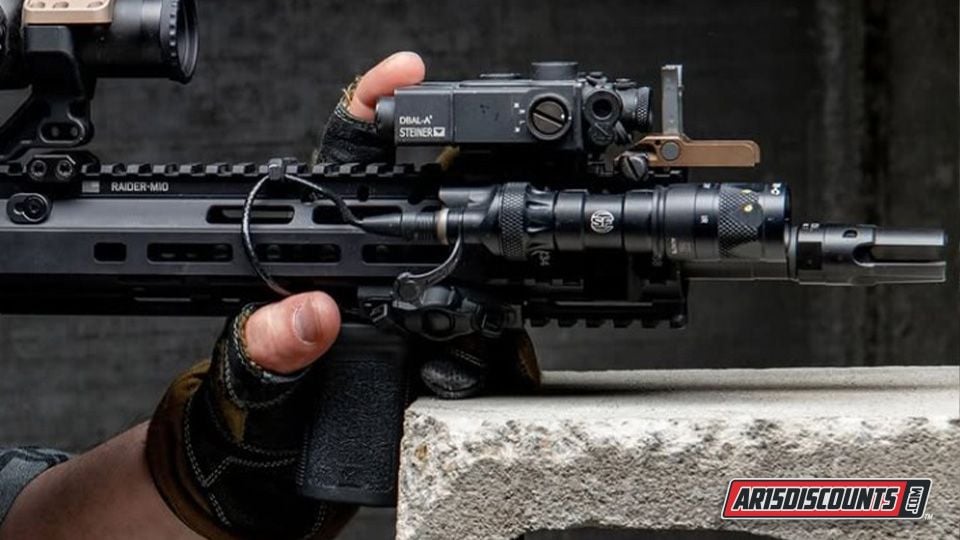
A foregrip attaches to the handguard of your AR-15 and provides a dedicated point for your support hand. Without one, many shooters rely solely on gripping the handguard, which can lead to inconsistent hand placement, especially under stress or during rapid fire. Adding a foregrip improves consistency, helps manage recoil, and can protect your hand from heat buildup on the rail after sustained shooting. Modern foregrips come in various profiles to suit different shooting styles and build goals.
Full-Size Vertical Foregrips: Maximum Control and Leverage
Full-size vertical foregrips extend downward from the handguard, allowing your support hand to wrap fully around a dedicated handle. This design creates a repeatable grip point that many shooters find intuitive. The larger surface area offers excellent leverage for pulling the rifle firmly into the shoulder pocket. It also helps stabilize the muzzle during strings of fire and target transitions.
Full-size grips often provide better heat management because they keep your hand away from the handguard itself. They remain popular for builds focused on maximum control during high-volume shooting or dynamic drills.
These grips shine in scenarios where raw stability matters most. However, their added length and bulk can increase snag potential on gear or in tight spaces and may add noticeable weight compared with minimalist options.

Stubby Vertical Grips: Compact Control Without Excess Bulk
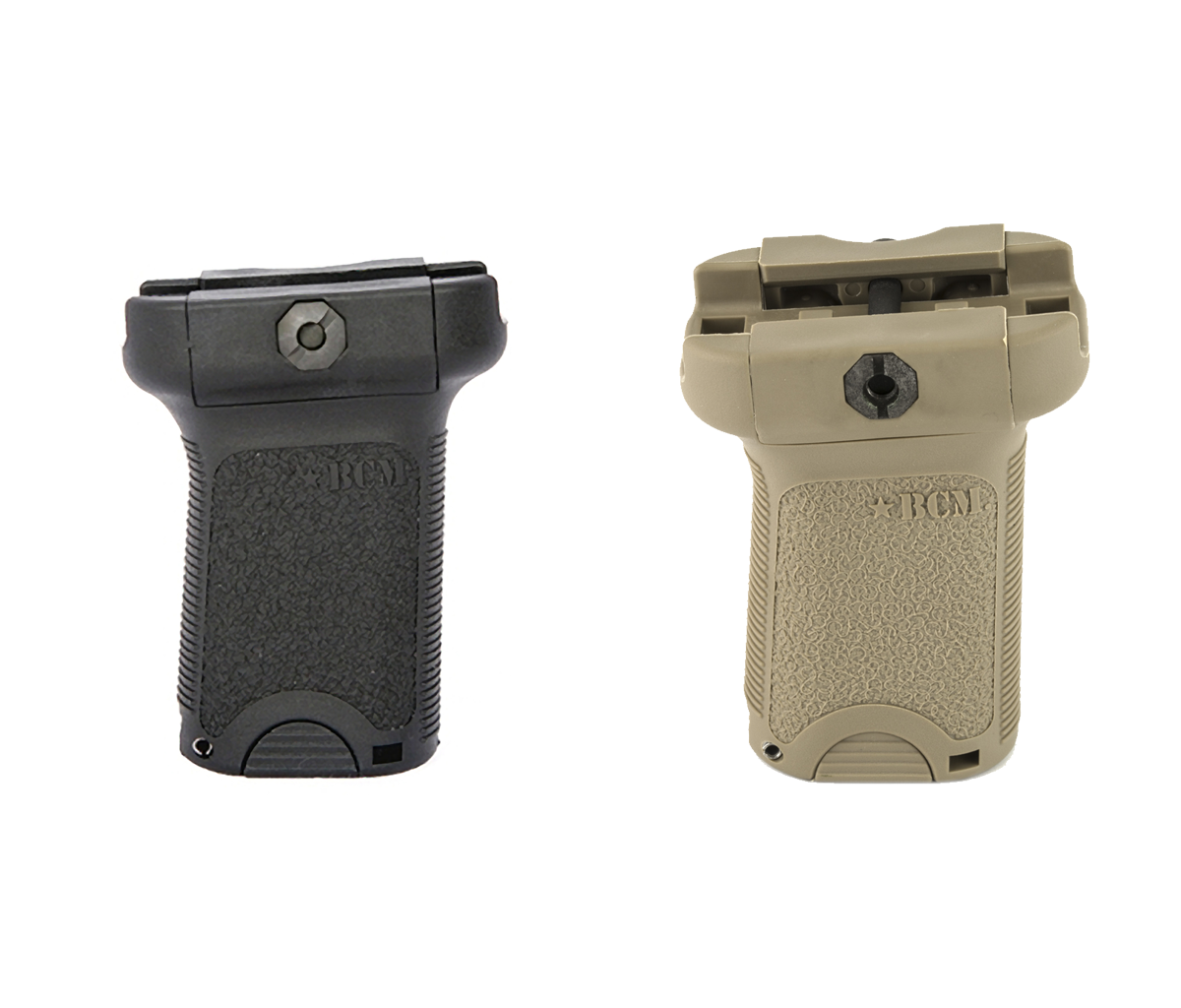
Stubby grips deliver many of the control benefits of full-size vertical foregrips but in a much shorter package. They allow a vertical or semi-vertical hold while keeping the overall profile lower. This reduced height improves balance on the rifle and minimizes interference during movement. Stubby options often feature a slight forward angle that promotes a natural wrist position and increases forearm rigidity when driving the rifle rearward.
The BCM Gunfighter Vertical Grip Short stands as a top choice in this category. Manufactured from high-quality impact-resistant polymers, it features a low-profile design that prioritizes mobility while reducing the chance of snagging. Its forward angle creates a more natural wrist position and enhances forearm rigidity. Flat sides with aggressive texture deliver superior yaw control during both firing and weapon manipulations. The grip requires three Picatinny slots for mounting and uses spring-loaded clamps for quick, tool-less installation and removal. Internal storage space is accessible via a convenient hinge door instead of a plug that could be lost. This combination of features makes the BCM Gunfighter Short an excellent middle-ground option for shooters who want enhanced control without the full extension of a traditional vertical grip.
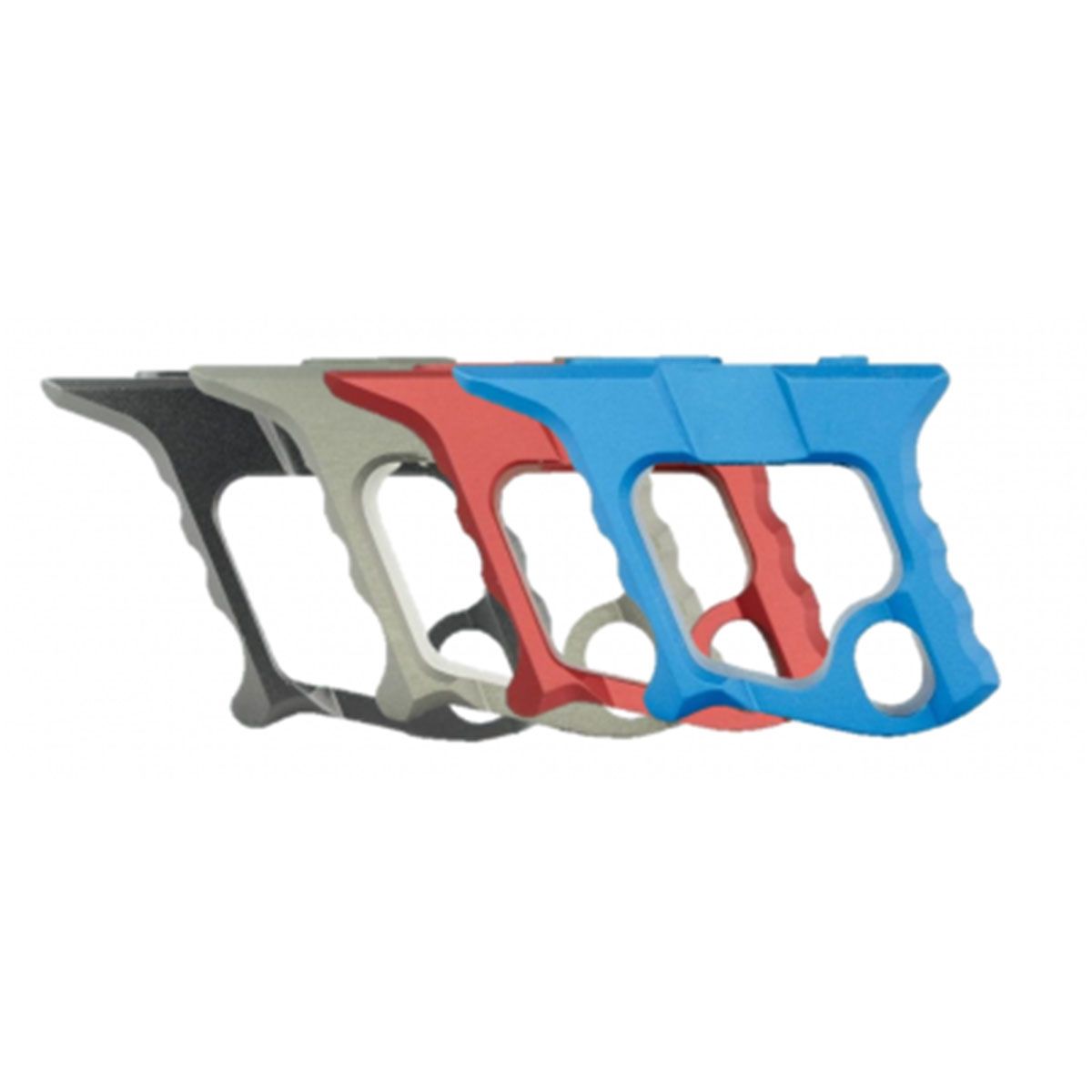
Another standout stubby model is the Tyrant Designs Halo Mini M-LOK Vertical Foregrip. Crafted from aluminum with a bead-blasted Type III hardcoat finish and skeletonized construction, this grip weighs only 2.5 ounces. A slight angle improves ergonomics, while a lower lip extension allows shooters to use a traditional hold or tuck the pinky behind for added comfort. Chamfered edges provide a smooth feel, and aggressive side knurling ensures excellent yaw control. Chamfered holes even permit finger placement inside the grip if desired. The compact dimensions keep the AR-15 more maneuverable and less prone to snagging, making it ideal for lightweight builds or short-barreled rifles.
Handstops: Low-Profile Design for Increased Mobility and Reduced Snag Risk
Handstops take a minimalist approach to foregrip functionality. These small protrusions serve as an index point or physical barrier for your support hand. They prevent the hand from sliding too far forward toward the muzzle or off the front of the handguard. This design encourages a strong c-clamp grip directly on the handguard while keeping the rifle sleek and unobstructed. Their low-profile nature delivers increased mobility and significantly reduces the chance of snagging on clothing, gear, or environmental obstacles during dynamic movement.

Handstops excel on modern builds that prioritize speed, lightness, and versatility. They add minimal weight and maintain a clean profile that many shooters prefer for close-quarters or home defense setups. Because they do not extend downward like vertical grips, they often avoid certain legal considerations in restrictive areas and work well on short-barreled rifles or pistol configurations.
The Arisaka Defense Handstop offers a premium machined solution. CNC machined from 6061-T651 aluminum with a MIL-A-8625 Type III hard coat anodized finish, it mounts to either Picatinny or M-LOK rails. The design fits a wide variety of hand sizes without feeling oversized. Shooters use it to pull the rifle solidly into the shoulder for improved recoil mitigation and control. It also functions effectively as a barricade stop. The reversible mounting option lets you place it at the front of the handguard to prevent the support hand from slipping off during aggressive maneuvers.
The Arisaka Defense Finger Stop provides another versatile aluminum option. Machined with rounded and dehorned edges for comfort, this piece positions naturally between the middle and index fingers when placed far forward on the rail. Its wide profile works as either a rear or forward handstop, especially on short-barreled rifles. It enhances consistency in hand placement and can be braced against barricades for more stable shooting positions.

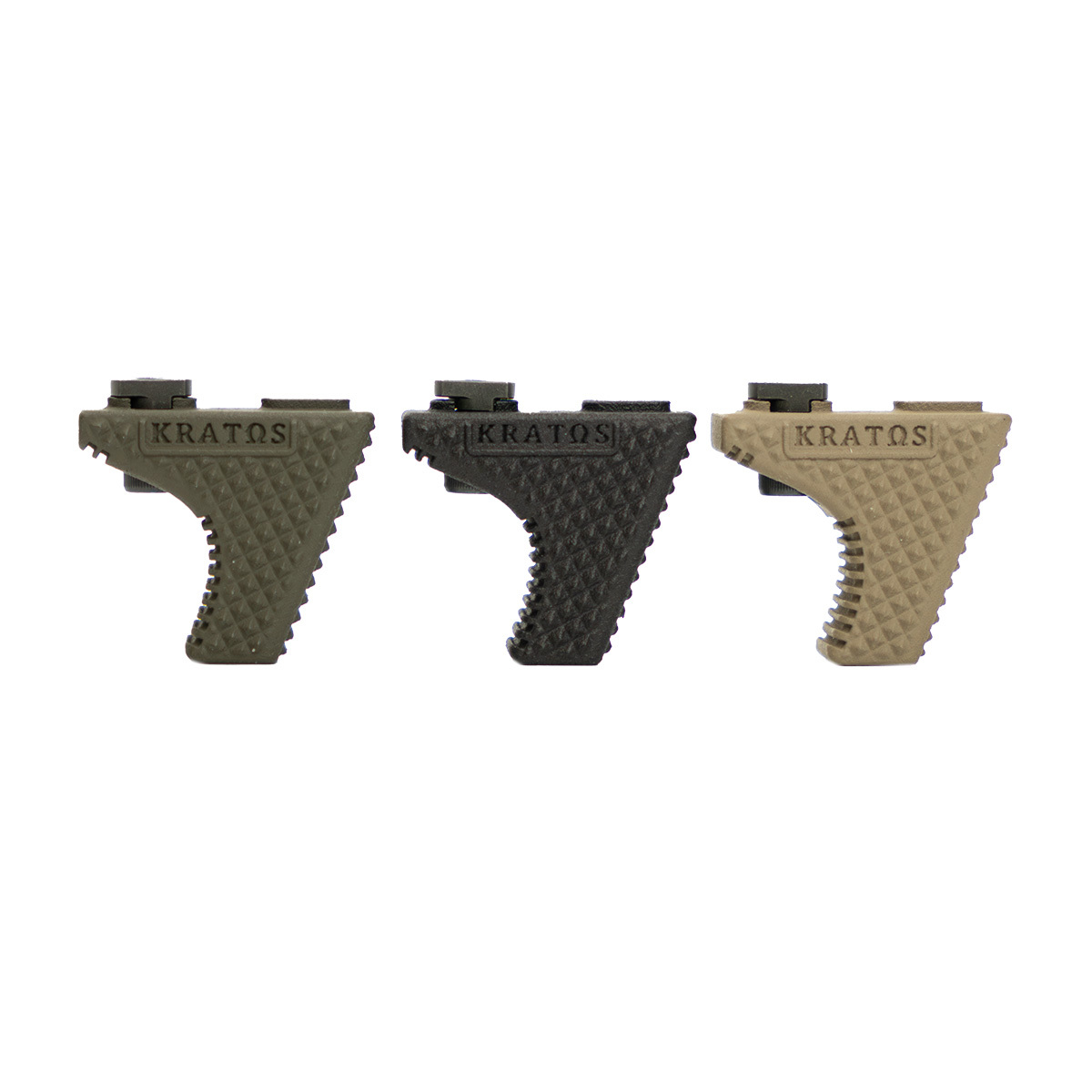
For an ultra-light polymer choice, the Kratos Design Group Low Profile Handstop weighs only 0.5 ounces and occupies a single M-LOK slot. It features deep serrated texturing on the front and textured sides for a solid grip in wet, dry, or gloved conditions. The forward sweep promotes an optimal hand position, and the reversible design offers a slightly less than 90-degree angle on the opposite side. Built-in front and rear barricade stops expand its usefulness for modern shooting techniques.
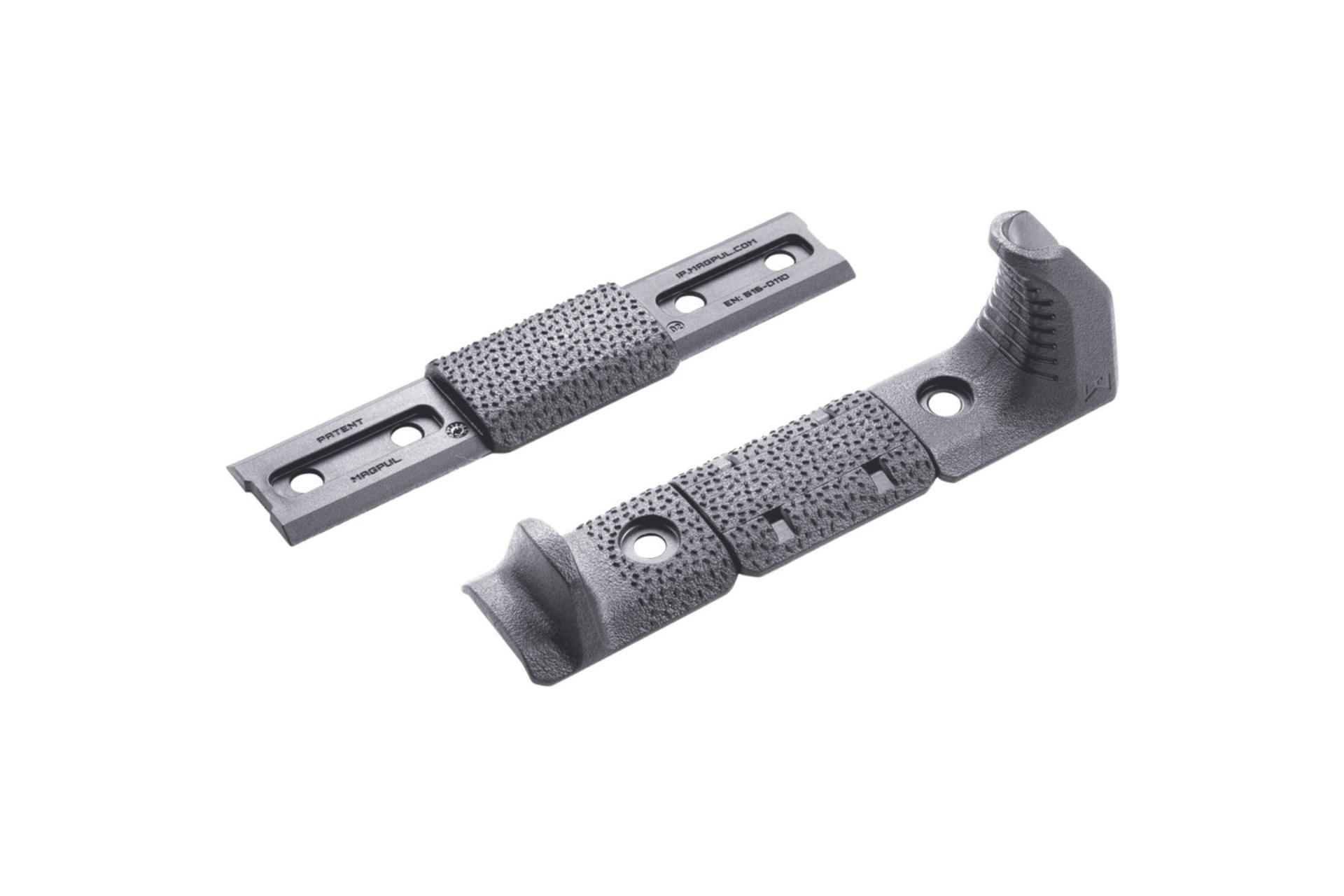
The Magpul M-LOK Hand Stop Kit in black delivers an affordable and complete solution. The kit includes the hand stop, an M-LOK index panel, a Type 2 rail cover, and an adapter for use on both polymer and wider aluminum handguards. At just 0.1 ounces for the stop itself, it serves as a lightweight forward barrier that prevents the support hand from reaching hot areas near the muzzle. Aggressive TSP texture enhances weapons control across various conditions, making this kit a practical choice for builders seeking improved indexing and rail coverage on a budget.
Hybrid Options: Splitting the Difference Between Handstop and Vertical Grip
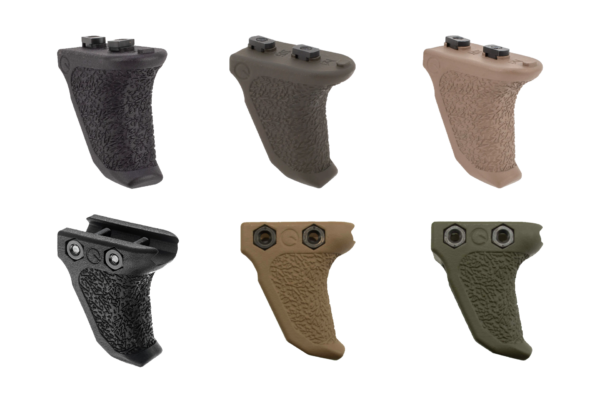
Some accessories combine elements of both styles for balanced performance. The Emissary Development Handbrake Mini on Picatinny rails provides exactly this kind of hybrid solution. Measuring 1.9 inches long by 1.4 inches wide by 1.7 inches high and weighing only one ounce, it is constructed from high-strength nylon polymer with steel hardware. The forward-swept angle promotes a natural hand position while the proprietary texture pattern delivers exceptional traction even when wet or with gloves. An anti-slip bottom ledge secures the support hand and reduces fatigue, and built-in front and rear barricade stops add versatility for shooting from cover or during dynamic drills. Rated for over 300 degrees Fahrenheit, the Handbrake Mini offers improved recoil management and muzzle control without the full downward extension of a traditional vertical grip. This makes it an excellent choice for minimalist or legally sensitive builds while still providing meaningful control benefits. There’s also a larger version we’ve linked to below.
Premium Compact Vertical: The SLR Rifleworks SLR Vertical Foregrip
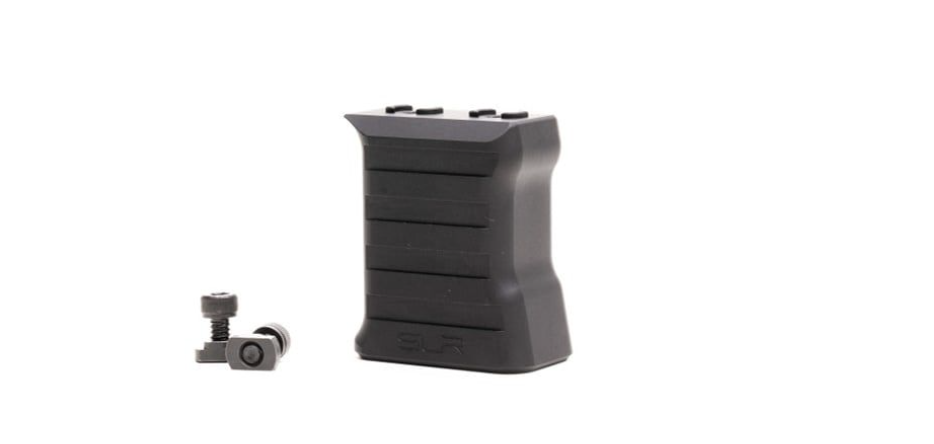
Shooters seeking rigid control in an extremely compact vertical package often choose the SLR Rifleworks SLR Vertical Foregrip in its M-LOK version. Machined from 7075 billet aluminum with a black hardcoat anodize finish, it measures only 1.95 inches long, 0.95 inches wide, and 1.37 inches deep. The entire unit weighs just 1.6 ounces including hardware. Its super rigid double M-LOK bolt and nut setup allows secure mounting using just a single M-LOK slot while maintaining exceptional stability. This design delivers full-size vertical control benefits in a footprint that rivals many stubby grips, making it a strong option for builders who want maximum rigidity without added bulk.
Key Trade-Offs: Control Versus Mobility
Full-size and stubby vertical foregrips generally provide superior leverage for recoil management and muzzle stabilization. The dedicated handle allows the support hand to apply consistent downward and rearward pressure, which many users find translates to faster follow-up shots and better performance during rapid fire. Handstops and hybrids offer less surface area but excel in mobility and snag resistance. Their minimalist profiles keep the rifle lighter and more streamlined, which proves advantageous in close-quarters home defense or when navigating tight environments. Heat management also varies: vertical grips create more distance from the handguard, while handstops may require rail covers or gloves for extended sessions.
Which Foregrip Style Fits Your AR-15 Build Best?
For a standard full-size rifle focused on extended range sessions or maximum control, a full-size vertical foregrip often feels most natural. On short-barreled rifles, SBRs, or pistol builds, stubby grips or handstops usually provide a better balance of control and maneuverability. In close-quarters or home defense setups, the low-profile advantages of a handstop or hybrid like the Emissary Handbrake Mini often take priority to support quick movement and reduced snag risk.
Mounting location plays an important role as well. Most shooters find success placing the foregrip far enough forward for a comfortable arm extension but not so far that it strains the shoulder or wrist. Nearly all modern options mount easily to M-LOK or Picatinny rails, so compatibility rarely limits your choices.
Choosing Based on Hand Size and Shooting Style
Your hand size and preferred grip technique should guide the final selection. Larger hands often appreciate the full wrap of a vertical grip for comfort and power. Shooters who favor a thumb-forward or c-clamp style tend to prefer handstops for their unobtrusive guidance and natural handguard contact. Stubby grips and hybrids offer flexibility for those whose needs fall somewhere in between. Many builders test a couple of options since swapping them on modern rails takes only minutes.
Popular recommendations include BCM and Magpul for reliable full-size and compact vertical grips, Tyrant Designs and BCM for excellent stubby models, Arisaka Defense and Kratos for premium handstops, and Magpul for budget-friendly kits. The SLR Rifleworks and Emissary Development pieces round out the selection with specialized compact and hybrid performance.
Conclusion
Ultimately, the right foregrip enhances consistency and confidence behind your AR-15. Whether you prioritize raw control, lightweight mobility, or a practical blend of both, adding one of these accessories almost always improves your shooting experience. Experiment with a few styles on your specific build to discover what feels best in your hands. At AR15Discounts.com, you will find a wide selection of quality foregrips from trusted brands to complete your perfect AR-15 setup.
A full-size vertical foregrip provides a longer, full-hand grip that allows your support hand to wrap completely around it for maximum leverage and control. A stubby grip is significantly shorter, offering a more compact profile while still delivering a vertical or semi-vertical hold. Stubby grips reduce bulk and snag potential while retaining much of the stability and recoil management benefits of a full-size version.
For SBRs and short-barreled rifles, a stubby grip or handstop is usually the better choice. Their compact size helps maintain balance and maneuverability without adding unnecessary length that could affect handling. Full-size grips can feel oversized on shorter barrels and may increase snag risk in tight spaces.
Adding a vertical foregrip to a pistol-braced or bare AR-15 pistol can reclassify the firearm as a short-barreled rifle under federal law, which requires NFA registration and a tax stamp. If you want to stay in pistol configuration, stick with handstops or angled/hybrid grips that do not provide a vertical forward grip. Always check current ATF guidelines and consult a firearms attorney for your specific setup.
The ideal mounting position is far enough forward on the handguard to allow a comfortable, slightly extended arm position without straining your shoulder or wrist. Most shooters find success placing it where their support hand naturally falls when shouldering the rifle. Experiment with a few positions to find what feels most natural for your stance and reach.
Yes. Almost all modern vertical foregrips, stubby grips, and handstops are designed to mount on either M-LOK or Picatinny rails. Make sure your handguard has the appropriate rail system and that the grip you choose matches it for a secure installation.
A vertical foregrip can improve recoil control and muzzle stability by giving your support hand a dedicated pull point and better leverage. Many shooters notice faster follow-up shots and more consistent muzzle control during rapid fire. However, the real improvement depends on your shooting technique, grip strength, and overall rifle setup.
For close-quarters and home defense builds, a low-profile handstop or hybrid option like the Emissary Handbrake Mini is often preferred. Their minimalist design reduces snag risk, keeps the rifle lightweight and maneuverable, and supports a strong natural c-clamp grip on the handguard.
It depends on your priorities. Stubby grips offer good vertical control in a compact package. Angled foregrips promote a natural wrist position and are popular for c-clamp style shooting. Handstops provide the lowest profile with excellent mobility and minimal snag potential. Many builders prefer handstops or hybrids for modern, lightweight setups.
Popular and highly regarded brands include BCM (especially the Gunfighter Short and Mod 3), Magpul (MVG and AFG), Tyrant Designs (Halo Mini), and SLR Rifleworks for premium compact vertical grips. These brands are known for durable materials, thoughtful ergonomics, and reliable performance.
Larger hands usually benefit from full-size or longer stubby grips that allow a full wrap for comfort and power. Shooters who prefer a thumb-forward or c-clamp grip often do better with handstops or angled/hybrid options that keep more contact with the handguard. Test a few styles if possible, as personal feel and shooting stance play a big role in the final choice.