
Angled Foregrips, AR-10 Parts, AR-15 Parts, AR-15 Upper Receiver, Vertical Foregrips
Common Mistakes When Choosing an Angled Foregrip for your AR-15
Apr
Table of contents
- Do You Even Need a Foregrip?
- Mistake 1: Choosing Based on Trends Instead of Your Use Case
- Mistake 2: Ignoring Hand Size and Ergonomics
- Mistake 3: Bad Mounting Position and Compatibility
- Mistake 4: Expecting Vertical-Grip Performance
- Mistake 5: Overlooking Legal, Weight, and Minimalist Factors
- Mistake 6: Buying Cheap and Skipping Real Testing
- Top Angled Foregrip Recommendations for 2025-2026
- Final Thoughts
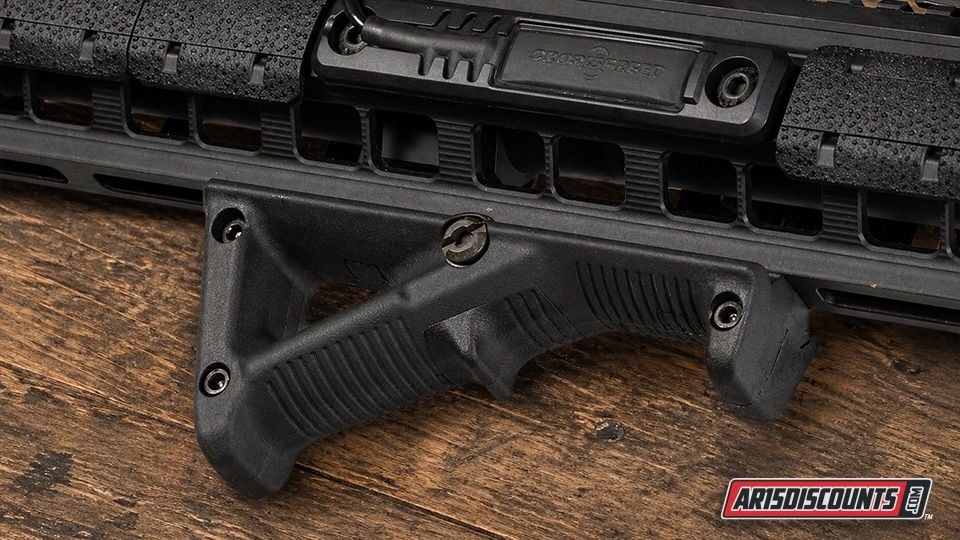
Angled foregrips remain one of the most popular AR-15 upgrades. Their rearward cant, typically 20 to 45 degrees, creates a natural wrist angle, supports a relaxed thumb-over-bore hold, reduces fatigue, and speeds up target transitions. Many shooters notice smoother handling and less muscle fatigue in the forearms compared to a clean rail or vertical grip.
Still, plenty of buyers end up removing their new grip after just a few range sessions. Here are the most common mistakes and how to avoid them, plus an important reality check on whether you need a foregrip at all.

TL;DR- Too Long Didn’t Read
The blog post discusses the popularity and practical considerations of angled foregrips for AR-15 rifles. It aims to guide shooters in making informed decisions to enhance their shooting performance.
- Analyze if you need a foregrip based on your shooting style and environment.
- Avoid choosing grips based on trends; focus on your specific needs.
- Consider hand size and ergonomics for comfort and control.
- Ensure proper mounting position for optimal performance.
- Set realistic expectations for angled grips compared to vertical ones.
- Check legal implications and assess minimalist options before buying.
- Invest in quality grips and thoroughly test them.
Do You Even Need a Foregrip?
Before spending money or adding hardware to your handguard, ask yourself an honest question: Does your current setup already deliver the control, consistency, and comfort you want?
Many modern AR-15s with free-float handguards and proper technique shoot fast and accurately with nothing more than a solid C-clamp or thumb-over-bore grip on the rail itself. The AR platform’s straight-back recoil impulse is mild enough in 5.56 that strong fundamentals often outperform added hardware. A clean rail gives you complete freedom to adjust hand position on the fly during different shooting positions or stages. Adding any grip locks you into one spot and can create new problems if the placement is off.
Reasons to skip a foregrip entirely include prioritizing maximum lightness and snag-free movement for home defense in tight spaces, fast competition movement stages, or brushy hunting terrain. You may already achieve consistent splits and good control without one. You might also want to avoid extra weight, potential legal classification issues in restrictive states, or interference with lights, slings, and other accessories. Many experienced shooters ultimately remove foregrips after refining their grip technique and stance, finding that less hardware keeps the rifle faster and more maneuverable.
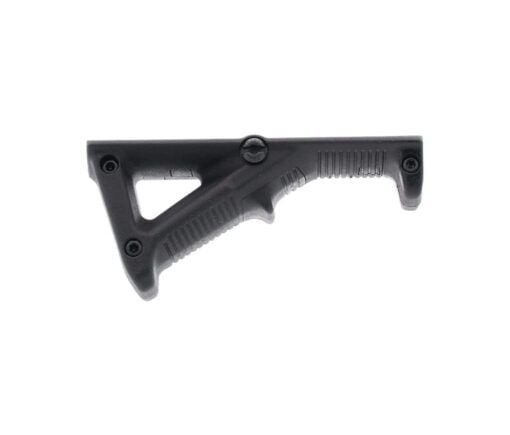
A foregrip or handstop usually helps in situations such as longer training sessions or matches where fatigue sets in, inconsistent hand placement under stress, the need for a repeatable index point, or heavier recoiling setups and barricade work. The bottom line is to test your rifle as-is first. Run drills with and without a temporary grip using tape or a cheap clamp-on if needed. If you are already fast, comfortable, and consistent, save the money. If you notice slippage, wrist strain, or slower transitions, then consider adding an angled option.
Mistake 1: Choosing Based on Trends Instead of Your Use Case
Many shooters buy an angled foregrip simply because they saw it on a popular competitor’s rifle or influencer build. This trend-driven approach often leads to disappointment because the grip that works perfectly for three-gun matches may feel out of place on a home defense rifle or hunting setup.
Angled grips dominate competition environments because they support faster splits, quicker transitions between targets, and reduced fatigue over long stages. For home defense and close-quarters scenarios, a low-profile angled grip or even a vertical option may provide better leverage and fewer snag points around doorways or gear. In hunting applications, the focus shifts toward all-day carry comfort and resistance to brush and branches.
The fix is to clearly define your primary use case before shopping. Think about the environments and shooting styles you actually encounter most often. Test grips during drills that match those real-world needs rather than chasing what looks popular online. This ensures the grip genuinely improves your performance instead of becoming unused weight on the rail.
Mistake 2: Ignoring Hand Size and Ergonomics
A grip that feels great in someone else’s hands can create wrist strain or discomfort in yours. Shooters often overlook how hand size, finger length, and natural wrist angle interact with the grip’s length, angle, and palm swell. A model that is too long or steeply angled can force unnatural wrist deviation, leading to fatigue and reduced control during extended shooting.
Smaller hands frequently work better with compact angled grips that keep the wrist neutral, while larger hands benefit from fuller palm swells that fill the hand more completely. The ideal angled foregrip should promote a natural handshake-style position that aligns the support arm comfortably and reduces ulnar deviation.
The fix is to handle as many grips in person as possible at a local shop or range. Pay close attention to texture, overall length, and how the grip supports your preferred C-clamp or thumb-over-bore technique. Models with finger channels or adjustable angles can offer more forgiveness across different hand sizes.
Mistake 3: Bad Mounting Position and Compatibility
Even the best angled foregrip will underperform if mounted in the wrong spot. Placing it too far forward forces you to stretch your support arm, throwing off balance and increasing fatigue. Mounting it too far back crowds your stance and limits natural movement. Many buyers also run into compatibility headaches when the grip does not mate cleanly with their handguard rail system.
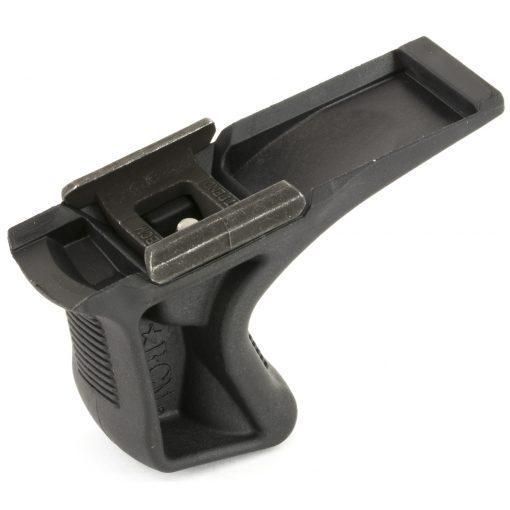
M-LOK has become the standard for its slim profile and secure attachment without needing bulky adapters. Poor compatibility can lead to wobble, loose screws, or interference with other accessories.
The fix is to mount the grip where your support arm stays relaxed and your hand falls naturally. Install all your other accessories first, such as lights and slings, then test the full setup for any clearance issues. Take the rifle to the range and shoot from multiple positions to confirm the placement feels right before tightening everything down permanently.
Mistake 4: Expecting Vertical-Grip Performance
Some shooters expect an angled foregrip to deliver the same strong leverage and recoil control as a traditional vertical grip. When it does not pull the rifle back into the shoulder pocket with the same force, they feel let down. Angled designs focus instead on speed, comfort, and natural wrist alignment. They often work very well as handstops due to their rearward slope, which helps lock the palm in place and prevent forward slippage during movement.
The fix is to set realistic expectations. Most users experience 5 to 10 percent faster target transitions and noticeably less fatigue with a quality angled foregrip. Reserve vertical grips for applications that demand maximum leverage, such as heavy-recoil builds or specific barricade shooting. Understand what an angled grip does best and choose it for those strengths rather than trying to make it something it is not.
Mistake 5: Overlooking Legal, Weight, and Minimalist Factors
Adding any foregrip increases overall weight and can create new snag points on the rifle. In certain states, a vertical grip may push the firearm into a different legal classification, while angled versions often remain more compliant. Shooters focused on lightweight or featureless builds sometimes add a full grip unnecessarily when a minimalist solution would suffice.
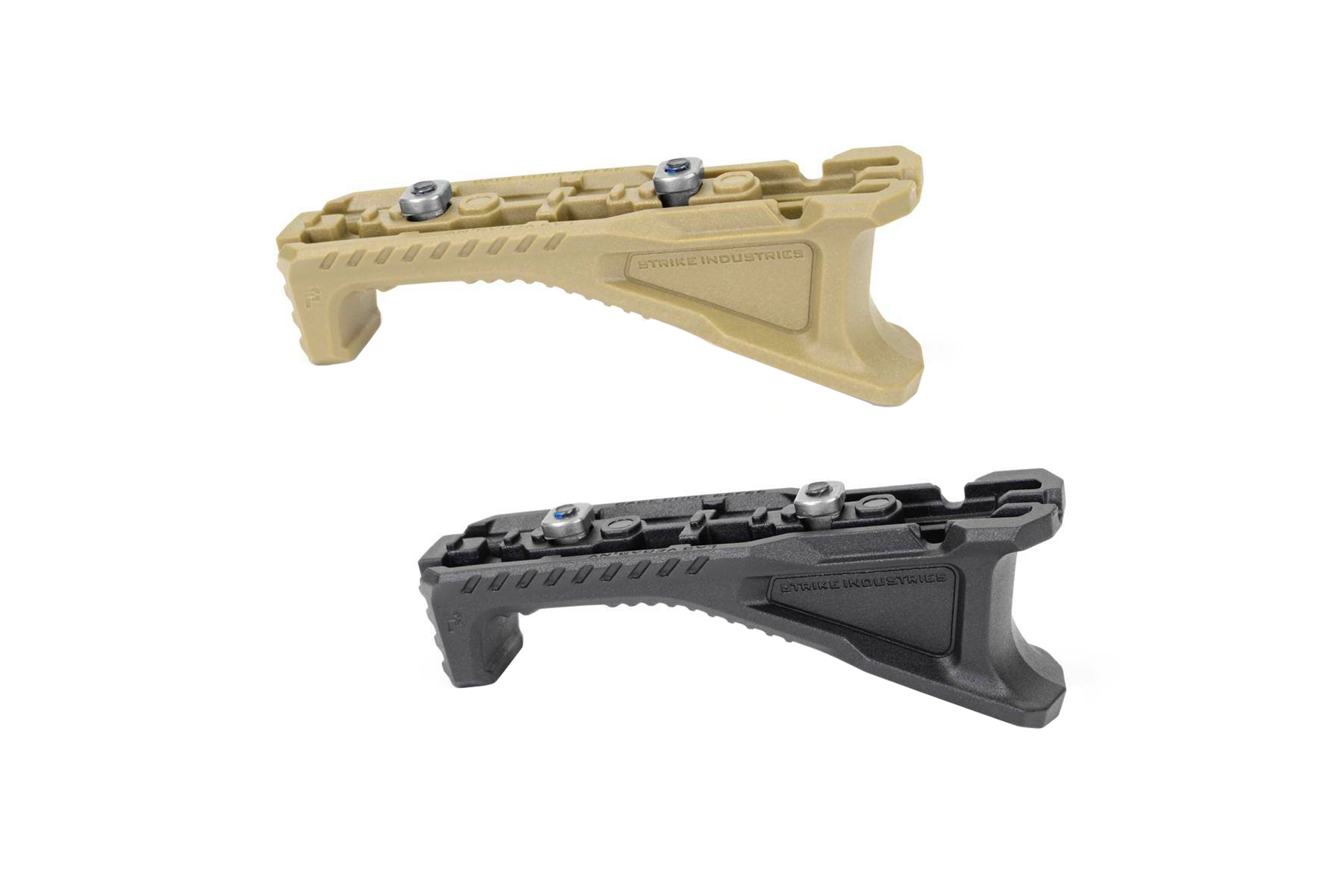
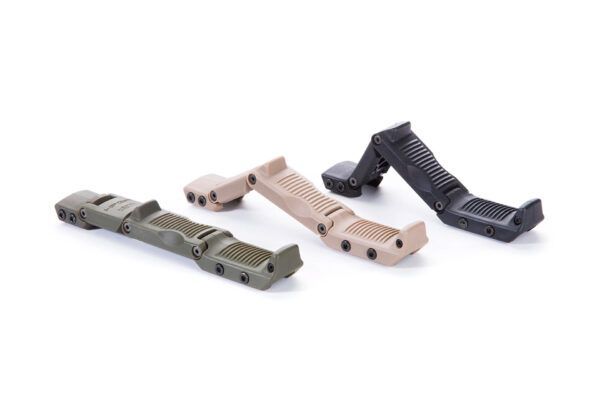
The fix is to consider your local laws and overall build goals. Minimalist angled grips or simple handstops, such as the Arisaka Indexer or Strike Industries models, can provide many of the benefits with far less added weight and bulk. Evaluate whether a full grip truly solves a problem or if a clean rail with refined technique meets your needs.
Mistake 6: Buying Cheap and Skipping Real Testing
Low-cost polymer grips often develop cracks, lose their texture, or become slippery after exposure to heat, moisture, or repeated use. Without real-world testing, many buyers discover too late that their new grip shifts under recoil or feels uncomfortable during dynamic drills.
The fix is to invest in proven brands known for durable materials and aggressive texturing. Once installed, run timed drills, extended shooting sessions, and movement courses. Your split times, wrist comfort, and overall confidence will quickly show whether the grip is a keeper or needs to come off.
Top Angled Foregrip Recommendations for 2025-2026
The Magpul AFG2 remains a top choice as the ergonomic benchmark that doubles effectively as a handstop with excellent bore alignment. The BCM Gunfighter KAG delivers a low-profile 20-degree angle paired with a comfortable palm swell and reliable texturing. Strike Industries LINK Cobra and Enhanced models stand out for their hybrid designs and built-in cable management. The Hera Arms HFGA offers adjustable angle customization, while the Fortis Shift Short provides a compact yet robust solution for tighter builds.
Final Thoughts
The worst mistake is treating an angled foregrip as mandatory gear. It should solve a specific problem such as fatigue, transitions, consistency, or compliance rather than just following the crowd.
Start by asking if you need anything at all. Many shooters discover that a refined technique on a clean rail or a simple handstop outperforms a full grip. If an angled foregrip does make sense for your build, choose thoughtfully, mount it correctly, and verify it actually improves your shooting.
Ready to upgrade? Browse our complete selection of quality angled foregrips with fast shipping and competitive pricing.