
AR-15 Basics, AR-15 Parts
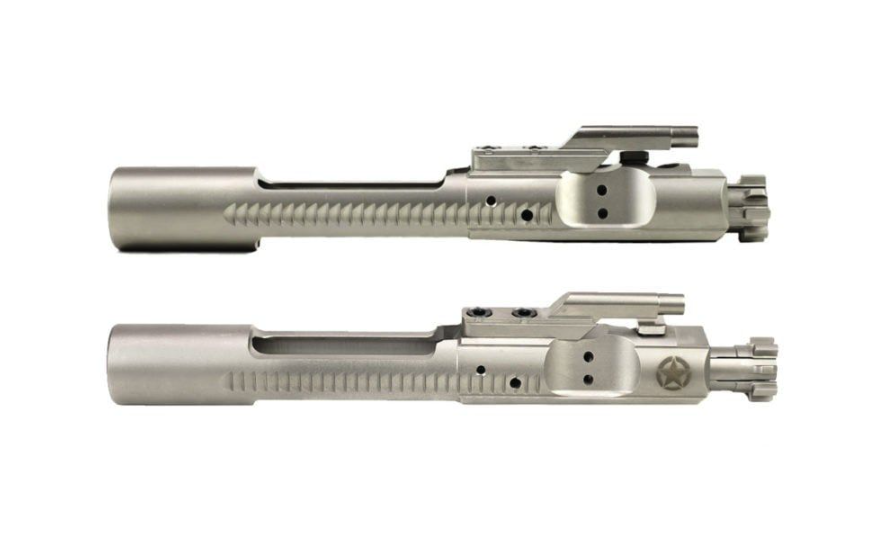
Best Nickel Boron BCGs for Sale in 2026: Top Picks for Reliability & Performance
May
Table of contents
Nickel boron BCGs remain a popular upgrade choice for AR-15 owners seeking smoother operation and easier cleaning. The reduced friction and bright appearance appeal to a wide range of shooters, from high-volume range users to builders putting together dedicated suppressed setups. That said, opinions in the firearms community aren’t unanimous. Some experienced trainers and builders point to potential drawbacks including carbon embedding that causes discoloration over time, occasional tolerance challenges from coating thickness, and reports of brittleness in certain lower-quality bolts or extractors.
High-quality nickel boron BCGs from reputable manufacturers continue to perform well when properly selected and maintained. This breakdown covers how they work, how they compare to other finishes, what to look for when buying, and which options are worth considering in 2026.
TL;DR- Too Long Didn’t Read
Nickel boron bolt carrier groups (BCGs) are popular among AR-15 owners due to their smoother operation and ease of cleaning. While they offer several benefits, it’s important to consider potential drawbacks and ensure selection of high-quality options from reputable manufacturers.
- Nickel boron BCGs offer a low-friction surface, reducing drag during firing and enhancing smoother cycling.
- Compared to phosphate and nitride finishes, nickel boron provides a cleaner feel and easier maintenance.
- Quality of materials and manufacturing practices significantly impact reliability and longevity of BCGs, regardless of finish.
- Regular maintenance and lubrication are essential for optimal performance and longevity, even with nickel boron finishes.
- When purchasing, consider models with MPI-tested bolts, proper staking, and strong warranties.
How Nickel Boron BCGs Work
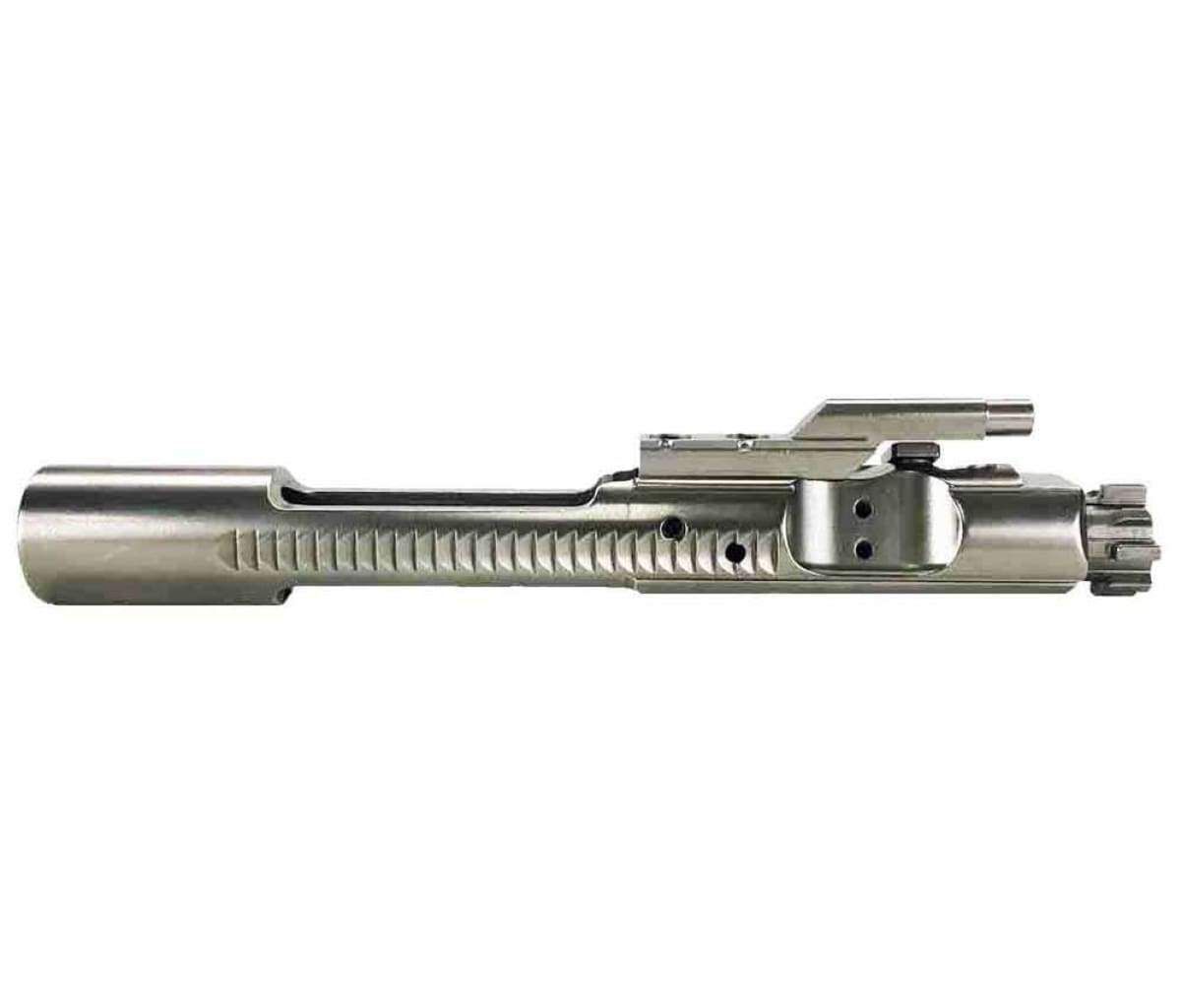
A nickel boron BCG features an electroless nickel-boron plating applied to the carrier, bolt, and other key components. This coating creates a hard, low-friction surface that reduces drag as the BCG cycles during firing. In an AR-15, the BCG moves back and forth with each shot to extract and eject spent cases while chambering the next round. The nickel boron layer promotes smoother travel inside the upper receiver, which can reduce heat buildup and wear on contact points.
Quality versions use 9310 or Carpenter 158 steel for the bolt and 8620 for the carrier, along with properly staked gas keys and MPI-tested bolts. The coating alone doesn’t make a BCG good. The underlying materials and manufacturing standards do.
Nickel Boron vs. Phosphate vs. Nitride
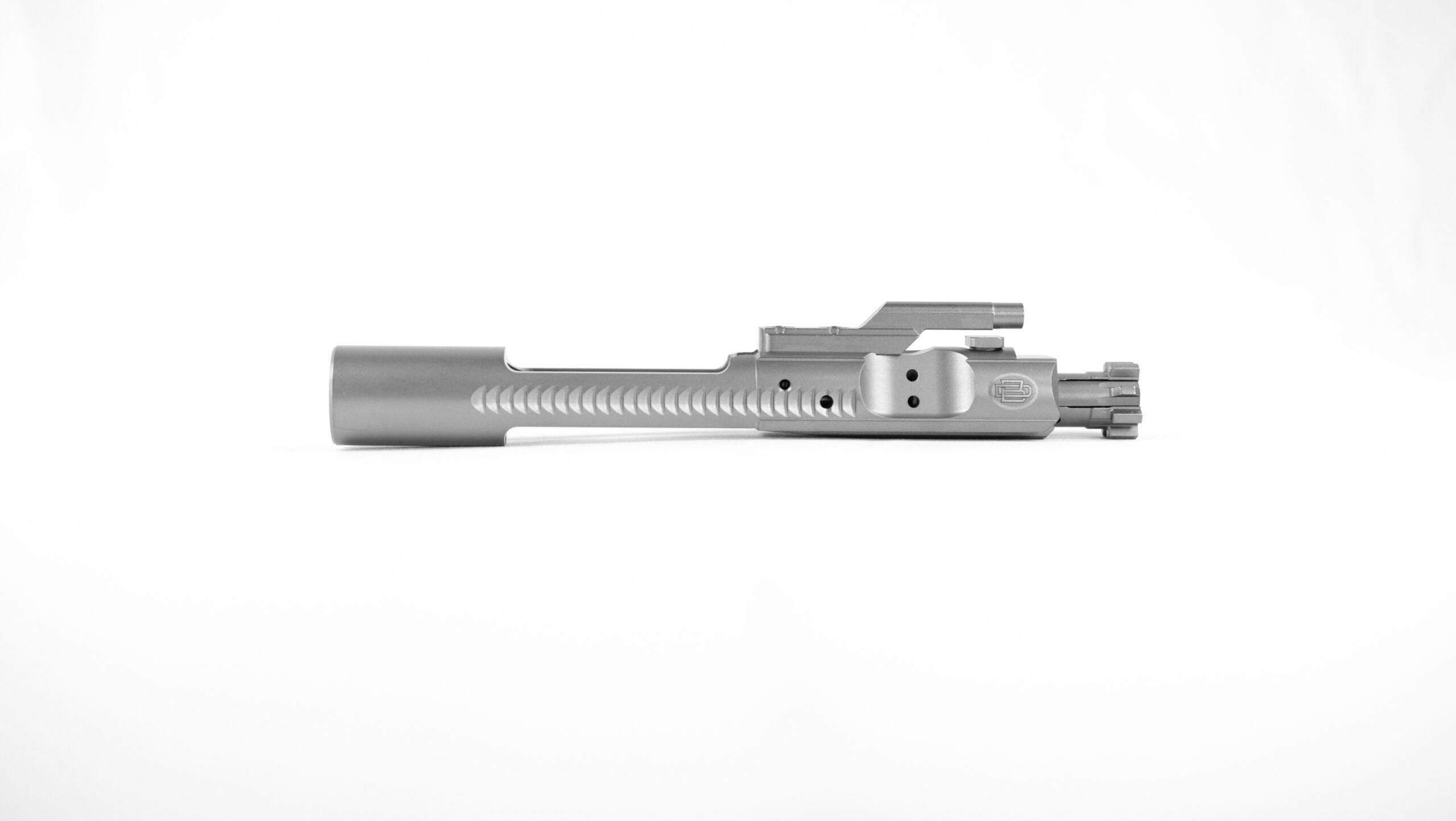
Phosphate remains a proven mil-spec choice that offers solid corrosion resistance, holds lubrication well, and comes in at the lowest price point of the three. Nitride delivers excellent hardness and corrosion protection with good inherent lubricity and typically costs a step above phosphate. Nickel boron offers an exceptionally slick feel right out of the box and tends to wipe down cleaner in the early stages of use.
Each finish has strengths depending on what you prioritize. Many experienced builders have found success with all three. Finish choice matters less than material quality, testing standards, and how well the BCG is maintained.
Key Benefits in AR-15 Builds
Shooters frequently report smoother cycling with nickel boron BCGs, which is especially noticeable in suppressed rifles or short-barreled setups where heat and fouling accumulate faster. The bright silver finish makes it easy to spot residue early and gives a clean, distinctive look. The coating also aids heat dissipation during rapid fire.
Many nickel boron BCGs come with full-auto M16 profile carriers, which add a bit of extra mass and support reliable function in semi-automatic rifles without any compatibility concerns in standard builds. The M16 profile works fine in semi-auto configurations and rarely causes issues for most users.
Cleaning and Maintenance
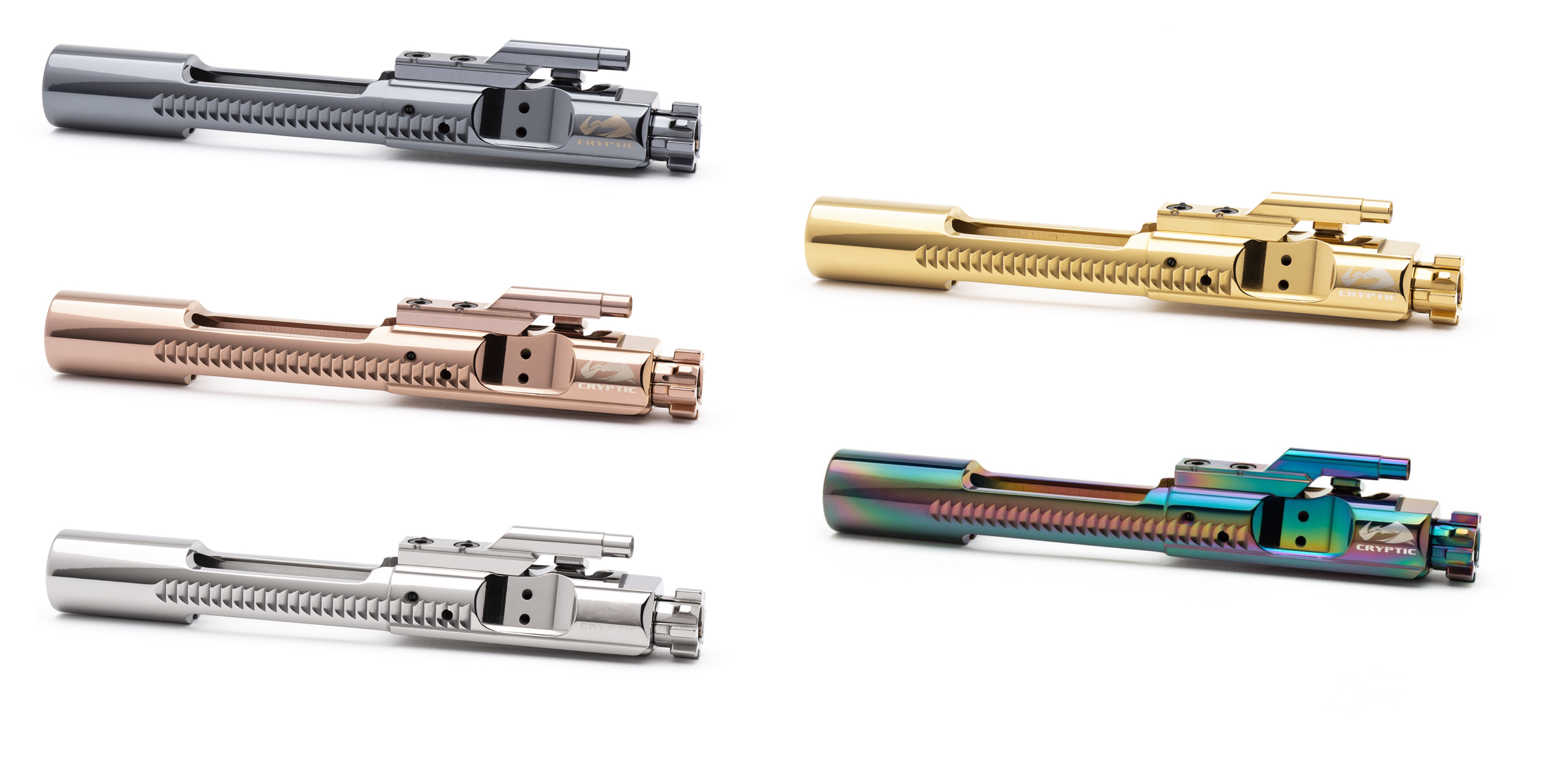
Nickel boron BCGs generally clean up faster than phosphate models. Carbon residue often wipes away with minimal effort rather than requiring aggressive scrubbing. The surface may develop some darkening from embedded carbon over extended use, but regular lubrication and basic maintenance keep them running well.
Light lubrication is still recommended for best long-term results, especially after high-volume or suppressed shooting sessions. Running any BCG completely dry, including nickel boron versions, isn’t advisable. Proper lubrication supports consistent reliability regardless of finish.
Reliability and Longevity
Well-made nickel boron BCGs from reputable manufacturers have proven themselves over tens of thousands of rounds. A quality example can last 20,000 to 30,000 rounds or more with regular care, often matching or exceeding the service life of standard finishes. The hard coating resists abrasion on contact surfaces, and lower friction supports consistent operation under demanding conditions.
As with any BCG, overall reliability comes down to quality materials, proper manufacturing, and correct headspacing more than the finish itself. MPI testing, proper staking, and dimensional consistency matter more than what the outside looks like.
What to Look for When Buying in 2026
Focus on models with MPI-tested bolts, properly staked gas keys, and strong base materials such as 9310 or Carpenter 158 steel. Look for complete, even coating coverage on critical areas without excessive buildup that could affect tolerances. Check recent customer feedback for real-world notes on wear and discoloration, and prioritize manufacturers that back their products with solid warranties.
Top Nickel Boron BCG Picks
If you want a house-brand option with real credentials, the Dirty Bird AR-15 Nickel Boron BCG is worth a close look. Built on a 9310 steel bolt with MPI inspection, a properly staked gas key, and a full M16 profile carrier, it checks every box that matters on paper and backs it up in practice. The nickel boron coating covers both the bolt and carrier, which is worth noting since some budget options only coat the carrier. It runs reliably across .223, 5.56 NATO, and .300 Blackout without any modifications, making it a genuinely versatile option for builders running multiple uppers or a dedicated suppressor setup.
Toolcraft nickel boron BCGs are consistent favorites thanks to MPI inspection, M16 profile carriers, solid warranties, and smooth function across a wide range of builds. They deliver excellent value whether you’re building new or upgrading an existing rifle.
NBS nickel boron BCGs offer another dependable option with competitive pricing and reliable performance across 5.56 and .300 BLK platforms. A strong choice for everyday shooters who want quality without overpaying.
For those seeking maximum slickness and proven brand reputation, WMD NiB-X and FailZero EXO coated BCGs represent the premium end of the category. Both include advanced treatments for enhanced lubricity across all components and have earned strong followings among high-volume shooters.
Are Nickel Boron BCGs Worth the Extra Cost?
For frequent range use or dedicated builds, the easier cleaning, smoother feel, and performance benefits make the price premium worthwhile for many shooters. For casual use or tighter budgets, a quality nitride BCG remains an outstanding choice that won’t leave you wanting.
Do your own research and weigh the potential drawbacks some users have reported before deciding. If reduced maintenance effort and slick operation matter to you, a quality nickel boron BCG from a trusted source is a legitimate upgrade. Browse the current selection at AR15Discounts.com and verify compatibility with your specific setup before purchasing.
A Nickel Boron BCG features an electroless nickel-boron plating applied to the carrier, bolt, and other key components. This coating creates a hard, low-friction surface that reduces drag as the BCG cycles during firing. In an AR-15, the BCG moves back and forth with each shot to extract and eject spent cases while chambering the next round. The Nickel Boron layer helps promote smoother travel inside the upper receiver, which can reduce heat buildup and wear on contact points. Quality versions typically use 9310 or Carpenter 158 steel for the bolt and 8620 for the carrier, along with properly staked gas keys and MPI testing.
Phosphate finishes remain a proven mil-spec choice that offers solid corrosion resistance and holds lubrication well at a lower price point. Nitride treatments deliver excellent hardness and corrosion protection with good inherent lubricity. Nickel Boron BCGs often provide an exceptionally slick feel right out of the box and tend to wipe down cleaner in the early stages of use. Each finish has strengths depending on the shooter’s priorities, with many experienced builders finding success across all three options.
Shooters frequently report smoother cycling thanks to the reduced friction, which can be especially noticeable in suppressed rifles or short-barreled setups where heat and fouling build up faster. The bright silver finish gives a clean, distinctive look while making it easier to spot any residue early on. The coating can also help with heat dissipation during rapid fire. Many Nickel Boron BCGs come with full-auto (M16) profile carriers that add a bit of extra mass, supporting reliable function in semi-automatic rifles without causing any compatibility issues in standard builds. Not every Nickel Boron BCG needs to be full-auto profile, but the M16 style works perfectly in semi-auto rifles and rarely creates any concerns for most users.
Nickel Boron BCGs generally clean up faster than phosphate models. Carbon residue often wipes away with minimal effort rather than requiring aggressive scrubbing. While the surface may develop some darkening or tinge from embedded carbon over extended use, regular lubrication and basic maintenance keep them performing well. Most users still recommend light lubrication for best long-term results, especially after high-volume or suppressed shooting sessions. It is generally not advisable to run any BCG completely dry, including Nickel Boron versions, as proper lubrication supports consistent reliability.
Well-made Nickel Boron BCGs from reputable manufacturers have proven themselves over tens of thousands of rounds in many user experiences. The lower friction can support consistent operation under demanding conditions. As with any BCG, overall reliability comes down to quality materials, proper manufacturing processes, and correct headspacing more than the finish alone.
It is generally not advisable to run any BCG completely dry, including Nickel Boron versions. While the coating offers excellent lubricity, proper lubrication still supports consistent reliability and helps prevent long-term wear, especially after high-volume or suppressed shooting sessions.
A quality Nickel Boron BCG can easily last 20,000 to 30,000 rounds or more with regular care, often matching or exceeding the service life of standard finishes. The hard coating helps resist abrasion on contact surfaces. Ammunition quality, maintenance habits, and overall build tolerances play important roles in longevity. Paying close attention to MPI testing, staking, and dimensional consistency helps avoid potential issues some have reported with certain coated parts.
Not every Nickel Boron BCG is full-auto (M16) profile, though many popular models use the heavier M16 carrier. The M16 style works perfectly in semi-auto rifles and rarely creates any concerns for most users. It adds a bit of extra mass that can support more reliable function without compatibility issues in standard builds.
When shopping for a Nickel Boron BCG, focus on models with MPI-tested bolts, properly staked gas keys, and strong base materials such as 9310 or Carpenter 158 steel. Look for complete coverage of the coating on critical areas without excessive buildup that could affect tolerances, and check recent customer feedback for real-world performance notes on wear or discoloration. Strong manufacturer warranties provide added confidence. At AR15Discounts.com, you will find reliable options that balance performance and value for different budgets and uses.
Nickel Boron BCGs typically cost more than basic phosphate or nitride models, yet many shooters find the easier cleaning, smoother feel, and distinctive performance well worth the investment for frequent range use or dedicated builds. For casual shooters or tight budgets, a good nitride BCG remains an outstanding choice. Do your own research and consider the potential shortcomings some users have experienced before deciding. If you value reduced maintenance effort and slick operation, a quality Nickel Boron BCG from a trusted source can be a worthwhile upgrade that enhances your AR-15 experience. Browse the current selection at AR15Discounts.com to find the right option for your next build or rifle refresh. Always follow standard maintenance practices and verify compatibility with your setup.