
AR-15 Basics, AR-15 Parts, Gas Block
The Role of AR Gas Blocks in Rifle Performance
Mar
Table of contents
- Adjustable Gas Blocks Provide Precise Control
- Common Limitations of Traditional Adjustable Gas Blocks
- Reliable Fixed Gas Block Options for Standard Builds
- How the Riflespeed Gas Control Redefines Adjustability
- Other Strong Adjustable Options Worth Considering
- Durability and Practical Advantages of the Riflespeed
- Conclusion

TL;DR- Too Long Didn’t Read
The blog post discusses the significance of gas blocks in AR-15 rifles and examines various types for optimal firearm performance, covering adjustable and fixed options.
- Adjustable gas blocks offer precise control to reduce recoil and prevent excessive wear, suitable for short-barreled rifles and those using suppressors.
- Traditional adjustable blocks need tools for adjustment and can suffer from carbon buildup and other issues.
- Fixed gas blocks, like Dirty Bird and VLTOR, provide consistent performance without the need for frequent tweaks.
- The Riflespeed Gas Control stands out by allowing tool-free adjustments and is designed for long-term durability.
- Other adjustable options like Superlative Arms and SLR offer varied features like bleed-off methods for reduced fouling.
- Choosing the right gas block enhances the AR-15’s functionality, transitioning it from a basic tool to a refined shooting instrument.
The gas block serves as one of the most critical yet often overlooked components in any AR-15 rifle. In a direct impingement system, it captures the high-pressure gases escaping through the barrel’s gas port after a round is fired. Those gases travel through the gas tube and into the bolt carrier group, supplying the force required to cycle the action, extract the spent cartridge case, and chamber the next round. A malfunctioning or poorly matched gas block turns a semi-automatic rifle into a cumbersome single-shot firearm.
Factory AR-15 barrels typically feature generously sized gas ports. This conservative approach ensures reliable function across a broad spectrum of conditions, including dirty environments, underpowered ammunition, extreme cold, or heavy fouling. The result is an intentionally over-gassed system that prioritizes dependability over refinement.
While this design works well for basic rifles, it introduces several downsides. Excess gas accelerates the bolt carrier group’s rearward movement, which increases felt recoil, accelerates wear on internal components, and drives more carbon fouling back into the receiver and onto the shooter’s face. Shooters frequently report sharper recoil impulses, faster sight disruption during strings of fire, and brass ejecting at aggressive angles, often forward or sharply upward instead of the preferred three to four o’clock position.
Adjustable Gas Blocks Provide Precise Control
Many builders address these issues by installing an adjustable gas block. These devices allow the shooter to fine-tune the volume of gas entering the system. Reducing the flow softens the cycling action, decreases recoil, extends the service life of parts, and improves overall shootability.
The benefits become especially pronounced on short-barreled rifles, where port pressures run higher, or when a suppressor is added, which dramatically increases back pressure and further over-gasses the action. Adjustable gas blocks also make it easier to maintain reliable function with a wide range of ammunition, from hot surplus loads to milder commercial rounds, and to adapt to changing conditions such as cold weather that thickens lubricants and slows the cycle.
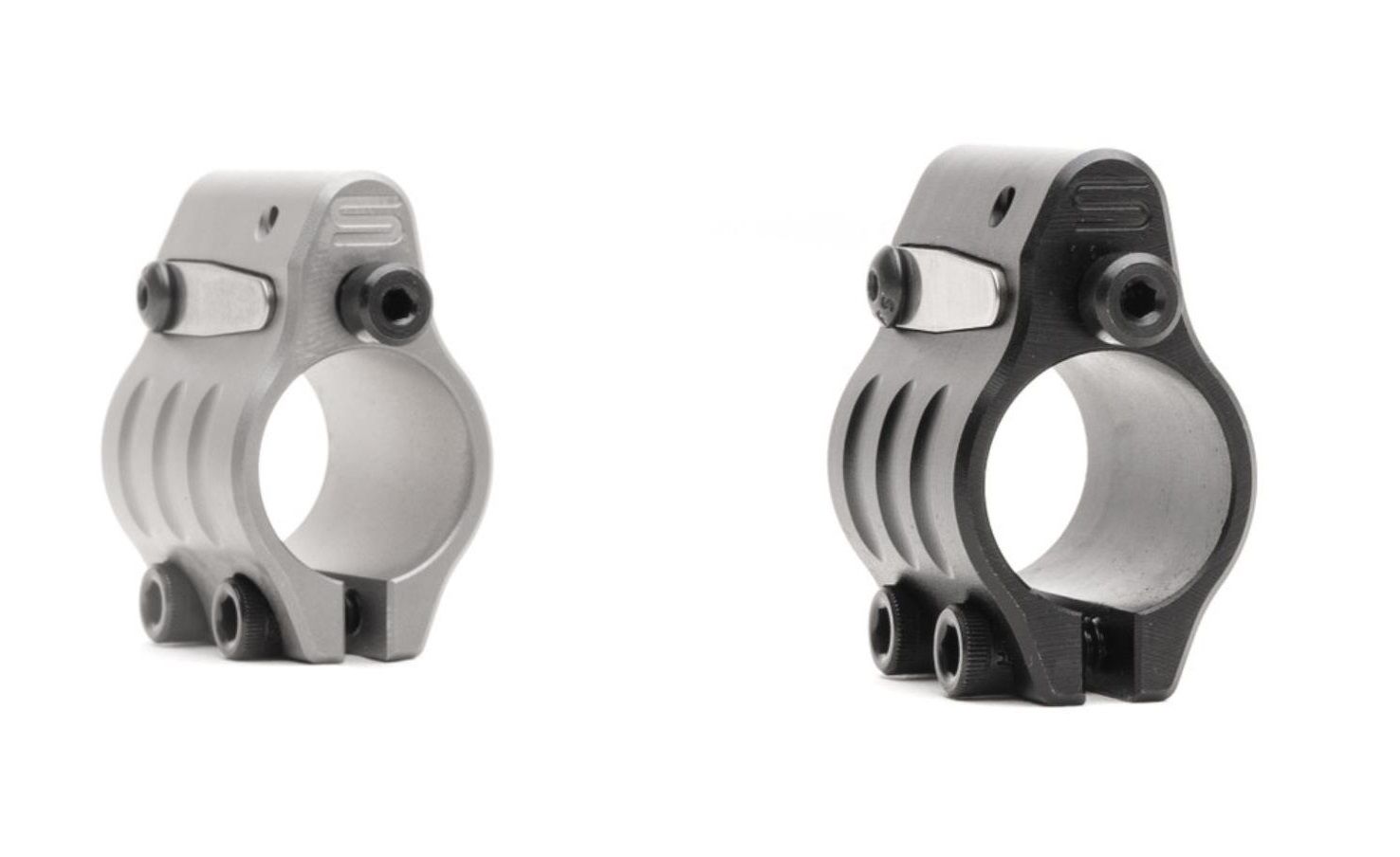
Traditional adjustable gas blocks usually come in low-profile configurations designed to fit beneath most handguards. Mounting styles include set-screw, clamp-on, and pinned designs.
Set-screw models rely on small screws that press directly against the barrel to maintain position. Heat cycles and vibration can cause them to shift over time, and carbon buildup often seizes the screws.
Clamp-on versions use two screws to encircle the barrel evenly, distributing pressure more uniformly and reducing the risk of barrel damage or movement.
Pinned blocks, common on military-style rifles with integrated front sight bases, offer maximum security by using taper pins drilled through both the block and barrel. This method eliminates any possibility of shifting but requires permanent installation and can complicate future barrel changes.
Common Limitations of Traditional Adjustable Gas Blocks
Despite their advantages, most adjustable gas blocks share several practical drawbacks. Adjustments typically require tools such as hex keys, and the adjustment point sits close to the muzzle, making changes difficult or impossible without removing the handguard.
Many designs rely on threaded plungers or restrictive orifices that accumulate carbon rapidly, suffer erosion from hot gases, or experience screw breakage after repeated adjustments. For duty use, competition, or suppressed shooting, where quick and dependable tuning is essential, these limitations become frustrating.
Reliable Fixed Gas Block Options for Standard Builds
For shooters who prefer a simple, no-fuss setup without the need for frequent adjustments, fixed low-profile gas blocks remain excellent choices. These provide consistent performance when the gas system is properly tuned through barrel selection, buffer weight, or spring rate.
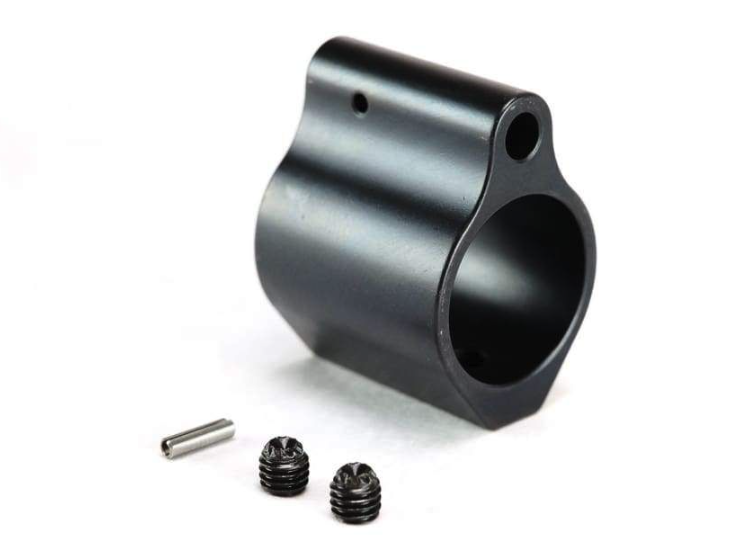
One strong option is the Dirty Bird .750 Low Profile Steel Gas Block with black nitride finish. Precision machined from durable 4140 steel, it handles high gas pressures and extreme heat effectively. The black nitride coating enhances corrosion resistance and longevity, while the included set screws and stainless steel roll pin ensure secure installation on .750-inch barrel journals. This block delivers reliable gas delivery with no leaks or blockages when aligned properly, backed by a lifetime warranty. It stands out as an affordable yet robust choice for standard AR-15 builds where over-gassing is managed through other means.
Another dependable fixed option is the VLTOR Low Profile Gas Block in .750 diameter. Constructed from high-strength 17-4 PH stainless steel, it features a clamp-on design with set screws for superior clamping force and sealing around the barrel. Built to tight tolerances, it fits seamlessly under most rail systems and handguards without interfering. The matte black oxide or gray silver finish minimizes glare, and its straightforward reliability makes it ideal for rifles that do not require on-the-fly tuning, such as those running consistent ammunition loads unsuppressed. Users praise its precise fit, easy installation, and flawless function even on shorter barrels, making it a solid pick for builders seeking quality without complexity.
How the Riflespeed Gas Control Redefines Adjustability
The Riflespeed Gas Control stands apart as a significant advancement among AR gas blocks. Developed after years of frustration in competitive shooting, where temperature swings and ammunition variations caused inconsistent cycling, this system rethinks the entire adjustable gas block concept.
Conventional designs were tested and discarded due to issues like seizing screws, fragile components, and inconvenient tool-dependent adjustments. The goal was to create a military-grade solution built for uncompromising performance.
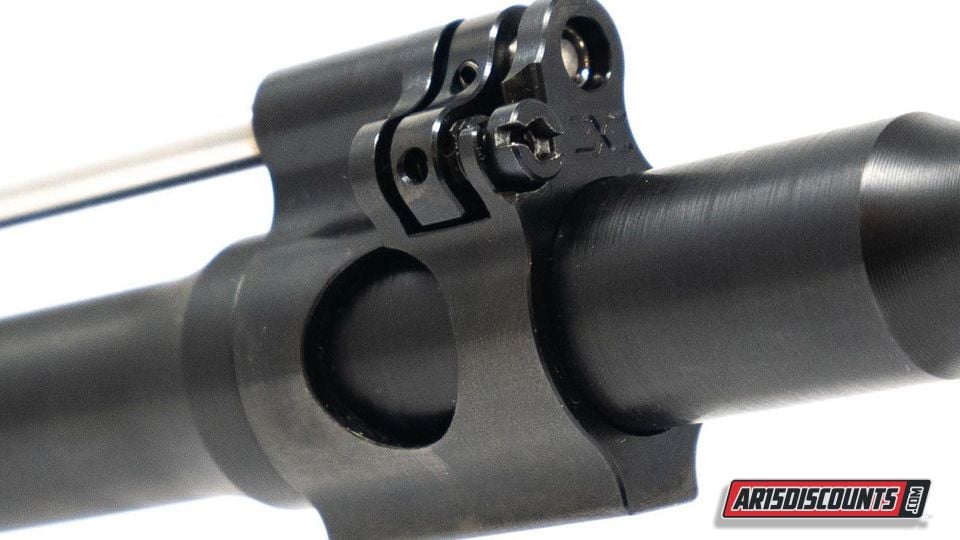
The Riflespeed features a tool-free adjustment mechanism positioned forward of the handguard, allowing shooters to dial in settings instantly with their fingers, even during a string of fire.
It uses a robust, modular construction with four primary machined components, including a large, proven spring sourced from suppressor specialists and a smooth, threadless plunger that resists carbon fouling.
Unlike many designs that use thin-walled or threaded gas tubes prone to failure, Riflespeed employs a straight gas tube for superior structural integrity. Testing demonstrates that failures typically occur in barrels or suppressors long before the gas block itself gives way.
The system bleeds off excess gas through a variable aperture rather than fully restricting flow, which helps prevent over-gassing without starving the action. It provides a wide range of precise settings, often described as offering around twelve distinct positions for fine-tuning.
This versatility excels in multiple scenarios. For unsuppressed precision shooting, dial it down to minimize recoil and maintain steady sight alignment. Add a suppressor, which significantly increases back pressure, and open the setting for flawless cycling without excessive bolt speed.
In calibers such as 300 Blackout, swapping to a different plunger size enables complete gas shutoff on one position for ultra-quiet suppressed operation that mimics bolt-action silence by eliminating ejection port noise, followed by quick readjustment for standard semi-automatic function.
Other Strong Adjustable Options Worth Considering
Beyond innovative tool-free designs, several adjustable gas blocks offer excellent performance through different approaches.
The Superlative Arms .750 Adjustable Gas Block with clamp-on mounting and Melonite finish uses a patented bleed-off method. Instead of restricting gas flow like traditional blocks, it vents excess gas out the front port, delivering only what is needed to cycle the action while reducing pressure, recoil, and fouling. This results in cleaner, cooler operation, less blowback on suppressed or short-barreled rifles, and prevents carbon buildup or erosion on the adjustment screw.
It features thirty locked positions with an external detent to avoid contamination, a safety mechanism on the screw, and stainless steel construction. Many users report significantly reduced recoil and easier tuning for varied setups, making it a top contender for those prioritizing reduced fouling and suppressor compatibility.
The SLR clamp-on adjustable gas block also earns consistent praise for its reliability and ease of use. It provides positive, tactile clicks across multiple settings for repeatable tuning, with a design that emphasizes durability and straightforward maintenance. Shooters often highlight its solid construction, effective recoil reduction, and performance on suppressed rifles or builds requiring precise gas regulation.
While tool-dependent like most traditional adjustables, its metering screw and overall craftsmanship make it a dependable choice for hard-use applications where consistent adjustments matter.
Durability and Practical Advantages of the Riflespeed
Durability sets the Riflespeed apart even further. The plunger functions as the primary wear item and is rated for ten thousand to twenty thousand rounds, even under abusive full-auto fire, before needing replacement. At an inexpensive eighteen dollars, the part swaps in about a minute without tools.
The overall build prioritizes robustness over minimal weight, making it ideal for hard-use rifles rather than ultralight competition setups. Compatibility covers both AR-15 and AR-10 platforms, with options for various barrel journal sizes and gas system lengths, though handguard clearance is required to expose the adjustment collar.
Installation follows the same straightforward process as other low-profile blocks, but the modular plunger and straight tube simplify long-term maintenance.
Many users pair it with quality barrels and handguards to create turnkey uppers that deliver exceptional performance from the first round. Shooters who have compared it to other adjustable options consistently highlight the elimination of tool dependency, broader adjustment range, and noticeably smoother operation.
While the price reflects its premium, no-compromise construction, those who invest in it frequently call it the best AR gas block available, particularly for suppressed setups, variable conditions, or anyone seeking maximum tunability and reliability.
Conclusion
Understanding and selecting the right gas block transforms an AR-15 from a functional tool into a finely tuned machine. Basic fixed blocks like the Dirty Bird or VLTOR suffice for simple, reliable builds, while adjustable options such as Superlative Arms, SLR, or the Riflespeed unlock reduced recoil, extended component life, and adaptability across ammunition and environments.
Among current designs, the Riflespeed Gas Control represents the pinnacle of innovation, solving longstanding pain points with thoughtful engineering and real-world durability. Whether building a duty rifle, a suppressed platform, or a competition gun, prioritizing gas system control delivers tangible improvements with every shot fired.