
AR Rifle, AR-15 Accessories, Optics, Red Dot
Holographic Sight Vs Red Dot for the AR-15
Oct
Table of contents
- How the Two Sights Build an Aiming Point
- Buy for the Job, Not the Spec Sheet
- Parallax, Astigmatism, and the Eye Behind the Glass
- Battery Life and Weight Favor the Red Dot
- The Best Holographic Sight for a Magnified Setup
- Real-World Distance and the Best Holographic Sight
- Choosing the Best Holographic Sight or Red Dot for Your AR-15
- The Best Holographic Sight Is the One That Fits Your Rifle
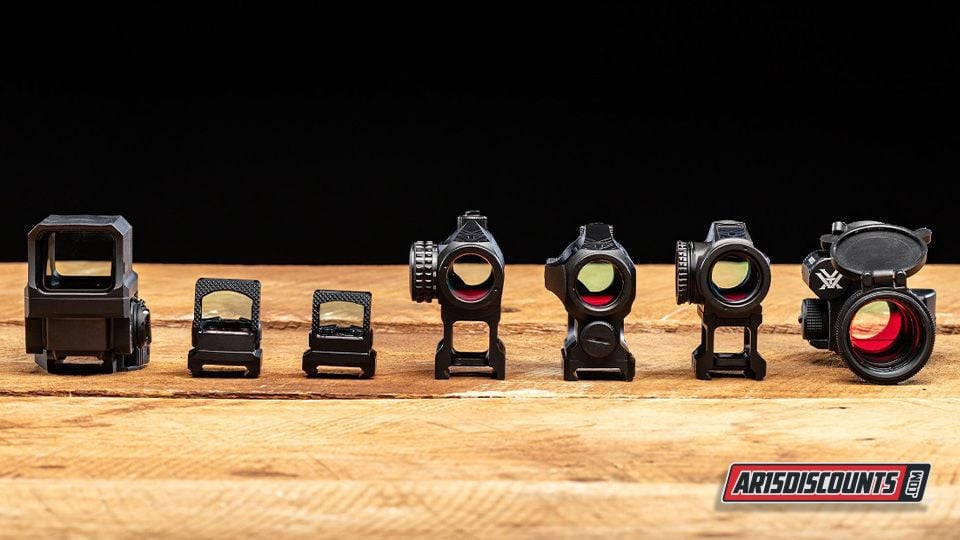
Finding the best holographic sight for an AR-15 starts with a question we hear from AR15Discounts customers almost every day. Should the rifle wear a holographic sight or a red dot? Both are 1x optics that put an illuminated aiming point over the target, and both work with both eyes open. Both also fill the same red dot and holographic sights category in our catalog. They get there in very different ways, and that difference decides which one makes more sense on your rifle.
After years of talking optics with buyers, we have found that most regret comes from choosing on reputation instead of use. A shooter who plans to add a magnifier or run night vision has different needs than someone building a light carbine. The same goes for a rifle that lives in the safe with the optic switched on. This guide explains how each sight works, where each one wins, and which models on our shelves fit each job.
How the Two Sights Build an Aiming Point
The Reflex Red Dot
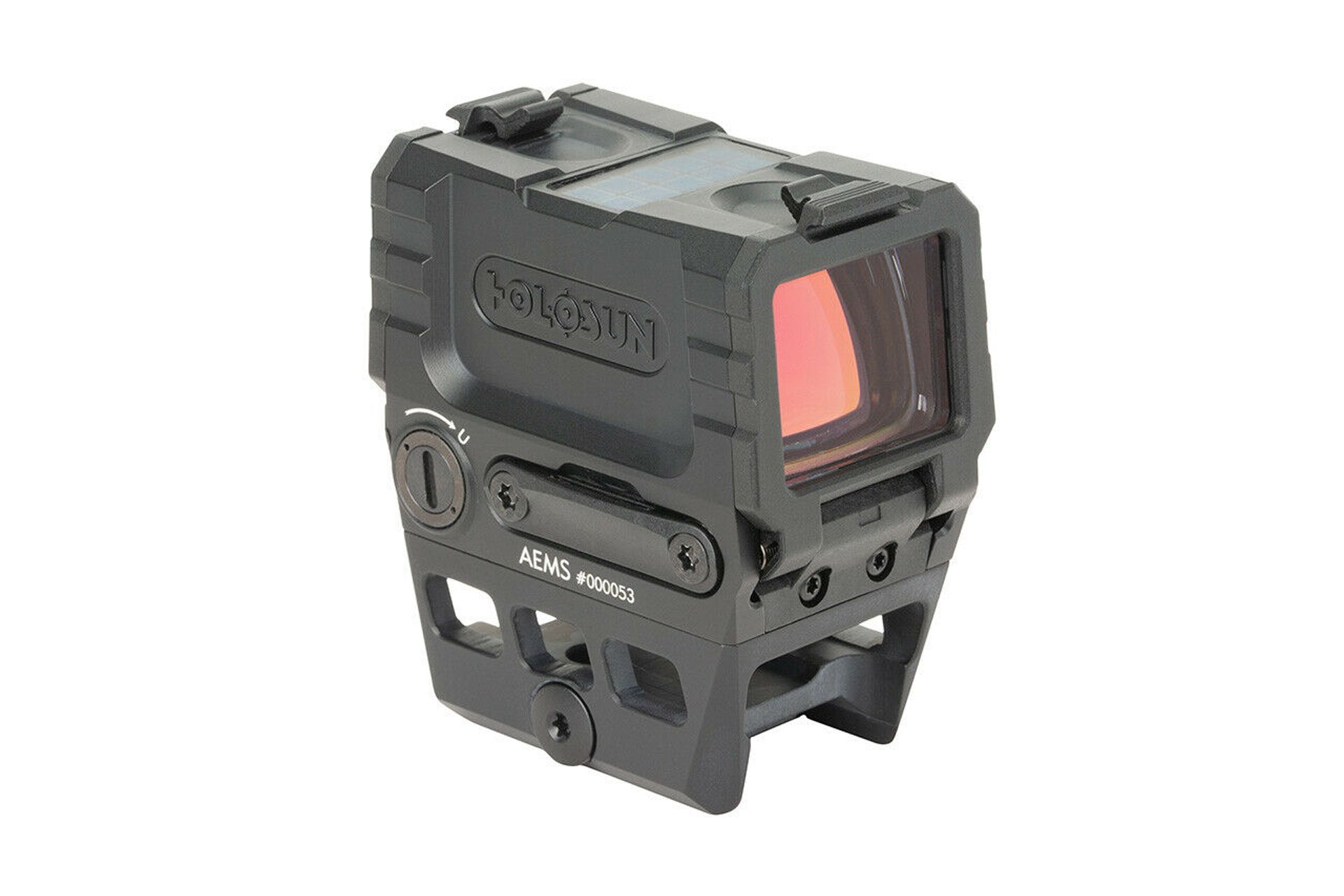
A red dot is a reflex sight. A small LED shines onto a coated lens, and that lens reflects the dot back toward your eye. The dot appears to sit out at the target. The design is simple, efficient, and compact. That is why enclosed micro dots such as the Holosun AEMS weigh around 4 ounces and run for years on one CR2032 coin cell. For a closer look at how red dots perform on the AR-15, see ARBuildJunkie’s red dot Q&A with Freddie Blish.
The Holographic Weapon Sight
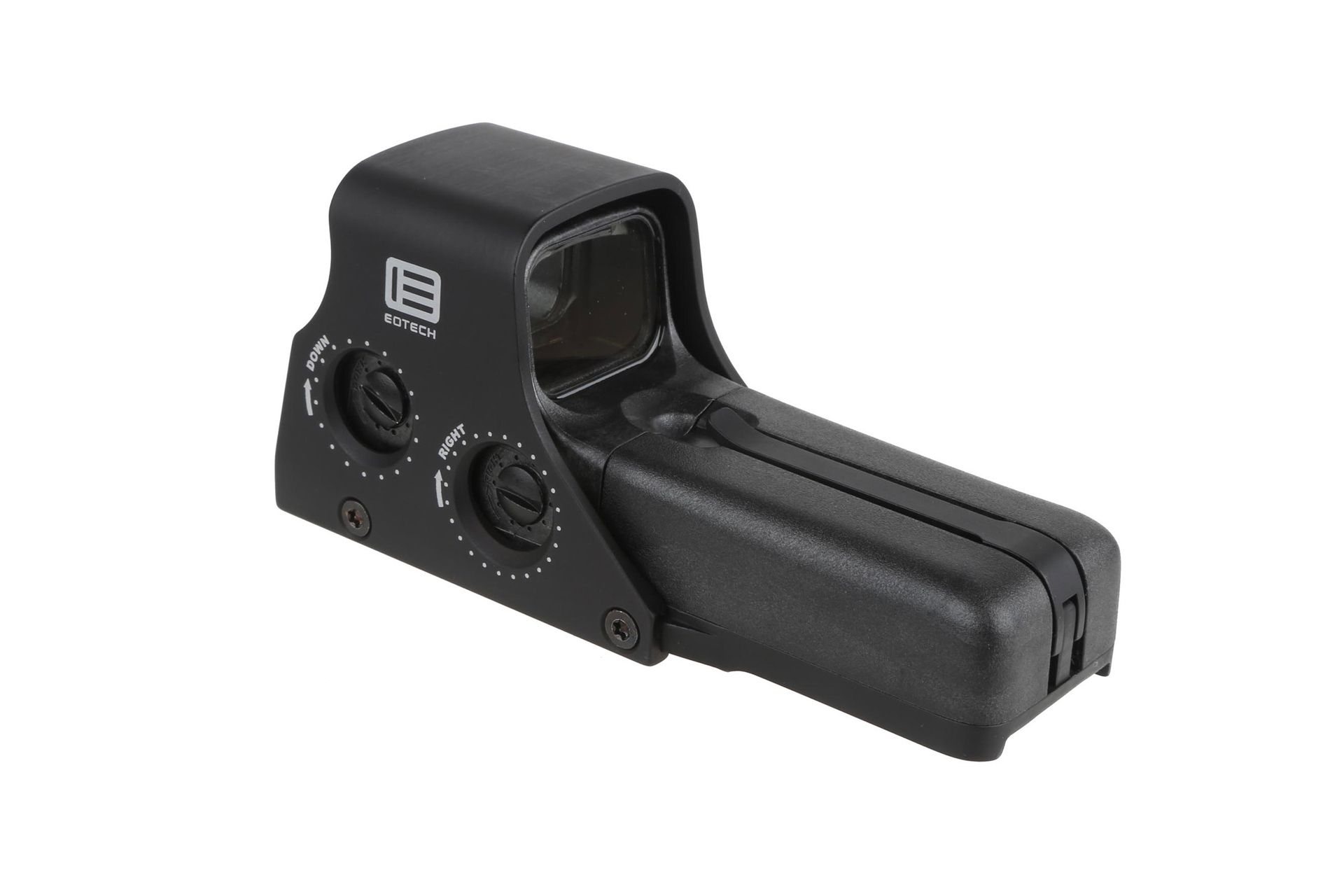
A holographic sight uses a laser diode instead of an LED. The laser lights up a hologram of the reticle recorded in the viewing window. Your eye then sees that reticle as a virtual image out at the target plane. EOTech pioneered this design for small arms, and most shooters still treat it as the best holographic sight maker in the business. EOTech says its HWS projects the reticle at 200 meters to minimize parallax. It also says the sight keeps working when the window is damaged or partly covered.

Buy for the Job, Not the Spec Sheet
We see this mistake often with first-time optic buyers. A shooter with a modest budget asks which LPVO to buy, when a quality red dot would serve that rifle better than a cheap variable scope ever will. Capability and requirements are different things. A rifle that can do more is not automatically the rifle you need, and paying for features you never use only makes the setup heavier and more expensive.
Start with an honest look at how the rifle will really be used, not with what everyone else runs online. For most owners, the dot has practical advantages that are easy to overlook. Mark Smith lays out the case for the red dot optic in his conversation with ARBuildJunkie. It is light and it can stay on. It also offers a wide field of view and a forgiving eye position, which helps from awkward shooting positions. It is also easier for a new shooter to run well. Apply the same test when you shop for the best holographic sight. Pay for the features your rifle will actually use.
Parallax, Astigmatism, and the Eye Behind the Glass
Neither design is free of parallax in the strict sense. Both are tuned so the point of aim moves very little when your head shifts behind the optic. At carbine distances, the error that remains is usually small next to the size of the target. Mounting the optic at a consistent height and building a repeatable cheek weld does more for accuracy than the parallax spec on the box.
Astigmatism is where many buyers expect a simple answer, and there is not one. EOTech’s own manual notes that astigmatism can distort the reticle. Some shooters with astigmatism find the holographic reticle crisper than an LED dot. Others see the same starburst in both. The only reliable test is your own eye, so look through both types before you commit if you can.
Battery Life and Weight Favor the Red Dot
Battery life is the red dot’s clearest win. Holosun rates the AEMS at up to 50,000 hours on its 2 MOA dot setting, so most owners leave it on. A laser draws more power. EOTech rates the EXPS3 at 1,000 continuous hours on one CR123 at brightness setting 12, and the sight shuts itself off after 8 hours by default.
That runtime gap comes from the laser itself. A laser is a hungry light source, and CR123-powered holographic sights have stayed at roughly 1,000 hours for years. The AA-powered EOTech 512 is the exception, rated at 2,500 hours on lithium cells. Even so, that is a fraction of what a modern dot delivers.
The auto shutoff deserves more thought than it gets. Picture grabbing the rifle in an emergency and finding the sight has turned itself off. Now you have to switch it on in the middle of the chaos. For a rifle that sits ready in the safe, that is a real cost. With the best holographic sight on a home defense rifle, make checking the optic part of your routine.
The Weight Cost of the Best Holographic Sight
Weight follows the same pattern. The EXPS3 weighs 11.2 ounces, the compact XPS2 weighs 9.0 ounces, and the 512 comes in at 11.5 ounces. A micro red dot saves more than half of that. A shooter notices the difference on a light carbine or a short pistol build. Weight is not a minor detail. A light, nimble rifle is easier to handle and causes less fatigue over a long day, and a heavy optic works against that.
The Best Holographic Sight for a Magnified Setup
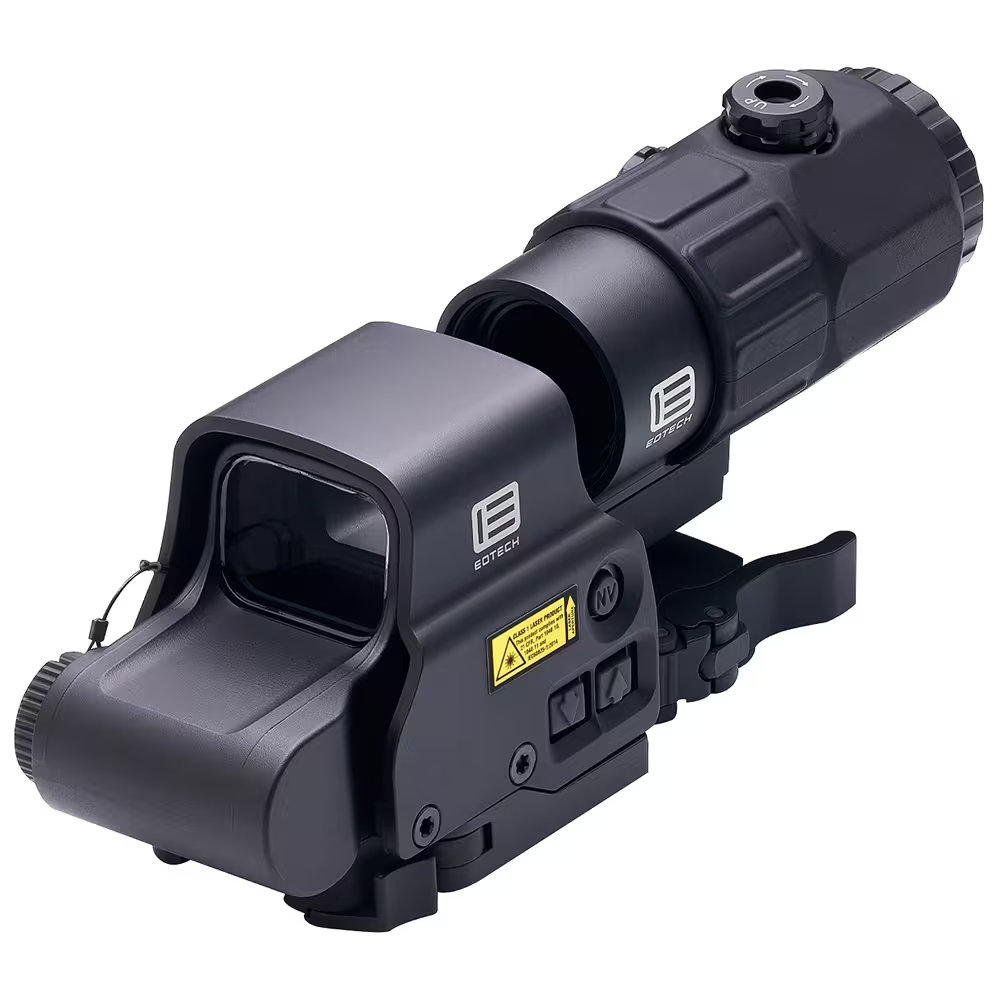
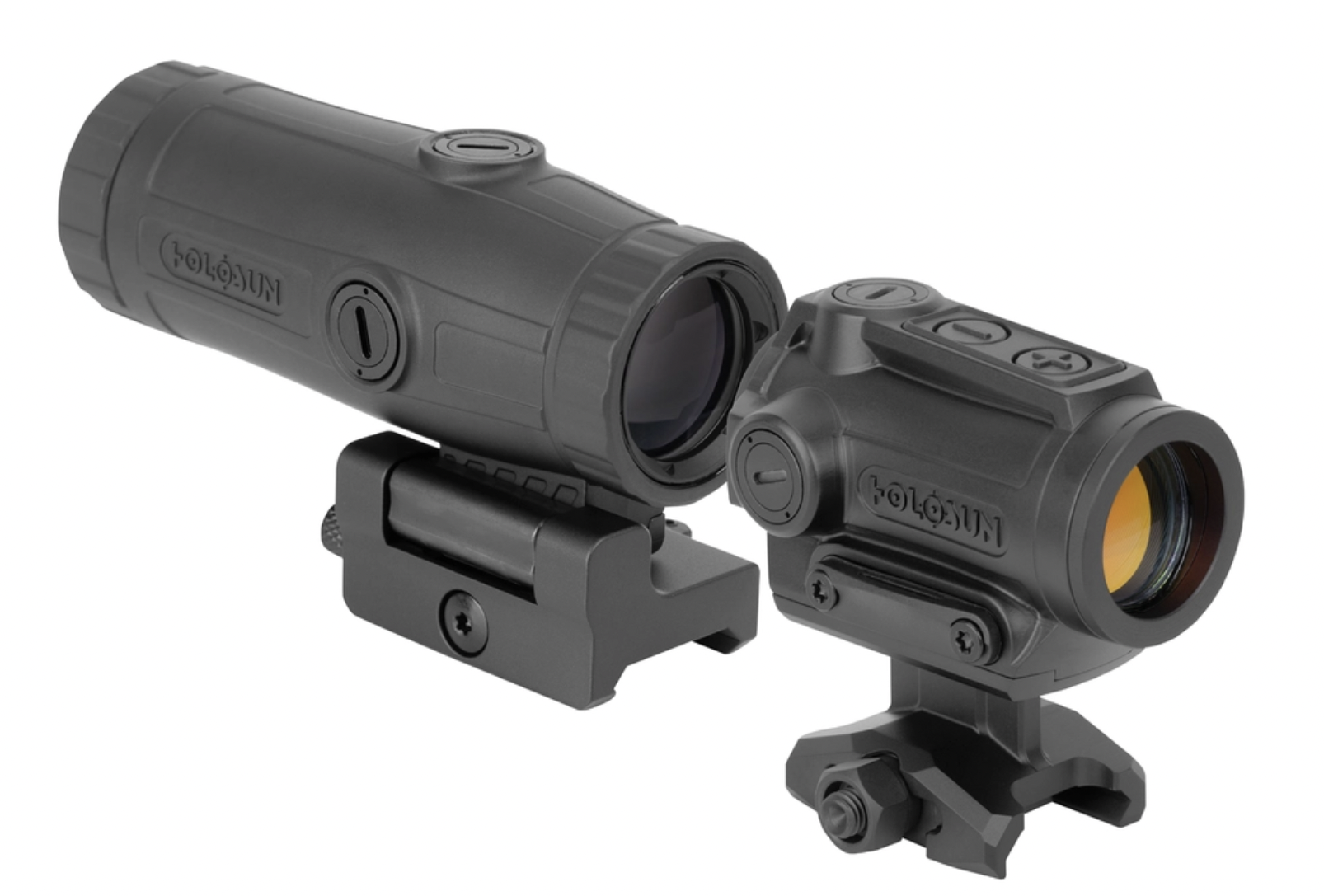
Magnifiers are where the holographic sight earns its price. EOTech explains that its laser dot keeps its 1 MOA appearance behind a 3x or 5x magnifier while the target gets bigger. An LED dot grows along with the target instead. That gives the holographic sight a finer aiming point at distance. Our EOTech complete system pairs an EXPS3-2 with the G43 3x magnifier on a switch-to-side mount, so the whole setup arrives matched.
Red dots still work well with magnifiers, and they cost far less to set up. The Holosun ARO and HM3X combo is one of the most affordable ways to try a magnified dot. The Vortex Micro3X is another strong choice behind an AR-height dot. Keep in mind that any distortion your eye already sees becomes more noticeable under magnification. Our guide to red dot and magnifier combos goes deeper on mounting heights.
One caution applies to caliber. Quality magnifiers from Aimpoint and EOTech hold up well on a 5.56 rifle, but we do not recommend a magnifier on anything heavier. On .308 rifles, recoil can make the mount vibrate and push the dot off center in the magnifier, which slows follow-up shots. For a heavier recoiling rifle, an LPVO is the better choice.
Real-World Distance and the Best Holographic Sight
Distance is where many buyers overestimate their needs. Red dots were designed with 200 and 300 yard shots in mind. A skilled shooter who knows the holdovers can reach well past that, but the realistic envelope for a good carbine with good ammunition runs from contact distance out to about 300 yards. EOTech rates its HWS for aiming out to 300 meters. So the best holographic sight and a quality dot cover the same practical ground.
A 1x optic does have one honest weakness. Without magnification, positively identifying a target at distance is harder than it is with an ACOG or an LPVO. Still, the defensive situations most civilians could ever justify happen well inside 100 yards. When most of your shooting falls inside 100 yards, a red dot is hard to beat. An LPVO makes more sense for someone who regularly works from 100 to 300 yards on rural property.
It is also hard to picture a lawful 200-yard defensive shot for the average citizen. The shooters who truly benefit from an LPVO tend to fall into two groups. One is landowners who need to identify an animal at distance before they shoot. The other is shooters who want to ring steel at 300 to 400 yards. Most AR owners we talk with fit neither group.
Choosing the Best Holographic Sight or Red Dot for Your AR-15
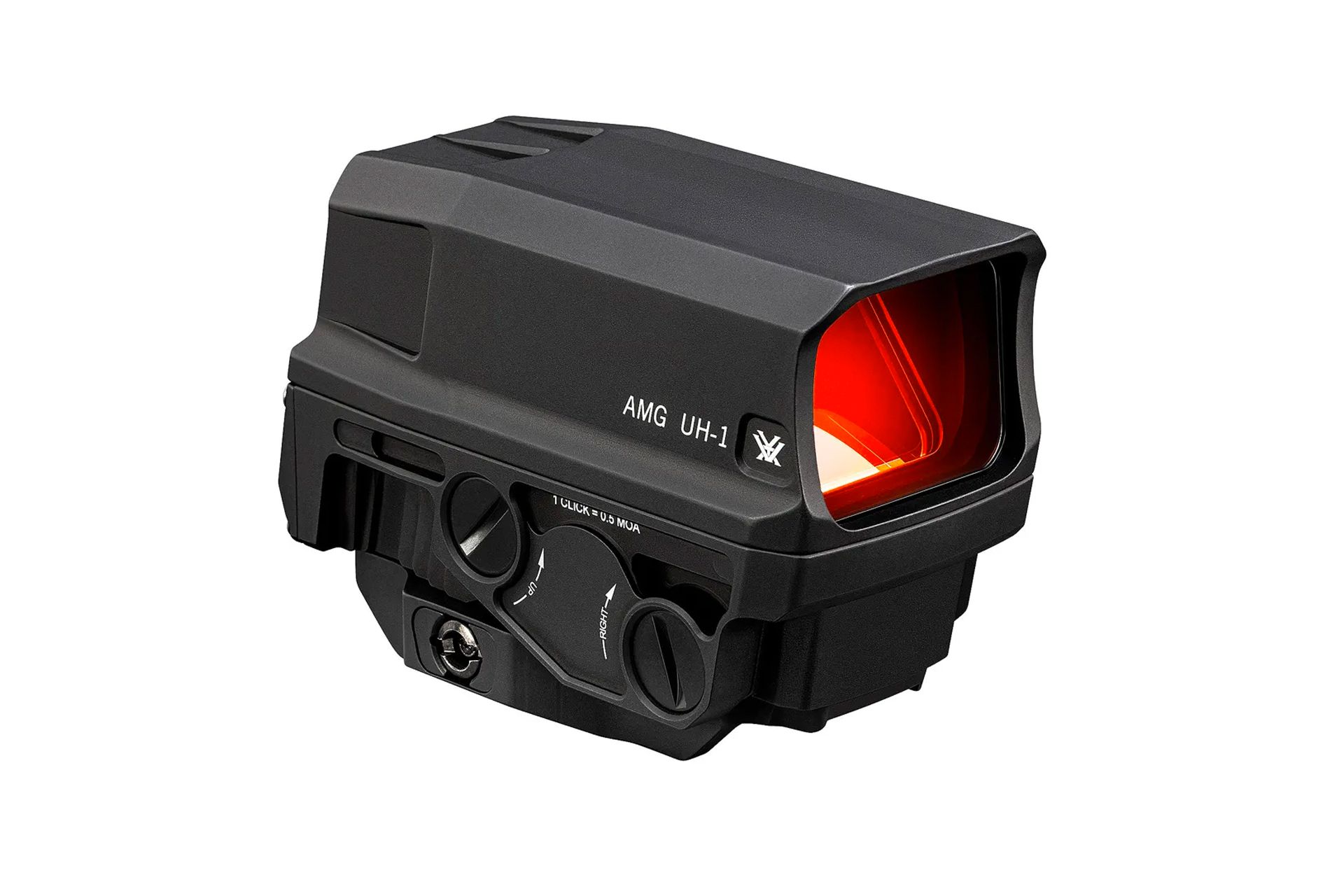
For a duty-style rifle that will see a magnifier or night vision, the EOTech EXPS3-0 is our pick for the best holographic sight. It pairs the 68 MOA ring and 1 MOA dot with night vision settings and side buttons. Its quick-detach base sets up a lower 1/3 co-witness. The XPS2-0 gives up night vision compatibility to save weight and rail space. The Vortex AMG UH-1 Gen II is the main holographic alternative to EOTech, and the Vortex VIP Warranty backs it.
For a lightweight carbine, a first AR, or a rifle kept ready in the safe, a quality red dot usually makes more sense. The low weight, long battery life, and lower price are hard to argue with. As of October 2026, the EOTech 512 is the least expensive holographic sight we carry at under $400. Proven red dots start well below that.
Quality still matters, though. The $50 to $300 sights sold at gun shows are mostly made offshore, and they are fine for a hobby rifle or a .22. A rifle you may trust with your life needs proven durability, reliability, and battery life. Spend the money once instead of buying twice. Holosun and Sig’s Romeo line have earned a reputation for rugged, reliable dots, which is why the AEMS has a place on our list. A quality dot on a defensive carbine is not a compromise. Read our guide on how to mount a red dot before you set the height.
The Best Holographic Sight Is the One That Fits Your Rifle
We have watched plenty of shooters spend extra on the best holographic sight they could find, then never put a magnifier behind it. We have also seen buyers save money on a dot and later wish they had bought the EOTech when they added a 3x. The technology matters less than the setup it supports.
After years of helping customers choose, our advice comes down to three things. Buy quality, be honest about your distances, and match the optic to the job. Inside 300 yards, both designs will do the work. Decide whether a magnifier, night vision, or weight matters most, and let that answer choose the optic. The best holographic sight or red dot is the one built for the rifle you actually run.
FAQ
Neither is better for every rifle. A holographic sight is the better match for magnifiers, night vision, and a wide window. A red dot is the better match for light weight, long battery life, and lower cost.
A red dot is usually the easier first optic. It is lighter and costs less. It can also stay on for years without a battery change, so it is ready whenever you pick up the rifle. A dot is also simpler to learn than a magnified optic.
Generally, yes. EOTech’s laser dot keeps a fine 1 MOA appearance behind a magnifier, while an LED dot grows with the image. Red dots still work well with magnifiers, especially for shooters on a budget.
The red dot wins by a wide margin. Holosun rates the AEMS at up to 50,000 hours on its dot setting. EOTech rates the EXPS3 at 1,000 hours on one CR123 and the 512 at 2,500 hours on lithium AAs.
Sometimes, but not always. Some shooters with astigmatism see a cleaner reticle in a holographic sight, while others see distortion in both. Look through both before you buy the best holographic sight for your eyes.
A laser diode and a recorded hologram cost more to produce than an LED and a coated lens. EOTech also builds its HWS line in the USA, while many entry-level red dots are made overseas. That is why the best holographic sight options usually cost more than a good red dot.
Both are fast because both are 1x sights used with both eyes open. A large ring reticle helps speed more than the technology does. EOTech’s 68 MOA ring and the 65 MOA circle on the Holosun AEMS are good examples.
Most shooters keep either optic inside about 300 yards, which is the realistic envelope for a good carbine with a dot. EOTech rates its HWS for aiming out to 300 meters. Adding a magnifier helps identify targets at the longer end of that range.
No. Both are 1x optics. For magnification, add a flip-to-side magnifier such as the EOTech G43 or Vortex Micro3X behind the sight.
The red dot is lighter. A micro dot like the Holosun AEMS weighs around 4 ounces. EOTech holographic sights run from 9.0 ounces for the XPS2 to 11.5 ounces for the 512.