
AR-15 Triggers
Hoffman Tactical Trigger Kicker: What It Is and What You Need to Know
Aug
Table of contents
- How a Standard AR-15 Trigger Resets
- How the Trigger Kicker Works
- How the Trigger Kicker Differs From Other Forced Reset Systems
- Trigger Compatibility
- Safety Selector Compatibility
- Hammer Compatibility
- Bolt Carrier Compatibility
- Platform Limitations
- Installation
- The Host Rifle Still Matters
- Safe Use at the Range
- Shipping Restrictions and Legal Considerations
- Is the Trigger Kicker Right for Your AR-15?
Forced reset triggers and active reset systems are designed to help shooters make faster follow-up shots by using the firearm’s operating cycle to push the trigger forward into reset. The system resets the trigger mechanically, but the shooter must still move the trigger rearward again to fire the next round.
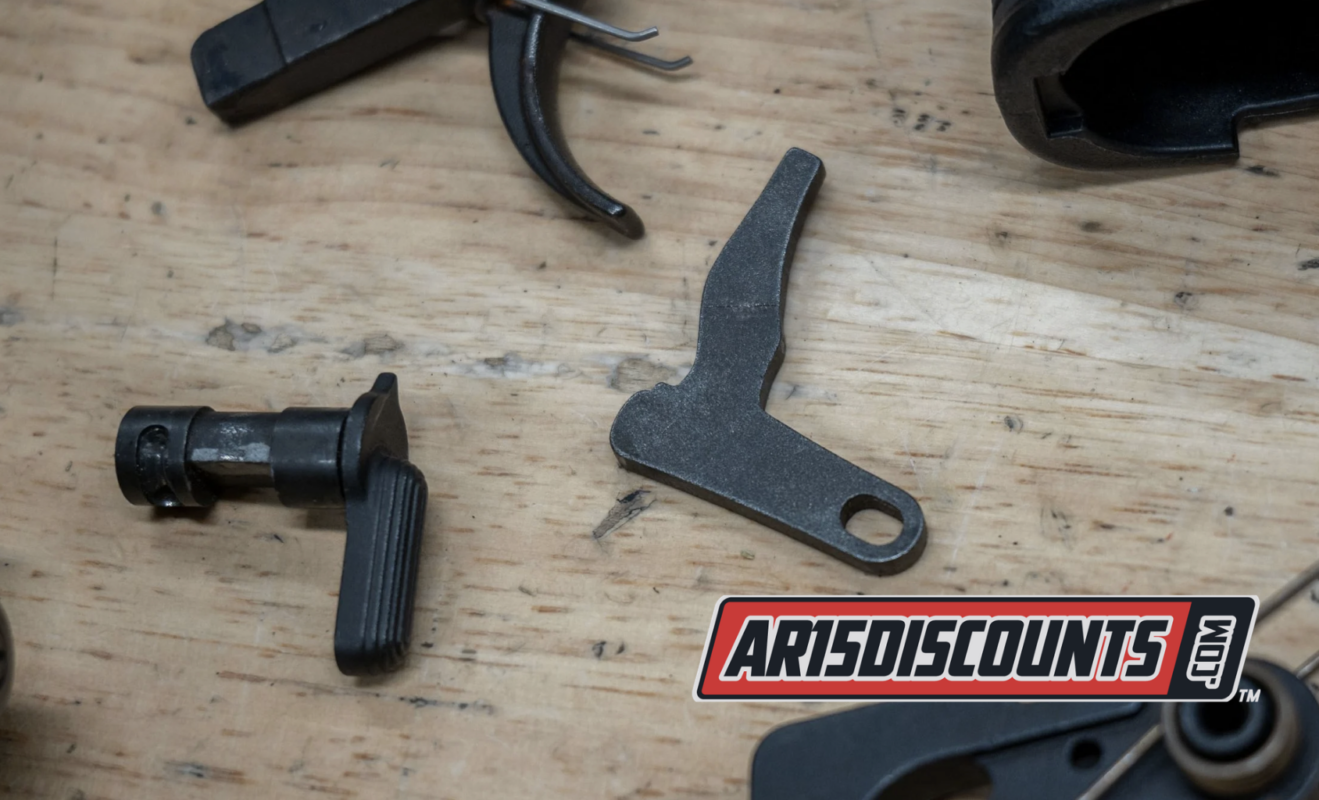
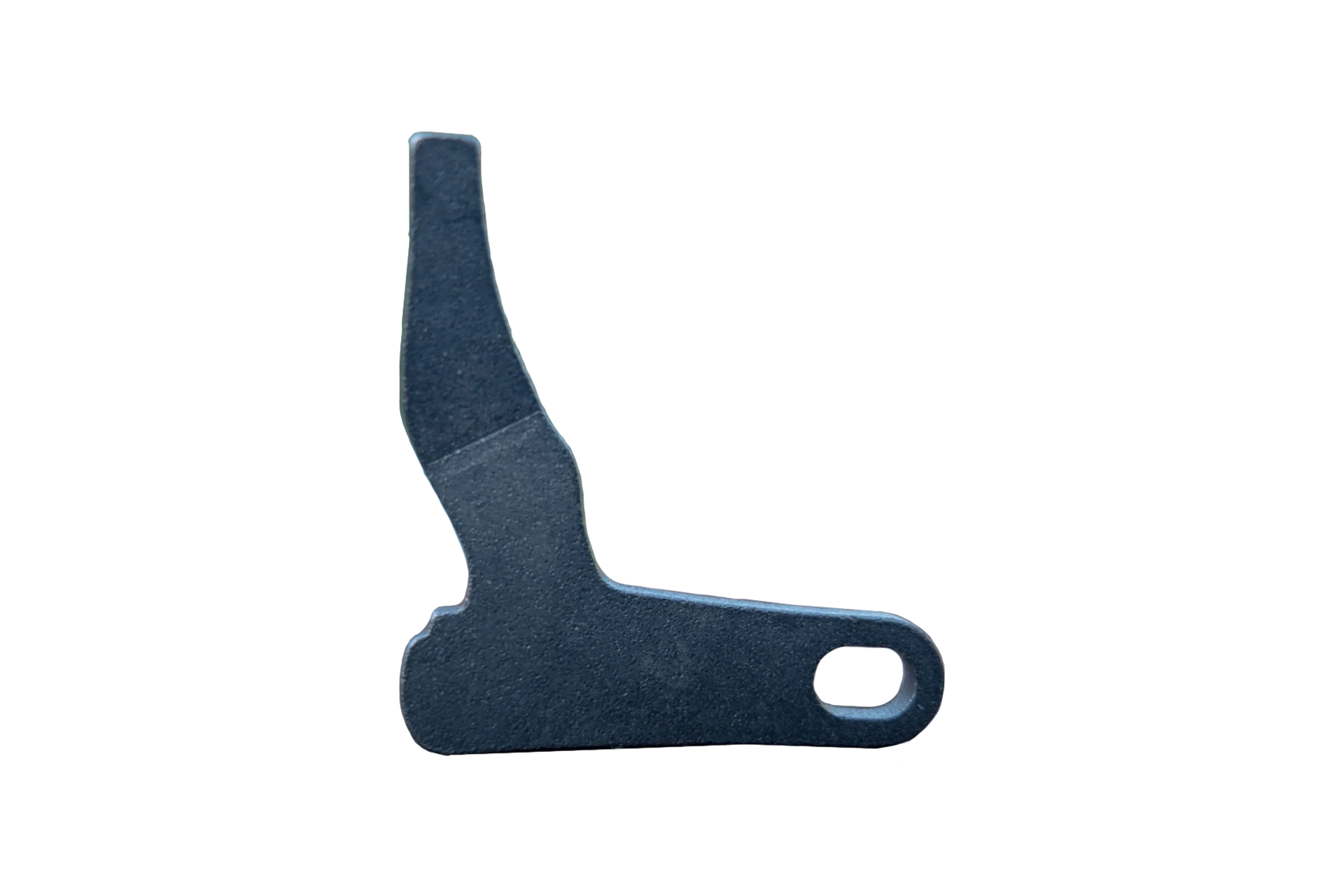
The Hoffman Tactical Trigger Kicker applies that concept in a notably simple way. It is not a complete trigger assembly or a cassette-style trigger. It is a single component that replaces the disconnector in an otherwise standard AR-15 fire control group.
That makes the Trigger Kicker smaller and less complicated than many other active reset products, but it does not make it universally compatible. The trigger, hammer, safety selector, and bolt carrier already in the rifle must have the correct geometry for the system to function properly.
AR15Discounts sells the Hoffman Tactical Trigger Kicker under manufacturer part number TK-15. Before ordering one, buyers should understand how it works, how it differs from other forced reset systems, and what components the host rifle needs.
How a Standard AR-15 Trigger Resets
With a standard semiautomatic AR-15 trigger, pulling the trigger releases the hammer and fires one round. As the bolt carrier cycles, it pushes the hammer back into the cocked position. If the shooter continues holding the trigger to the rear, the disconnector captures the hammer and prevents it from following the bolt carrier forward.
When the shooter allows the trigger to move forward, the disconnector releases the hammer to the trigger sear. That transfer completes the reset and prepares the fire control group for the next trigger pull.
An active reset system changes how the trigger reaches that reset position. Instead of relying entirely on the shooter to release pressure and allow the trigger spring to move the trigger forward, the system uses movement from the rifle’s operating cycle to push the trigger into reset.
How the Trigger Kicker Works
The Trigger Kicker replaces the standard disconnector and disconnector spring. When the rifle cycles, the hammer contacts the Kicker and pushes the trigger into its reset position. The Kicker then moves beneath the rifle’s standard safety selector, where it locks the trigger in reset while the bolt carrier is out of battery.
As the bolt carrier returns forward, it moves the Kicker out from beneath the selector. This unlocks the trigger after the carrier has returned to battery, allowing the shooter to operate the trigger again.
This locking function is an important part of the design. The Kicker does more than push the trigger forward. It also prevents the trigger from being pulled again while the bolt carrier is cycling.
The current Trigger Kicker is a two-position system that retains the rifle’s standard safety selector. Its two settings are safe and active-reset semiautomatic. There is no third position for conventional spring-reset semiautomatic operation.
The Trigger Kicker is manufactured from hardened 4130 alloy steel. The package contains the Kicker itself, so an incompatible hammer or other fire control component must be replaced separately.
How the Trigger Kicker Differs From Other Forced Reset Systems
Forced reset products can produce a similar result through different mechanical designs. Some replace the complete fire control group with a self-contained cassette. Others perform the reset through a replacement safety selector.
The Atrius Development 3-Position Super Selector Safety is an example of a selector-based design. It replaces the standard safety and provides safe, conventional semiautomatic, and active-reset settings.
The Trigger Kicker works from the disconnector position instead. It keeps the rifle’s standard two-position safety and does not provide a separate conventional semiautomatic setting.
The smaller parts swap is a major part of the Kicker’s appeal. However, it also means the system depends heavily on the dimensions and profiles of the existing fire control components. A cassette-style trigger controls much of that geometry within its own housing. The Trigger Kicker must work with the trigger, hammer, safety selector, and bolt carrier already installed in the rifle.
Trigger Compatibility
The Trigger Kicker was designed for a standard semiautomatic AR-15 fire control group. The trigger must have the common disconnector slot shown in Hoffman Tactical’s compatibility guide.
Aftermarket triggers should not be assumed compatible simply because they fit inside an AR-15 lower receiver. Specialty triggers may use different dimensions, disconnector arrangements, or rear profiles that prevent the Kicker from moving correctly.
Buyers should compare their trigger directly with the images in the official Hoffman Tactical Trigger Kicker Guide before installing the part.
Safety Selector Compatibility
The Trigger Kicker uses the rifle’s existing safety selector. Hoffman Tactical specifies a selector with the common central drum and a 90-degree throw.
The manufacturer also warns that some inexpensive or imported selectors may be too soft to withstand the Kicker’s normal locking forces. Hoffman describes this as uncommon with properly manufactured selectors, but users should still watch for unusual wear and replace the selector if damage begins to appear.
Many aftermarket selectors have different shapes or internal geometry. Compatibility should be verified rather than assumed.
Hammer Compatibility
The hammer is one of the easiest components to misidentify. The Trigger Kicker requires a true semiautomatic AR-15 hammer. It was not designed for a demilled automatic hammer that has had its automatic sear surface ground away.
According to Hoffman Tactical, a demilled hammer can often be identified by the smooth ground surface on its rear. That surface sits lower than the corresponding area on a compatible semiautomatic hammer and can prevent the hammer from engaging the Kicker correctly.
The shape at the tip of the hammer is another identifying feature. A compatible semiautomatic hammer has a full radius in this area, while a demilled hammer has part of that radius cut away. The manufacturer’s guide includes comparison photographs that are more reliable than trying to identify the hammer from a written description alone.
If the hammer does not clearly match the compatible example, it should be replaced with a known compatible component before the Kicker is installed.
Bolt Carrier Compatibility
The Trigger Kicker also requires a mil-spec, full-profile bolt carrier with the correct trip surface on its underside. A lightweight, cut-back, or demilled carrier may not have enough material in the proper location to operate the Kicker.
Hoffman Tactical instructs buyers to examine the relationship between the trip surface on the underside of the carrier and the opening on top. On a compatible carrier, those areas should align. If the underside trip surface has been cut farther toward the rear, the carrier is not compatible.
This is not a problem that can be corrected by changing the trigger or safety selector. The bolt carrier must have the proper profile for the Kicker to operate at the correct point in the firing cycle.
Platform Limitations
The Trigger Kicker was developed for the standard AR-15 platform. A firearm’s ability to accept an AR-15 fire control group does not automatically make it compatible.
Hoffman Tactical states that AR-9, LR-308, KF-5, and bufferless systems are not immediately compatible with the Trigger Kicker. The manufacturer notes that some AR-9s and other platforms may work, but describes those applications as experimental.
Individual reports of the Kicker functioning in an unsupported firearm should not be treated as confirmation that every firearm of that type will work. Differences in bolt geometry, carrier travel, receiver dimensions, and fire control components can produce very different results.
Installation
Installation involves removing the original disconnector and disconnector spring and replacing them with the Trigger Kicker. No replacement safety is required.
Although the parts swap is straightforward, the rifle must be completely unloaded before work begins. Ammunition should be removed from the work area, and the trigger, hammer, selector, and bolt carrier should be compared with the official compatibility guide before installation.
After installation, the unloaded rifle should receive a complete function check in both selector positions. The selector must prevent the hammer from falling when set to safe, and the Kicker should move through its reset and locking cycle without binding or producing abnormal resistance.
If the components do not match Hoffman Tactical’s guide or the rifle fails any part of the function check, live fire should not be attempted. A qualified gunsmith should inspect the installation.
The Host Rifle Still Matters
AR15Discounts cautions that forced reset systems require a properly configured and tuned host rifle. They should not be viewed as universal drop-in upgrades for every AR-15.
Even when the fire control components and bolt carrier are compatible, the rifle must cycle reliably. Gas pressure, ammunition, buffer weight, action spring strength, and component tolerances can affect carrier movement and reset timing.
A rifle that short-strokes, cycles inconsistently, or produces a dead trigger should be unloaded and inspected. Continuing to fire an improperly configured system can cause repeated malfunctions or component damage.
Because every AR-15 configuration is different, buyers should follow the current manufacturer and retailer guidance for their specific setup instead of assuming that a buffer or spring combination reported by another owner will work in their rifle.
Safe Use at the Range
An active reset system can allow a much faster firing cadence than a conventional trigger. Shooters should be prepared for the effect that faster strings can have on muzzle control, ammunition consumption, and firearm temperature.
Initial live-fire testing should be conducted with a secure stance, firm control of the rifle, and a safe backstop. Shooters should begin with controlled shots while confirming that the rifle cycles and resets correctly.
Range rules should also be checked before using the Trigger Kicker. Some shooting facilities prohibit rapid fire regardless of whether the firearm and installed components are otherwise lawful.
Shipping Restrictions and Legal Considerations
At the time of publication, Hoffman Tactical and AR15Discounts state that they do not ship the Trigger Kicker to California, Colorado, Connecticut, Delaware, Hawaii, Illinois, Maryland, Massachusetts, Minnesota, Nevada, New Jersey, New York, Oregon, Rhode Island, or the District of Columbia.
This is the sellers’ current shipping restriction. It should not be described as a complete determination of the law in every state or locality. Laws and company policies can change, and local restrictions may exist in jurisdictions that are not included on the list.
The federal treatment of forced reset triggers has also changed in recent years. According to the Department of Justice, the U.S. District Court for the Northern District of Texas concluded in July 2024 that the forced reset triggers at issue in that case could not be classified as machine guns under the federal statute. In May 2025, the Department of Justice announced a settlement with Rare Breed Triggers that resolved several related cases.
That announcement addressed Rare Breed and the litigation identified in the settlement. It did not specifically address the Hoffman Tactical Trigger Kicker, and it does not override state or local restrictions.
Anyone uncertain about the law where they live should consult a qualified firearms attorney before purchasing or installing the Trigger Kicker.
Is the Trigger Kicker Right for Your AR-15?
The Trigger Kicker offers a compact approach to active reset by replacing only the disconnector and its spring. It keeps the rifle’s standard trigger, hammer, and safety selector, provided all of those parts are compatible.
Its simplicity is also why careful inspection is necessary. The Kicker cannot compensate for an incompatible trigger slot, incorrectly shaped hammer, unsuitable selector, cut-back bolt carrier, or unsupported firearm platform.
For an AR-15 with the correct mil-spec components, the Trigger Kicker provides active reset without replacing the complete fire control group or safety selector. For rifles built around specialty triggers, modified hammers, lightweight carriers, or nonstandard operating systems, other options may be more appropriate.
The most important step is to review the official compatibility guide before purchasing. The installation may be simple, but the host rifle still has to be right.