
Jul
Table of contents
- Operating Systems and Core Design Differences
- AR-15 vs. AK-47 – Caliber Performance and Ammunition Considerations
- Accuracy, Range, and Practical Shooting
- AR-15 vs. AK-47 – Reliability, Maintenance, and Long-Term Ownership
- AR-15 vs. AK-47 – Ergonomics, Comfort, and User-Friendliness
- Customization and Aftermarket Support
- AR-15 vs. AK-47 – Which Rifle Suits You Best?
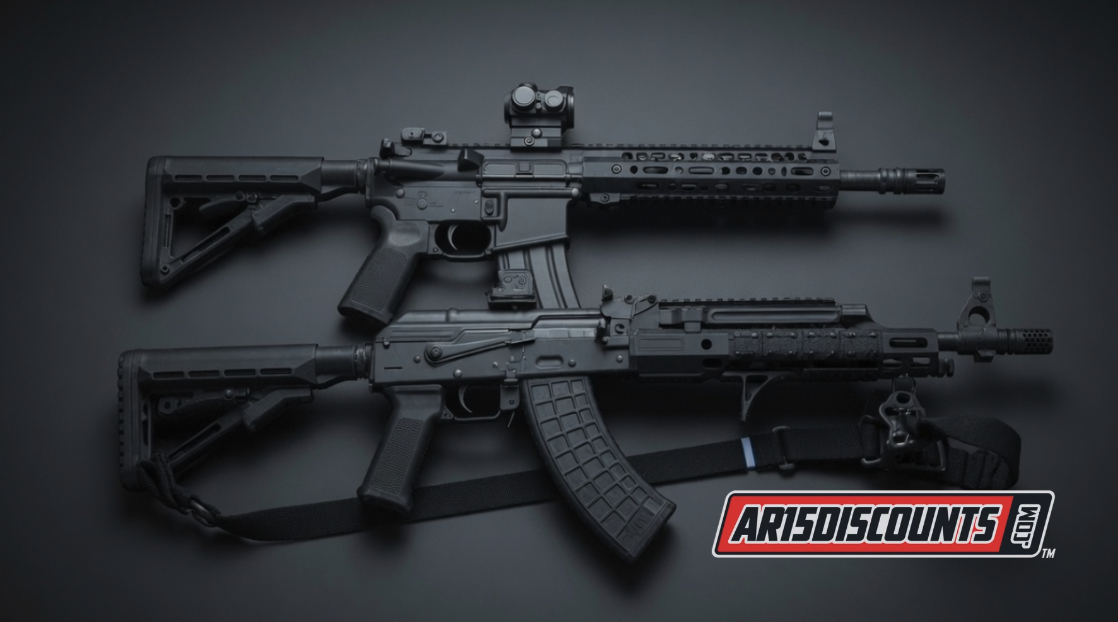
The AR-15 vs. AK-47 debate ranks among the most enduring discussions in the firearms community. Both platforms have earned legendary status through decades of real-world use, yet they represent fundamentally different philosophies in rifle design. One emphasizes precision, modularity, and shooter comfort while the other prioritizes rugged simplicity and tolerance for tough conditions. For many enthusiasts, especially those shopping at ar15discounts, the choice comes down to intended use, budget, and long-term ownership costs. This guide explores the key differences to help you decide which rifle fits your needs best.

TL;DR- Too Long Didn’t Read
The blog examines the enduring debate between the AR-15 and AK-47 rifles, focusing on their distinct philosophies, performance, and suitability for various scenarios. Both rifles have legendary status, but choosing between them depends on personal preferences and practical considerations.
- The AR-15’s direct impingement system allows for smoother shooting while the AK-47’s piston system offers durability in harsh conditions.
- Cost-effective ammunition favors the AR-15, though 5.56-chambered AKs are growing in popularity.
- AR-15s excel in accuracy and ergonomics but require more maintenance compared to the rugged AK-47.
- Customization is a strong suit of the AR-15 with vast aftermarket support.
- AR-15 tends to be more beginner-friendly with lighter recoil and more intuitive controls.
Operating Systems and Core Design Differences
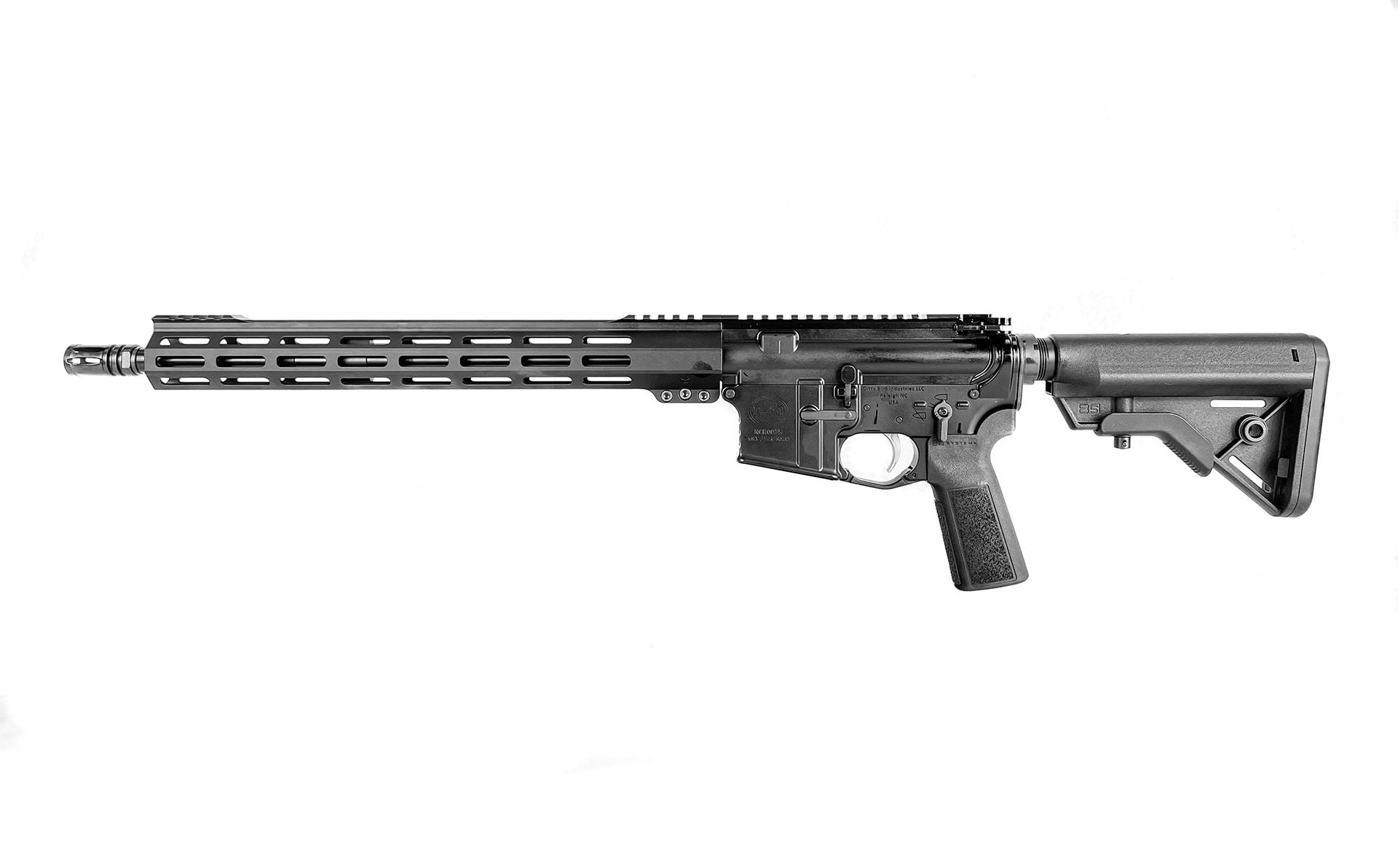
The AR-15 employs a direct impingement gas system that channels propellant gases directly into the bolt carrier group. This setup keeps the rifle lightweight with minimal reciprocating mass, which supports smoother shooting and better inherent accuracy. In contrast, the AK-47 relies on a long-stroke piston system where a heavy piston and bolt carrier move together as one unit. This design excels at keeping fouling away from the receiver and functions reliably even when dirty or poorly maintained.
Both rifles use rotating bolts, but the AR-15 features a seven-lug design with tighter tolerances and aluminum receivers, while the AK-47 typically uses a two-lug bolt in a steel receiver. These engineering choices make the AR-15 lighter overall, often weighing in around six and a half to seven pounds compared to the AK-47’s seven and a half to eight and a half pounds. The differences extend to how each rifle handles recoil and follow-up shots, shaping their suitability for various scenarios.
AR-15 vs. AK-47 – Caliber Performance and Ammunition Considerations
Standard AR-15 models fire the 5.56x45mm NATO round, a lighter and faster cartridge that delivers a flat trajectory and manageable recoil. This allows for quicker target reacquisition and effective performance out to several hundred yards. The 7.62x39mm cartridge common to traditional AK-47 variants offers greater mass and energy at close range, along with solid barrier penetration, but it produces more recoil and a more pronounced arc in its bullet path.
As we move through 2026, ammunition pricing plays a larger role than ever. The cost of 7.62x39mm has risen noticeably in many markets, making high-volume training sessions more expensive. This trend has increased interest in 5.56-chambered AK-style rifles, which combine the platform’s legendary durability with the lighter, more affordable, and lower-recoiling cartridge. These 5.56 AKs shoot quite smoothly, yet many owners still find that an AR-15 platform delivers superior overall performance in the same caliber thanks to better ergonomics and accessory support.
Accuracy, Range, and Practical Shooting
The AR-15 platform consistently demonstrates stronger accuracy potential due to its tighter manufacturing standards, free-floating barrels in many builds, and excellent trigger options. Quality examples often achieve one to two MOA groups with good ammunition, making them well-suited for longer-range work or precision-oriented tasks. The AK-47, while improved in modern iterations, generally groups in the two to four MOA range because of its looser tolerances and design priorities centered on reliability over pinpoint precision.
For engagements beyond three hundred yards, when it comes to AR-15 vs. AK-47, the AR-15 holds a clear edge thanks to its flatter trajectory and easier optics integration. Both rifles perform admirably inside one hundred yards for defensive or recreational purposes, but the AR-15 rewards skilled shooters who want to stretch its capabilities further.




AR-15 vs. AK-47 – Reliability, Maintenance, and Long-Term Ownership
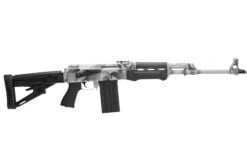
AR-15 vs. AK-47…The AK-47 earned its reputation for functioning under extreme neglect, with loose tolerances that shrug off dirt, mud, and minimal cleaning. Modern AR-15s from reputable makers have closed much of this gap through chrome-lined barrels, properly tested components, and straightforward maintenance routines. In typical civilian use where owners clean their rifles after range trips, both platforms prove highly dependable.
Cleaning an AR-15 takes a bit more attention to the gas system, but the process remains simple with basic tools. The AK-47 often requires less frequent deep cleaning, though its controls and magazine changes follow a different manual of arms that some shooters find less intuitive. When it comes to overall cost of ownership, the AR-15 benefits from widespread parts availability and lower ongoing ammunition expenses, particularly in 5.56.
AR-15 vs. AK-47 – Ergonomics, Comfort, and User-Friendliness
Shooters appreciate the AR-15 for its natural handling, adjustable stocks, ambidextrous controls, and comfortable cheek weld when optics are mounted. The design works especially well for left-handed users and reduces fatigue during extended sessions. The AK-47’s safety lever and magazine insertion method demand more deliberate movements, and its stock geometry can feel less natural with optics. Many first-time owners find the AR-15 easier to learn and more enjoyable to shoot right away.
Mounting a red dot or scope on an AR-15 is straightforward thanks to standardized Picatinny rails on flat-top receivers. AK-style rifles often need adapters or specific side rails, which can complicate setup.
Customization and Aftermarket Support
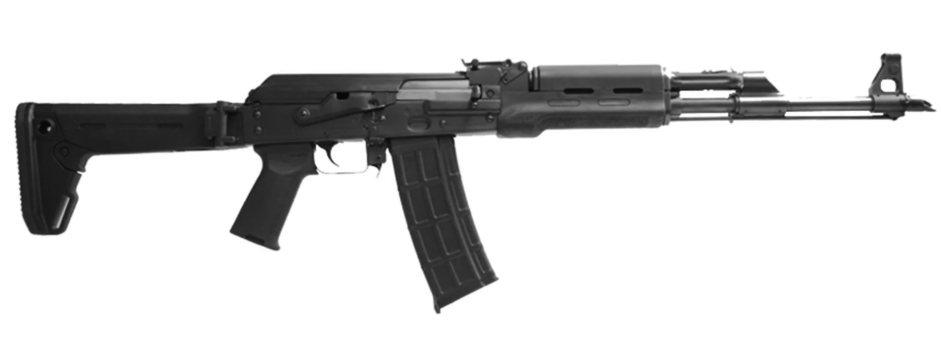
AR-15 vs. AK-47? The AR-15 stands unmatched in its ecosystem of parts, allowing easy swaps of uppers for different calibers or barrel lengths, plus countless triggers, grips, stocks, and handguards. This modularity lets owners tailor the rifle precisely to their preferences. While AK aftermarket options have grown, they remain more limited and sometimes require fitting.
AR-15 vs. AK-47 – Which Rifle Suits You Best?

For a first-time rifle owner, an AR-15 is generally the stronger overall choice. Its lighter recoil, intuitive controls, superior ergonomics, and vast accessory ecosystem make it more approachable and versatile for learning and long-term enjoyment. Many beginners appreciate how quickly they can become proficient and how enjoyable it feels on the range.
If ruggedness in harsh environments tops your priority list, a quality AK-style rifle delivers peace of mind. In 2026, however, a 5.56 AK variant offers an intriguing middle ground with smooth shooting characteristics and better ammo economics than traditional 7.62 models. Even then, pairing that caliber with an AR-15 platform often provides the best balance of performance, comfort, and future-proofing.
Civilian versions of both the AR-15 and AK-style rifles are strictly semi-automatic, offering reliable function without full-auto capability.
Whether you prioritize precision and customization or raw durability, both platforms have earned their place in collections and defensive setups. Visit ar15discounts to explore quality AR-15 builds, components, and related gear that can help you get started or upgrade your setup. AR-15 vs. AK-47? The right rifle is the one you will train with consistently and enjoy for years to come.
The AR-15 is generally the stronger choice for beginners. Its lighter recoil, intuitive controls, and comfortable ergonomics make it easier to learn on and more enjoyable to shoot right away.
The AR-15. Its 5.56x45mm cartridge is lighter and produces less recoil than the AK-47’s 7.62x39mm round, allowing for quicker follow-up shots. A 5.56 AK, however, is super smooth, and well worth looking into.
Yes, typically. The AR-15 benefits from widespread parts availability and lower ongoing ammunition costs, particularly in 5.56, though 7.62×39 pricing has risen further in 2026.
The AK-47 tolerates dirt and neglect better and needs less frequent deep cleaning. The AR-15 requires a bit more attention to its gas system but is still simple to maintain with basic tools.
The AR-15. It has a far larger ecosystem of triggers, grips, stocks, and handguards, making upgrades and caliber swaps easier. AK aftermarket options exist but are more limited and sometimes require fitting.
The AR-15, thanks to standardized Picatinny rails on flat-top receivers. AK-style rifles often need adapters or specific side rails.
The AR-15, due to its ambidextrous controls and natural handling.
The AR-15, typically weighing six and a half to seven pounds versus the AK-47’s seven and a half to eight and a half pounds.
No. Civilian versions of both are strictly semi-automatic.