
9mm Ammo, NFA, Suppressors
BOE Suppression IncoLite Series: A Serious Look at One of the Best 9mm Suppressors Available
Jun
Table of contents
- The Technology Behind the IncoLite Series
- Inconel 718: The Material Advantage
- Why 3D Printing Changes Everything
- Solving Back Pressure and Back Gassing
- Mono-Core Construction and D360 Coating
- BOE Suppression IncoLite 9
- BOE Suppression IncoLite 9S
- BOE Suppression IncoLite 9M
- How the IncoLite Series Compares to the Competition
- Sound Performance and Hearing Safety
- Final Thoughts
Most shooters spend a lot of time thinking about what gun to buy and not nearly enough time thinking about the suppressor on the end of it. That tends to change the first time someone runs a suppressed setup that actually works well. The difference between a quality 9mm suppressor and a mediocre one shows up in ways that matter: how the gun feels to shoot, how quickly it heats up, how it holds up after a few hundred rounds, and whether the whole package actually makes the firearm more useful or just heavier and longer.
TL;DR- Too Long Didn’t Read
BOE Suppression’s IncoLite series redefines 9mm suppressors by optimizing sound reduction, recoil control, and back gassing without sacrificing any one of these elements. Utilizing advanced materials and technology, these suppressors are at the cutting edge of firearm silencer design.
- The IncoLite series utilizes 3D-printing technology with Inconel 718 for enhanced heat resistance and structural integrity.
- Innovative internal geometry maximizes sound absorption and gas cooling, improving overall suppressor performance.
- The series addresses back pressure and back gassing effectively, enhancing firearm control and user safety.
- Models are user-serviceable, feature a D360 coating for durability, and are available in multiple configurations for various uses.
- Demonstrates competitive advantages in weight, durability, and functionality compared to other suppressors in the market.
BOE Suppression is the silencer division of CPD Inc., a Florida-based manufacturer that started with serious research and development rather than with existing suppressor designs. Their stated mission is to optimize the relationship between three things that traditional suppressors force shooters to compromise on: sound reduction, recoil control, and back gassing. Most suppressor manufacturers treat those as a sliding scale where improving one hurts another. BOE spent years trying to solve all three at once, and the IncoLite 9mm lineup is the result of that work.
The Technology Behind the IncoLite Series
Understanding why the IncoLite series performs the way it does requires a quick look at what BOE is actually doing differently, because it goes well beyond the material choice.
Inconel 718: The Material Advantage
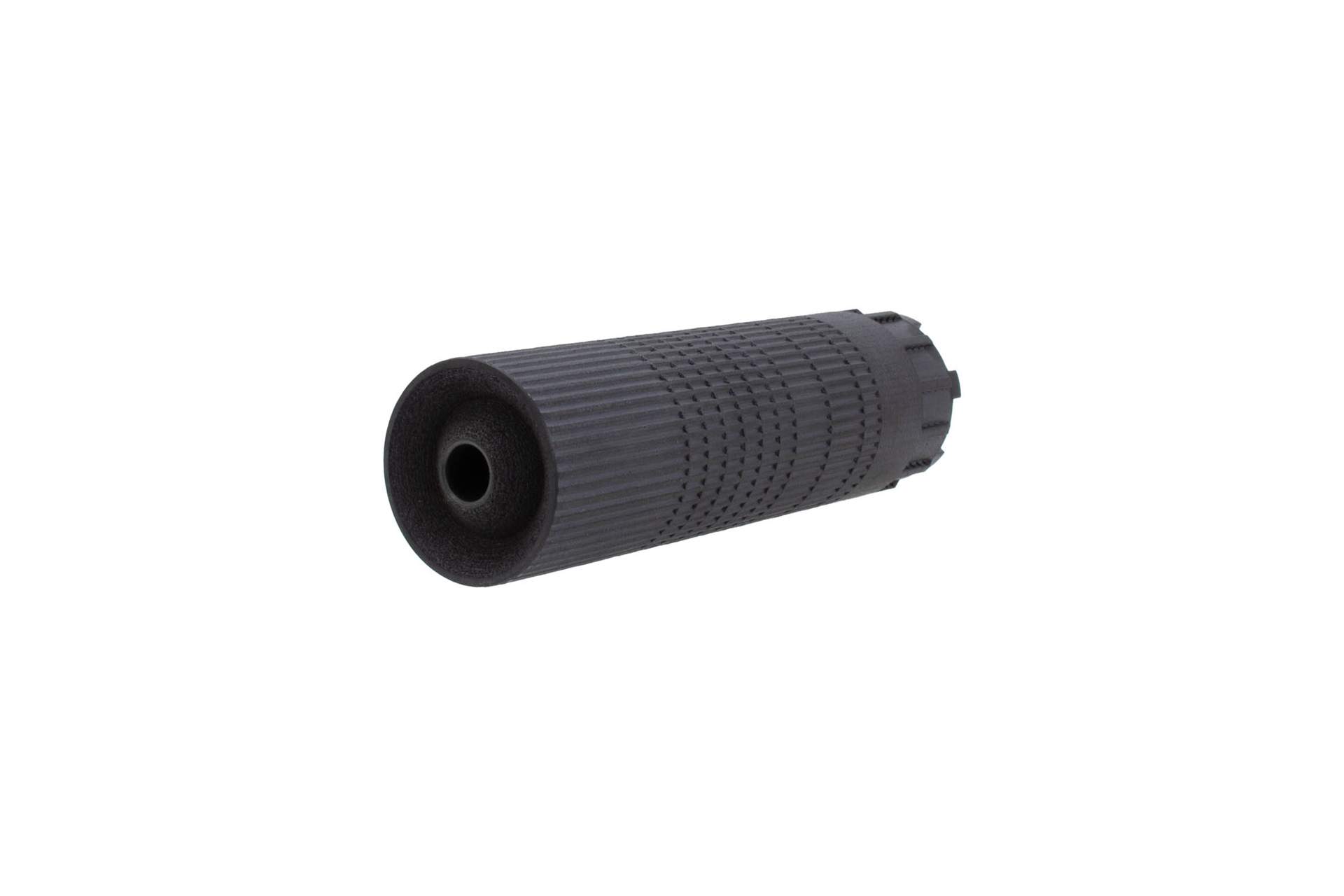
All three IncoLite models are fully 3D-printed from Inconel 718, a nickel-chromium superalloy used in jet engines and aerospace applications specifically because it resists extreme heat and maintains structural integrity under sustained stress. That matters in a suppressor more than most people realize, because heat is what degrades performance and shortens the life of lesser materials, especially on pistol caliber carbines and subguns running high volumes of fire.
Why 3D Printing Changes Everything
The reason these cans are 3D-printed rather than machined is not a cost-cutting measure. It is because the internal geometry BOE uses to achieve their performance cannot be produced with traditional manufacturing methods. Their unique core design maximizes both internal air volume and internal surface area simultaneously, which are two factors that traditional suppressor design forces manufacturers to trade off against each other. More air volume helps with sound absorption. More surface area helps gas cool and slow down. BOE’s 3D-printed geometry achieves both, which is the core reason these cans perform the way they do.
Solving Back Pressure and Back Gassing
The multi-chamber gas redirection system addresses back pressure and back gassing in a way that most competing designs do not. Back pressure is a real problem with many suppressors because it increases the cyclic rate of the firearm, which accelerates wear, reduces reliability, and makes the gun harder to control. Back gassing is the related problem where hot, toxic combustion gases get vented back toward the shooter’s face during firing. BOE treats both as design priorities from the ground up, and the printed geometry handles both by equalizing and venting gas more efficiently than traditional baffle stacks.
Mono-Core Construction and D360 Coating
The mono-core construction means the suppressor disassembles for cleaning and service, which is important for longevity. Many competing cans at this price point are sealed and cannot be cleaned properly over time. BOE also applies their proprietary D360 coating to every surface, inside and out. D360 is an advanced DLC treatment with a friction coefficient of 0.05, meaning carbon buildup has very little to adhere to. It is also rated for extreme temperatures and direct plasma jetting, which is the environment the inside of a suppressor experiences during firing.
BOE Suppression IncoLite 9
The IncoLite 9 is the standard model and the logical starting point for most shooters. It measures 5 inches long and 1.5 inches in diameter, and comes in at just 6.5 ounces. That is a legitimately light suppressor for its size class, and light suppressors matter because added weight at the muzzle changes how a pistol or carbine handles and tracks during strings of fire.
The IncoLite 9 suppressor is user-serviceable, which is worth noting because many cans in this price range are not. Being able to clean the internals properly extends service life and maintains performance over time. It ships with a QD mount for fast attachment and removal, making it practical for shooters who run the same can on more than one host. All IncoLite models use 1.375-inch HUB threading, which provides broad compatibility with direct thread mounts, quick-detach systems, and piston mounts for pistol use.
Sound performance sits in line with what experienced suppressor users would expect from a well-designed 9mm can: meaningful reduction across both subsonic and supersonic loads, with subsonic 147-grain ammunition bringing the most noticeable improvement in overall signature. It handles full-auto and high-volume fire better than titanium options of comparable weight. The can is also rated for subsonic .300 Blackout and .350 Legend, adding caliber versatility beyond 9mm.
The IncoLite 9 suppressor is the right choice for shooters who want a single versatile 9mm suppressor that works equally well on a pistol and a PCC without adding excessive length or muzzle-heavy weight.
BOE Suppression IncoLite 9S
The 9S suppressor takes the same Inconel 718 construction and compresses it into an even smaller package. At 4 inches long and just 4 ounces, this is one of the lightest 9mm suppressors available in its size category. The 1.5-inch diameter stays consistent with the standard model, but the reduced length makes a meaningful difference on compact pistols where any added length changes how the gun carries and draws.
Four ounces is light enough that the 9S suppressor eliminates the need for a booster on most semiautomatic pistols. A suppressor booster, also called a nielsen device, is a spring-loaded mechanism that allows the barrel to move during the firing cycle on the tilting-barrel design used by most modern service pistols. Suppressors that add too much weight to the muzzle can interfere with that movement and cause cycling reliability issues. The 9S suppressor is light enough that it avoids that problem on most hosts, which simplifies the setup and removes one more potential point of failure.
Sound reduction on a 4-inch suppressor is naturally somewhat less than a 5-inch suppressor from the same manufacturer. That is physics rather than a design flaw. The 9S trades some of that performance for a profile that works in situations where the standard model would feel like too much, particularly on subcompact pistols, short-barreled setups, or any application where keeping the overall length down is the priority. It is also user-serviceable and ships with QD mounting, carrying the same practical advantages as the full-size model. D360 coating applies throughout, keeping the internals clean and carbon-resistant over time.
The IncoLite 9S is the right choice for shooters who prioritize the smallest possible footprint without stepping down to a less durable material or a sealed can they cannot clean.
BOE Suppression IncoLite 9M
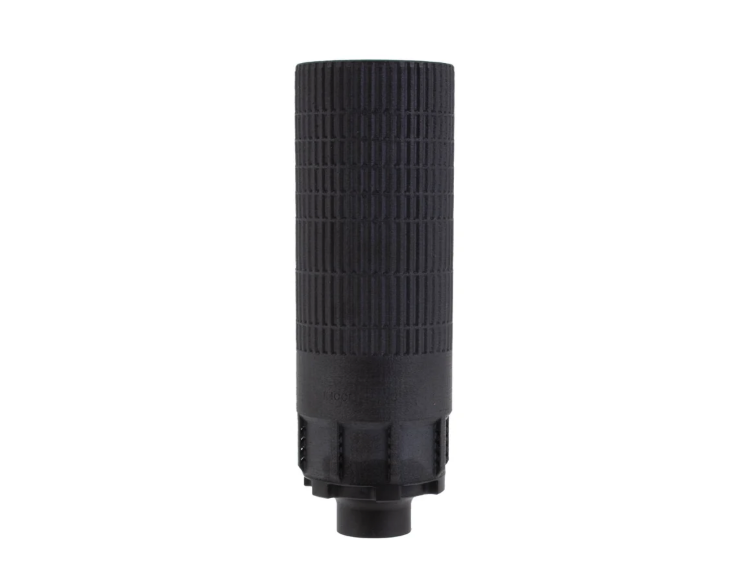
The 9M suppressor s the modular option and the most capable version in the lineup. It measures 7.5 inches overall and weighs 10 ounces, built on the same Inconel 718 base as the other two models. What sets it apart is a removable 2.5-inch front module that includes its own flash hider. That module comes off without tools, which means the 9M can be configured as a shorter can when the situation calls for it, or run at full length when maximum suppression is the priority.
BOE’s approach to modularity differs from most competitors. Most modular suppressors simply add or subtract length, which has some effect but is a fairly blunt instrument. The 9M goes further by offering caliber-specific core swaps in addition to the configurable front module, which means the suppressor can be genuinely optimized for different cartridges rather than just changed in length. Each caliber has unique pressure characteristics that affect how well a suppressor performs, and the 9M’s design accounts for that.
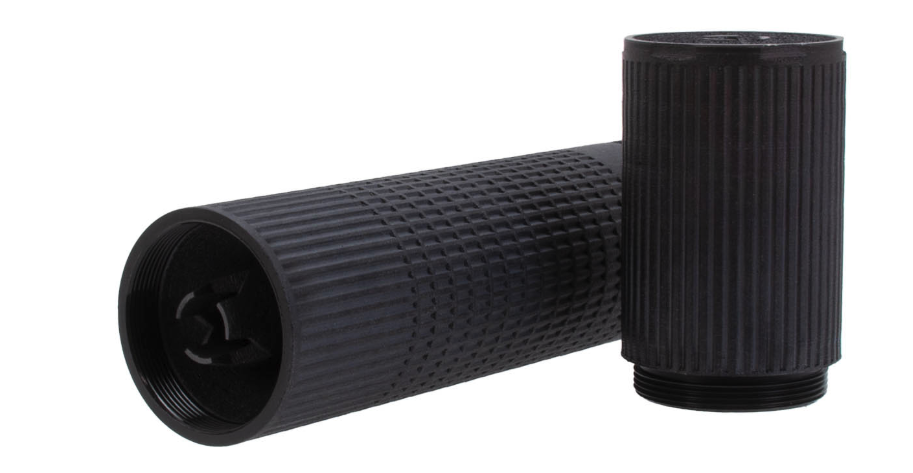
The flash-hiding capability in both configurations adds practical value for low-light and defensive applications. At 7.5 inches, the 9M suppressor produces noticeably more suppression than the standard 9, and the reinforced geometry in the main body allows it to handle supersonic intermediate cartridges and select rifle calibers beyond 9mm, giving it more versatility than the other two IncoLite models. QD mounting and full user-serviceability carry over from the rest of the line, along with the D360 coating throughout.
The 9M is the right choice for shooters who want one suppressor that adapts to multiple roles, or who want the maximum suppression capability the IncoLite line offers in a single package.
How the IncoLite Series Compares to the Competition
Against established names in the 9mm suppressor market, BOE IncoLite models differentiate primarily through material, geometry, and back pressure management. Competing options from Dead Air, SilencerCo, and Rugged all produce capable suppressors, but most weigh more than their IncoLite counterparts at comparable lengths. The Rugged Obsidian 9 is a strong modular option with a solid durability reputation, but it cannot match the sub-7-ounce weight of the IncoLite 9. SilencerCo’s Omega 9K and Spectre 9 offer refined performance with premium materials, but typically at higher prices and greater weight.
Where a BOE suppressor also distinguishes itself is in the back pressure and back gassing story. Many competing designs that reduce back pressure do so at the cost of acoustic performance, because venting gas quickly means less time for sound to be absorbed. BOE’s printed geometry attempts to solve both simultaneously, and the results in real-world testing support that claim more than most.
Sound Performance and Hearing Safety
A 9mm suppressor is generally considered hearing-safe when it keeps peak impulse noise at or below 140 dB, which is the OSHA threshold for impulse noise. Effective suppressors typically deliver 25 to 40 dB of reduction on 9mm platforms. Real-world results vary based on ammunition type, host firearm, and measurement position, but testers who have run the IncoLite series report solid reduction across both subsonic and supersonic loads, with subsonic 147-grain ammunition producing the most significant improvement in overall signature. The Inconel construction and D360 coating maintain that performance over time without the degradation that shows up in lighter materials as they accumulate heat and carbon buildup.
Final Thoughts
The BOE Suppression IncoLite series earns its reputation by combining materials that outperform the alternatives with manufacturing methods that allow suppressor geometry those alternatives cannot achieve, and by addressing back pressure and back gassing as design priorities rather than acceptable trade-offs. The result is a lineup of 9mm suppressors that are lighter than most competitors, more durable under sustained fire than titanium options at comparable weights, and priced well for what they deliver.
The IncoLite 9 suits most shooters who want one capable all-around 9mm can. The 9S is for those who need the smallest possible footprint without sacrificing Inconel durability or user-serviceability. The 9M is for those who want maximum suppression with the flexibility to adapt to different hosts, roles, and calibers.