
AR-15 Upper Receiver
AR-15 Upper Receiver Kits vs. Buying Parts Separately: Which Offers Better Value?
Jul
Table of contents
Choosing between an AR-15 upper receiver kit and individually selected components requires more than a simple price comparison. Builders should consider the package contents, whether the parts match their requirements, which assembly tools they already own, and whether they need professional installation.
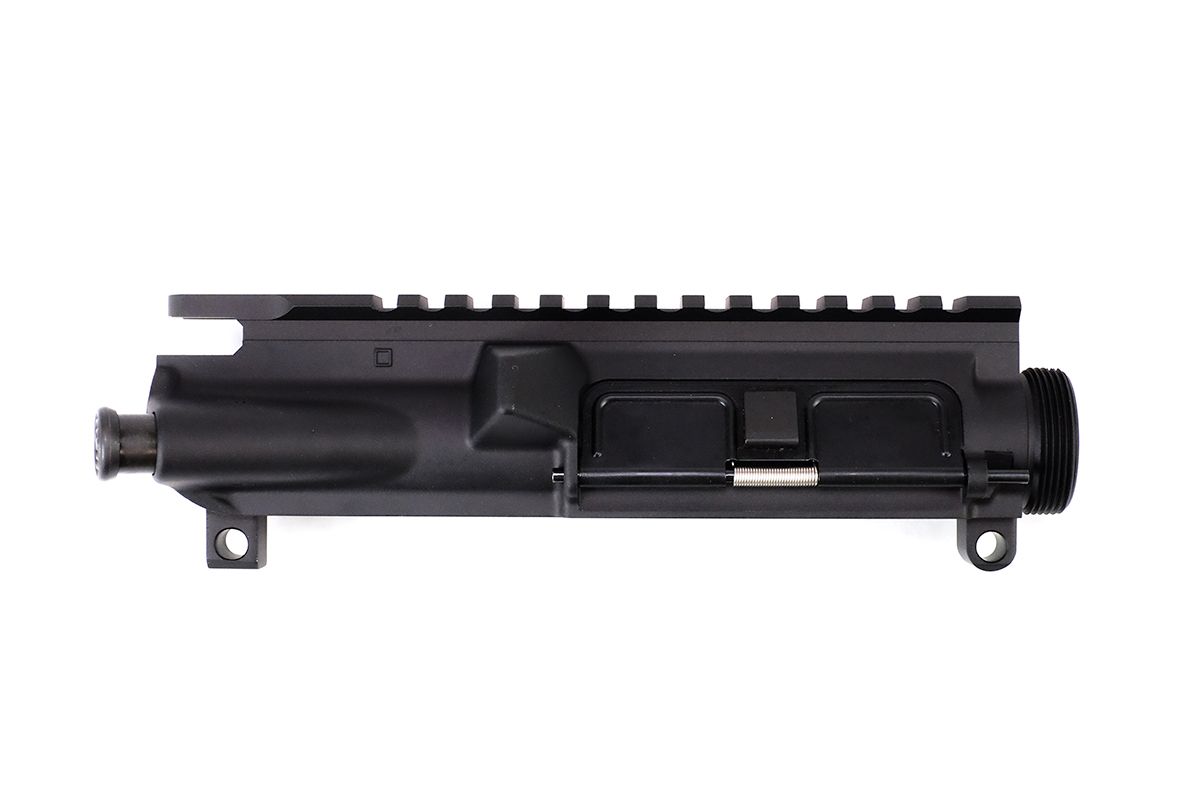
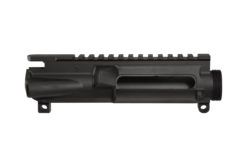
A stripped upper receiver consists mainly of the receiver body, while an assembled version may also include the forward assist and ejection-port cover. To complete an AR-15 stripped upper receiver, the builder must add a barrel, handguard, gas block, gas tube, muzzle device, bolt carrier group, and charging handle. Complete upper receivers combine many of these components into one assembled unit, although manufacturers and sellers include different parts in each package.
What Is an AR-15 Upper Receiver Kit?
The term “upper receiver kit” does not describe one standard group of components. One package may include an AR upper receiver and several loose installation parts, while another may combine the receiver, barrel, gas system, handguard, muzzle device, bolt carrier group, and charging handle.
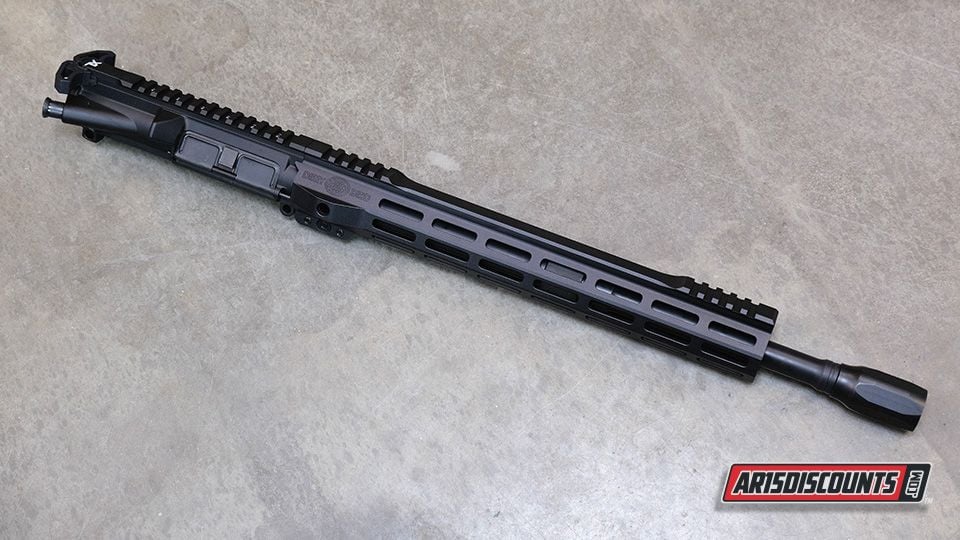
An AR-15 complete upper receiver in 5.56 mm usually includes an installed barrel, gas system, and handguard. Buyers should still confirm whether the package also includes the bolt carrier group and charging handle, as sellers do not use the term “complete” consistently.
Other configurations include a 300 Blackout upper receiver, 6mm ARC upper receiver, and 9mm upper receiver. These caliber-specific setups may use different barrels, bolts, magazines, gas-system components, or lower-receiver parts. Buyers should review the full specifications instead of assuming that every upper uses the same supporting components.
Advantages of an Upper Receiver Kit or Complete Upper
A complete AR-15 upper receiver saves the buyer from handling much of the assembly work. The manufacturer or amorer typically installs the barrel, gas system, muzzle device, barrel nut, and handguard before shipping the upper.
This setup can remove the need for barrel-nut installation, gas-block alignment, gas-tube installation, and handguard mounting. Those tasks often require a bench vise, receiver fixture, torque wrench, barrel-nut wrench, and an AR-15 upper receiver vise block or another fixture that matches the receiver and assembly method.
Choosing a complete upper receiver also reduces the number of compatibility decisions the buyer must make. However, buyers still need to confirm compatibility with the lower receiver, magazines, ammunition, suppressor, and buffer system.
The package label alone does not determine the best upper receiver for a particular build. Buyers should compare the caliber, barrel specifications, gas-system length, handguard, bolt carrier group, charging handle, and included hardware before choosing a kit.
Advantages of Buying Parts Separately
Starting with a stripped upper receiver gives the builder direct control over the entire configuration. The builder can choose the barrel length, caliber, twist rate, gas-system length, handguard, bolt carrier group, charging handle, upper style, and muzzle device individually.
This approach works well when standard assemblies do not match the intended application. A suppressed 300 Blackout upper receiver may use a different barrel and gas-system setup than a precision-focused 6mm ARC upper receiver. Likewise, a blowback-operated 9mm upper receiver may require a caliber-specific bolt, magazine, buffer, and lower-receiver components.
Buying parts separately also lets the builder choose a specific product, such as a Geissele upper receiver, without accepting the barrel, handguard, or internal components that come with a preassembled package. This flexibility makes it easier to create a highly specific configuration.
However, the builder must verify each component’s dimensions, installation requirements, and intended use. Builders should also account for the cost of fixtures and tools, including the best AR-15 upper receiver vise block or assembly fixture for the selected receiver. Purchasing parts separately offers greater control, but it also requires the builder to confirm fit and complete the installation correctly.
Upper Receiver Kit vs. Separate Parts
| Comparison Area | Kit or Complete Upper | Individually Selected Parts |
|---|---|---|
| Included components | Defined by the specific product listing | Selected individually by the builder |
| Assembly work | Major components may arrive installed | Builder or gunsmith completes assembly |
| Component selection | Limited to the offered configuration | Direct control over each component |
| Tools | Few upper-assembly tools may be needed | Vise, receiver fixture, torque wrench, and compatible wrenches may be required |
| Compatibility research | Fewer individual interfaces to evaluate | Every component interface must be verified |
| Pricing | One package price | Combined cost of parts, shipping, tools, and possible labor |
| Replacement options | Installed parts can generally be replaced | Configuration is selected during the initial build |
| Best suited for | Buyers who want less assembly work | Builders seeking a specific configuration |
The chart does not establish that one method is always less expensive. A sale-priced complete upper may cost less than comparable components sold separately, while a premium kit may cost more. An accurate comparison requires matching the barrel, handguard, bolt carrier group, charging handle, muzzle device, and other included parts as closely as possible.
Which Option Offers Better Value?
A kit or a complete AR-15 upper receiver may offer better value if it includes the desired components and spares you from having to purchase tools or gunsmithing services. Buying parts separately may provide better value when the builder already owns the required equipment and cannot find a complete configuration that meets the project’s specifications.
The best upper receiver option is therefore the one that satisfies the intended caliber, barrel length, handguard, component quality, and budget requirements with the fewest unwanted parts or additional expenses.
Choose the Right AR-15 Upper Receiver Setup for Your Budget and Build Goals
The better value depends on the configuration you need. A complete AR-15 upper receiver can reduce assembly work and compatibility decisions, while buying parts separately gives you greater control over the barrel, handguard, gas system, and other components.
Compare the included parts, required tools, shipping costs, and possible gunsmithing expenses before ordering. Shop complete uppers, stripped receivers, tools, and individual components at AR15Discounts.com to build the setup that best fits your budget and intended use.
AR-15 Upper Receiver and Accessory FAQ
Upper configuration affects available mounting space, rifle balance, and accessory compatibility. These answers provide general planning guidance rather than rules that apply to every rifle.
Confirm that the rifle operates correctly, then prioritize sights or an optic, a sling, and any equipment required for the intended use. Additional accessories should address an identified need.
There is no universal amount because optic, light, sling, mount, and accessory prices vary widely. Buyers should compare current prices for the specific products being considered.
Compare the exact contents before purchasing. A bundle provides value only when its components fit the rifle and match parts the buyer already planned to purchase separately.
Optics, lights, slings, bipods, and grips may be transferable when the rifles use compatible mounts, rail systems, and available mounting space.
Check published component weights and place only necessary accessories on the handguard. Barrel profile, handguard length, mounts, lights, and muzzle devices all affect balance.
Optics, weapon lights, sling attachments, bipods, and grips may require compatible Picatinny, M-LOK, or other mounting hardware.
Yes. Handguard length and slot location determine the available mounting area, while barrel and gas-system configuration may limit compatible handguard dimensions.
Many rail covers, M-LOK accessories, sights, optics, and sling attachments use basic fasteners. Manufacturer instructions and torque specifications should still be followed.
Testing the rifle in a basic configuration can help identify functional issues and determine which accessories are actually necessary.
Ambidextrous controls and reversible accessory placement can improve access for left-handed shooters, but buyers should confirm compatibility with the specific rifle.
For additional support, check out our sister site www.dirtybirdusa.com.