
AR-10, AR-10 Basics, AR-10 Parts
AR-10 BCG vs AR-15 BCG: Key Differences Every Builder Should Know
Apr
Table of contents
- Understanding the AR-10 and AR-15 BCG and Their Roles
- Key Differences Between AR-10 and AR-15 BCGs
- Are All AR-10 BCGs Interchangeable?
- Materials and Construction: Bolt Steel Choices
- What MPI and HPT Testing Mean for Your BCGs
- Choosing the Best Coating for an AR-10 or AR-15 BCG
- Does an AR-10 BCG Work with 6.5 Creedmoor?
- How Much Does an AR-10 BCG Weigh Compared to an AR-15 BCG?
- How Often Should You Clean and Inspect an AR-10 or AR-15 BCG?
- Selecting the Right BCG for Your Build
The AR-10 bolt carrier group serves as the core mechanism in any large-frame AR platform, while the AR-15 BCG fills the same role in smaller-frame rifles. Both handle the demanding process of chambering, locking, firing, extracting, and ejecting cartridges, but they are built for very different performance envelopes. While the AR-15 BCG manages lighter 5.56 loads efficiently, the AR-10 version is engineered for higher pressures and energies found in long-range shooting, hunting, and tactical applications.

TL;DR- Too Long Didn’t Read
The blog post provides a detailed guide on the roles and differences between AR-10 and AR-15 Bolt Carrier Groups (BCGs), emphasizing their construction, interchangeability, and maintenance needs.
- AR-10 BCGs are designed for heavier cartridges and offer higher durability, while AR-15 BCGs suit lighter calibers for faster cycling.
- Key distinctions include size, weight, and compatibility, with AR-10 components not interchangeable with AR-15 systems.
- Material selection, such as 9310 steel, and coating choices like nitride or nickel boron, affect performance and maintenance.
- BCGs should undergo HPT and MPI testing for reliability, especially in high-pressure environments like AR-10 setups.
- Regular cleaning and precise build matching enhance functionality and safety for both AR platforms.
Understanding the AR-10 and AR-15 BCG and Their Roles
Both the AR-10 and AR-15 BCG follow the direct-impingement operating system. Gas from the fired round travels down the gas tube and into the carrier’s gas key, forcing the assembly rearward. This action unlocks the rotating bolt, extracts the spent case, ejects it, resets the hammer, and then the buffer spring drives the components forward to chamber the next round.
While the operating principle is the same, the AR-10 design is far more than a simple upsized version. It incorporates a longer and wider carrier along with a larger bolt face to accommodate the wider cartridge rim and the increased bolt thrust generated by .308-class ammunition. These modifications ensure the system can safely manage the greater forces involved.
Key Differences Between AR-10 and AR-15 BCGs
The AR-10 and AR-15 BCGs differ significantly in size, weight, strength, and performance characteristics. A typical AR-15 BCG weighs roughly 11 to 12 ounces, which supports fast cycling and reduced recoil in lighter calibers. In contrast, a standard full-mass AR-10 BCG usually weighs between 18 and 20 ounces. This added weight helps absorb the sharper recoil impulse from larger cartridges and moderates the cycle rate for more controlled operation, especially when paired with heavier buffers and springs.
Some builders prefer lighter AR-10 BCG options that can weigh as little as 12 to 15 ounces. These designs aim for quicker handling in competitive or suppressed setups, but they often require careful tuning of the gas system to avoid short-stroking or reliability issues. The extra mass in a standard AR-10 BCG contributes to smoother function with the heavier loads typical of the platform, while AR-15 systems rely less on mass due to lower recoil forces.
The two BCG types are not interchangeable. An AR-15 BCG will not fit or operate safely in an AR-10 because of mismatched dimensions, headspace requirements, and pressure-handling limits. Attempting such a swap can lead to dangerous malfunctions or failure. The same holds true in reverse, as AR-10 components are too large for the AR-15 receiver and bolt face.
Are All AR-10 BCGs Interchangeable?
Compatibility among AR-10 BCGs requires more attention than in the highly standardized AR-15 world. AR-15 components benefit from a more uniform specification, while AR-10 platforms vary between two primary patterns: the original Armalite AR-10 design and the more widely used DPMS/LR-308 pattern. These patterns vary in key dimensions, particularly involving the bolt, barrel extension, and headspace.
Using a BCG from one pattern in a receiver or barrel designed for the other can result in extraction failures, improper headspace, or safety concerns. Most current aftermarket parts and complete rifles follow the DPMS pattern because it offers broad compatibility with magazines and other accessories. Always confirm that your BCG matches your upper receiver and barrel extension precisely. While the carrier body allows some flexibility, the bolt and barrel extension must align correctly for safe and consistent performance.
Materials and Construction: Bolt Steel Choices
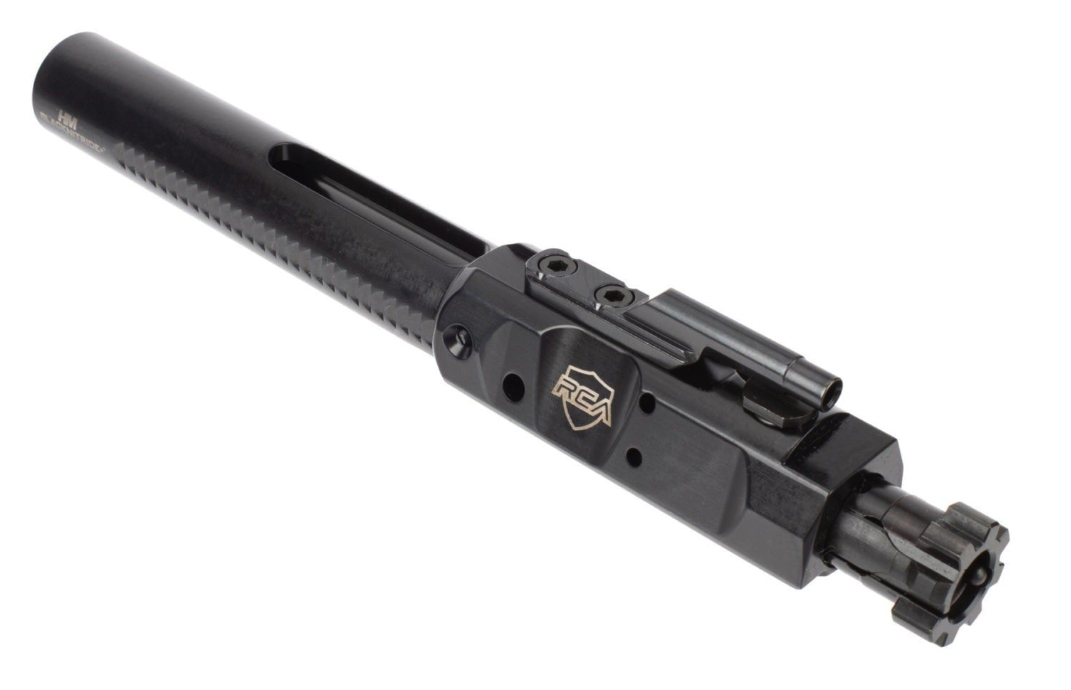
Both AR-10 and AR-15 carriers are commonly machined from 8620 steel, valued for its toughness and machinability. The bolt, which endures the highest stresses, demands stronger materials regardless of platform. The main choices are Carpenter 158 and 9310 steel.
Carpenter 158 has a long history of reliable performance and excellent case-hardening properties. Many manufacturers continue to use it successfully in both AR-10 and AR-15 builds. 9310 steel provides slightly higher tensile strength and improved through-hardening when properly treated, due to its alloying elements such as molybdenum and boron.
Durability ultimately depends more on precise heat treatment, shot peening, and manufacturing quality than on the base alloy alone. This is especially important in AR-10 platforms, where higher pressures place greater stress on the bolt.
What MPI and HPT Testing Mean for Your BCGs
Serious builders prioritize BCGs that have passed high-pressure testing and magnetic particle inspection, whether for an AR-10 or AR-15. High-pressure testing fires a proof-load cartridge well above normal specifications to reveal any weaknesses in the bolt. Magnetic particle inspection then uses magnetic fields and fluorescent particles under ultraviolet light to detect even tiny cracks or material flaws.
These processes do not make any part indestructible, but they significantly increase confidence that the bolt can endure thousands of rounds without catastrophic failure. In the higher-pressure environment of an AR-10, HPT and MPI testing provide even greater value.
Choosing the Best Coating for an AR-10 or AR-15 BCG
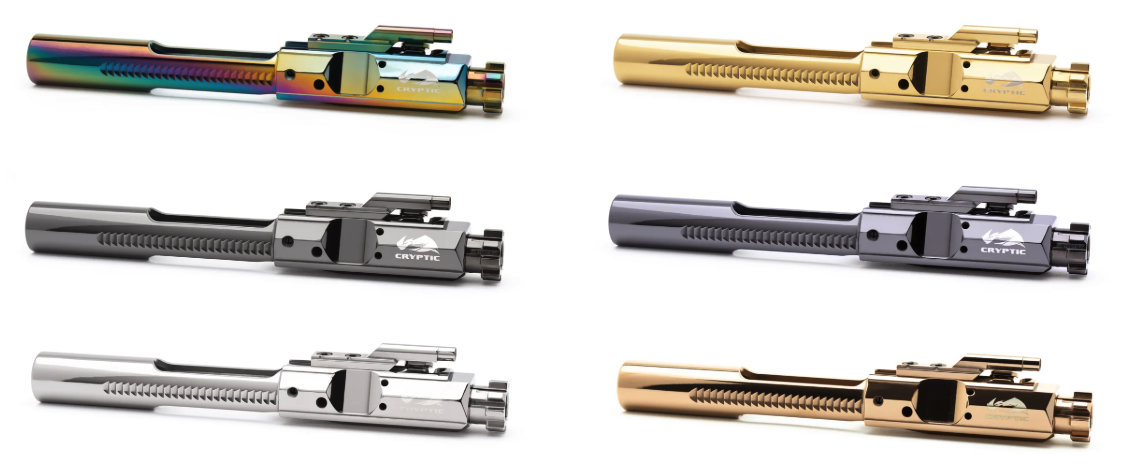
The surface finish of a BCG influences friction levels, corrosion resistance, and ease of cleaning across both platforms. Phosphate remains an affordable, traditional option that holds lubricant effectively, although it tends to collect carbon buildup over time.
Black nitride treatment hardens the surface, reduces friction, and improves resistance to corrosion and fouling, which simplifies maintenance. Nickel boron offers an exceptionally slick finish that minimizes the need for heavy lubrication and speeds up cleaning, making it popular for suppressed or competition rifles.
Diamond-like carbon stands out as a high-end choice thanks to its extreme hardness, low friction, and strong wear resistance. There is no universal best coating. Nitride delivers excellent overall value for most shooters, while nickel boron or diamond-like carbon suit those who want reduced maintenance and smoother operation.
Does an AR-10 BCG Work with 6.5 Creedmoor?
A standard .308-pattern AR-10 BCG is generally compatible with 6.5 Creedmoor. Both cartridges use similar bolt face dimensions, allowing the BCG to function reliably across them. This is one of the advantages of the AR-10 platform compared to the more caliber-specific nature of many AR-15 setups.
Certain manufacturers produce dedicated 6.5 Creedmoor BCGs with optimized extractor or ejector features for precision ammunition. When changing between calibers, always verify headspace with proper gauges to maintain safety and extend brass life.
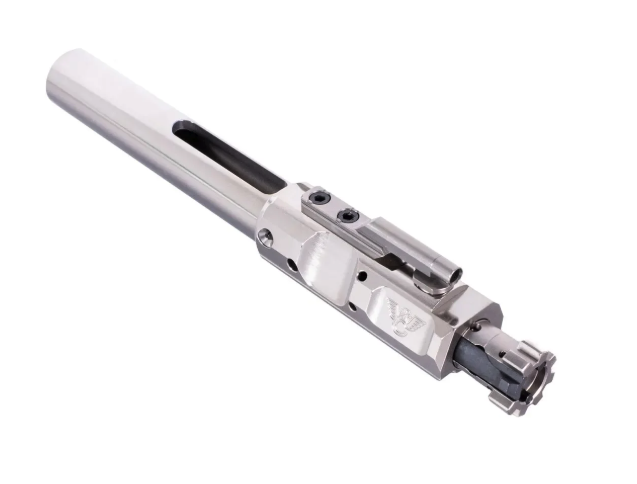
How Much Does an AR-10 BCG Weigh Compared to an AR-15 BCG?
Weight differences between the platforms are intentional and noticeable. An AR-15 BCG typically weighs 11 to 12 ounces, while a standard AR-10 BCG ranges from 18 to 20 ounces or more. The greater mass helps tame the increased recoil energy and slightly slows the cycling rate for better control with heavier ammunition.
Lighter AR-10 BCG variants are available for those seeking faster handling, but they usually need tuned gas systems, buffers, and springs to remain reliable.
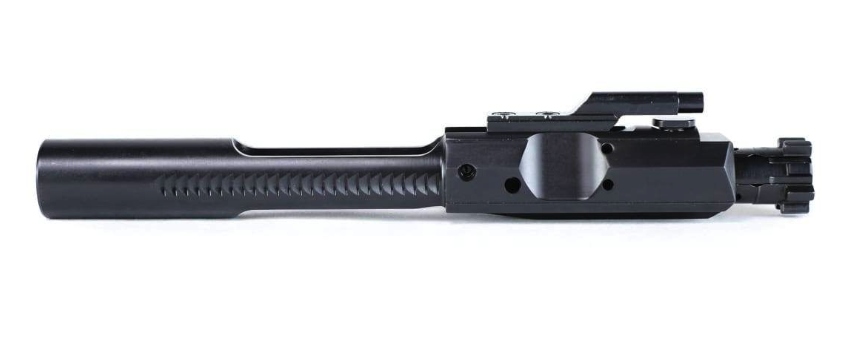
How Often Should You Clean and Inspect an AR-10 or AR-15 BCG?
Both platforms benefit from consistent maintenance, though larger cartridges in AR-10 rifles typically produce more fouling. Clean the BCG after each range session or at least every few hundred rounds, particularly when using a suppressor.
Disassemble by removing the firing pin, cam pin, and bolt, then thoroughly clean the carrier interior, gas key, bolt lugs, extractor, and ejector. Inspect components for wear and reapply lubricant generously to sliding surfaces during reassembly.
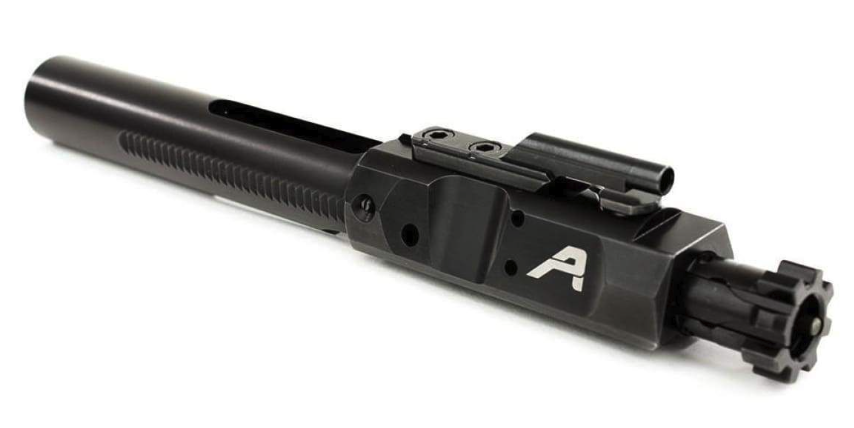
Selecting the Right BCG for Your Build
When building or upgrading, match the BCG to your platform—AR-10 or AR-15—and ensure compatibility with your upper receiver and barrel. AR-15 builders benefit from widespread standardization, while AR-10 builders must pay closer attention to pattern compatibility.
Prioritize components that have undergone HPT and MPI testing from established manufacturers. Choose bolt steel and surface coatings that fit your intended use.
The additional cost and attention to detail required for a quality AR-10 BCG compared to smaller-frame parts translate into better durability, smoother operation, and fewer issues in the field. A properly chosen and maintained BCG helps either platform perform reliably within its intended role.
No. The AR-15 BCG is significantly smaller and lighter, with different dimensions for the carrier, bolt face, and overall length. It will not fit properly in an AR-10 upper and cannot safely handle the higher pressures or larger cartridge rim of .308-class rounds. Attempting the swap risks malfunctions or catastrophic failure. The reverse is also true…AR-10 components are too large for an AR-15.
The AR-10 BCG is larger, longer, and heavier to manage the greater bolt thrust and energy of .308 Winchester and similar cartridges. It features a wider bolt face and reinforced construction for higher pressures. A standard AR-15 BCG weighs about 11–12 ounces, while a full-mass AR-10 BCG typically weighs 18–20 ounces. This extra mass helps tame recoil and supports reliable cycling in the larger platform. The operating system is similar (direct impingement), but the components are not interchangeable due to size and strength requirements.
Not always. The AR-10 platform lacks the tight standardization of the AR-15. Two main patterns dominate: the original Armalite AR-10 design and the more common DPMS/LR-308 pattern. These differ in critical dimensions, especially around the bolt, barrel extension, and headspace. Mixing patterns can lead to extraction issues, improper headspace, or safety problems. Most modern builds use the DPMS pattern for better parts availability. Always verify that your BCG matches your upper receiver and barrel extension exactly…bolt and barrel extension compatibility is especially important.
There is no single “best” coating. Phosphate is affordable and holds lubricant well but collects carbon more easily. Black nitride (QPQ/Melonite) is a popular choice for its hardened surface, good corrosion resistance, easier cleaning, and balanced performance. Nickel boron (NiB) provides a slick finish that reduces friction and speeds cleanup, making it suitable for suppressed or competition use. Diamond-like carbon (DLC) offers excellent hardness, low friction, and wear resistance, ideal for high-round-count or harsh environments, though it costs more. Nitride often gives the best value for most shooters, while DLC or NiB excel when easier maintenance is the goal.
Both are strong options when properly heat-treated and finished. Carpenter 158 has a long, proven track record with excellent case-hardening properties. 9310 tool steel can offer slightly higher tensile strength and better through-hardening potential due to its alloy composition. Real-world durability depends far more on precise heat treatment, shot peening, and quality control than on the raw material alone. Reputable manufacturers produce reliable bolts in either steel…focus on the maker’s testing and overall process rather than debating the alloy.
Yes, in most cases. A standard .308-pattern BCG shares the same bolt face dimensions as 6.5 Creedmoor, so it functions reliably with both cartridges. The AR-10 platform handles 6.5 Creedmoor’s pressures well when headspace is correct and the barrel extension matches the bolt. Some manufacturers offer dedicated 6.5 Creedmoor BCGs with optimized extractor/ejector geometry or “high-pressure” bolts for extra margin with precision or hot loads. Always check headspace with go/no-go gauges when swapping components.
A typical AR-15 BCG weighs 11–12 ounces. A standard full-mass AR-10 BCG weighs 18–20 ounces or more. The added weight helps absorb the sharper recoil of larger cartridges and moderates cycling for smoother operation. Lighter AR-10 BCG options (12–15 ounces) exist for competition or suppressed builds, but they usually require tuned gas systems, buffers, and springs to maintain reliability.
DPMS (also called LR-308) and Armalite patterns differ in key dimensions, particularly the bolt lugs, barrel extension interface, and headspace specs. The carrier bodies are somewhat similar, but the bolts and barrel extensions are generally not interchangeable between patterns. Most modern aftermarket parts and rifles use the DPMS pattern for wider compatibility. Mixing the two can cause feeding, extraction, or safety issues…stick to one pattern for your build.
Larger cartridges generate more carbon and fouling, so clean the BCG after every range session or at least every few hundred rounds…more frequently if suppressed. Field-strip by removing the firing pin, cam pin, and bolt. Thoroughly clean the carrier interior, gas key (check staking), bolt lugs, extractor, and ejector. Inspect for wear on lugs, gas rings, extractor tension, and cam pin holes. Re-lubricate sliding surfaces and the bolt tail generously. Periodically verify gas key screws for proper torque and staking. Consistent maintenance prevents short-stroking and extends service life significantly.