
Ammo
Where to Buy Reloading Supplies Online (and Find the Best Deals)
Jan
Table of contents

TL;DR- Too Long Didn’t Read
Reloading your own ammunition offers precision and cost savings while enhancing understanding of firearms and shooting fundamentals. With the necessity for safety and quality equipment, reloading becomes a rewarding aspect of shooting culture.
- Reloading allows customization for better firearm performance and cost-effectiveness.
- Beginners should start with basic reloading equipment and gradually move to advanced setups.
- Pistol and rifle reloading differ in complexity due to pressure and powder types.
- Safety is paramount; always follow manual instructions and avoid shortcuts.
- Invest in quality equipment and components for consistency and reliability.
- AR15Discounts.com offers a variety of reloading supplies and equipment.
Disclaimer: Reloading ammunition carries inherent risks, including equipment failure, improper component use, or incorrect load data, which can result in serious injury or death. Always adhere to manufacturer guidelines, use verified load data from reputable sources, and consult professionals if uncertain. AR15Discounts.com is not liable for any damages or injuries resulting from the use of this information. Proceed at your own risk.
Why Choose Reloading?
Reloading your own ammunition gives you complete control over every aspect of the round you fire. You can fine-tune loads to match your firearm exactly, often achieving tighter groups, more consistent velocities, and overall better performance than most factory ammunition. This level of customization shines for high-volume practice, precision shooting, hunting, or working with calibers that are expensive or hard to find in stores.
Over time, reloading typically reduces the cost per round, especially when you purchase components like brass, bullets, primers, and powder in bulk. During ammo shortages, having your own stock of reloading supplies keeps you shooting without relying on store shelves.
The process demands focus and patience, but the results make it worthwhile. Many shooters find it deeply satisfying to craft ammunition by hand and then watch it perform exceptionally at the range. Reloading builds a stronger understanding of ballistics, firearm function, and shooting fundamentals while connecting you to a tradition shared by generations of reloaders.
Reloading Basics: The Core Process
Reloading follows a clear, repeatable sequence of steps. You begin by cleaning and inspecting fired brass cases, then resizing them to restore proper dimensions. Cases may need trimming, and the spent primer is removed from the primer pocket. Next, a fresh primer is seated, followed by charging the case with a precise amount of powder. A bullet is then seated to the correct depth, and a crimp is applied when required to secure the round.
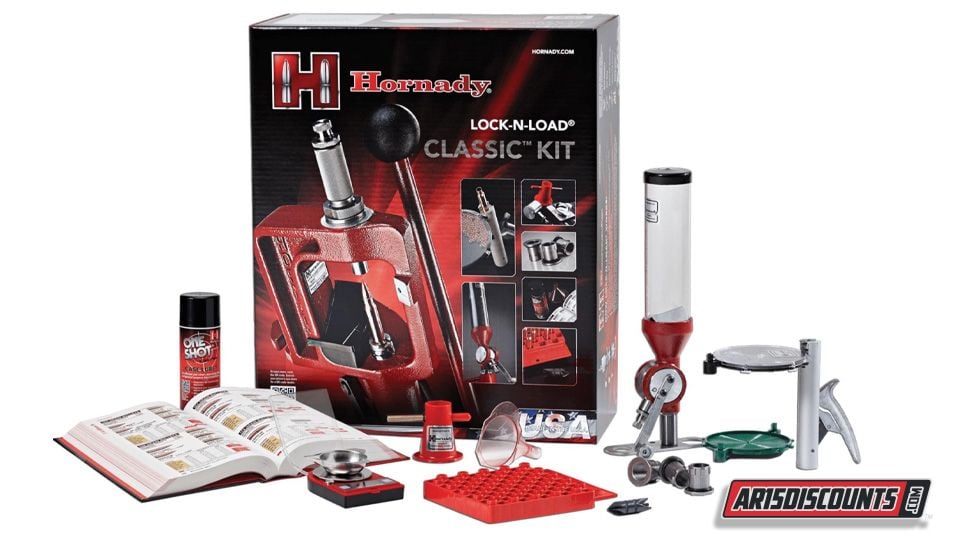
Beginners often start with a single-stage press to learn each step thoroughly before moving to a turret or progressive press for higher output. Essential reloading equipment includes a press, caliber-specific dies, a reliable scale or powder dispenser, calipers, a case trimmer, a primer seating tool, and safety glasses.
A current reloading manual from a reputable source such as Hornady, Lyman, or Speer is non-negotiable. These manuals provide verified load data, including safe starting charges and maximum limits tested under controlled conditions.

Pistol Versus Rifle Reloading: Key Differences
Pistol and rifle reloading share the same fundamentals, but several important differences affect how each is approached.
Pistol cartridges such as 9mm, .45 ACP, or .38 Special typically operate at lower pressures and use faster-burning powders. Many require a taper crimp to prevent bullet setback in semi-automatic handguns. Case lengths are shorter, and headspacing is usually on the case mouth rather than the shoulder, so trimming is less frequent but still important. Because powder charges are smaller, double-charging is easier to miss without careful inspection. High-volume pistol shooters often favor progressive presses to keep up with round counts.
Rifle cartridges like .223 Remington, .308 Winchester, or 6.5 Creedmoor operate at much higher pressures and use slower-burning powders. They require precise neck tension, consistent bullet seating, and careful attention to shoulder bump and case stretch. Trimming becomes routine due to greater case expansion over time. Headspace is typically set by the shoulder, making proper resizing critical. Precision rifle loads benefit from uniform brass preparation, including techniques such as annealing or neck turning.
In both cases, the fundamentals remain the same: follow published load data, measure charges accurately, and inspect every component. Because rifle cartridges operate at higher pressures, small mistakes can have larger consequences, so added caution is essential.

Safety: Be Extra Careful Every Time
Reloading is safe when done properly, but it involves handling energetic materials under pressure. A single mistake can damage a firearm or cause serious injury, so every session should be approached with care.
Work in a clean, well-lit, distraction-free area and wear safety glasses at all times. Double-check every powder charge, preferably with a scale rather than relying only on a powder measure. Inspect brass carefully for cracks, splits, excessive thinning, or signs of overpressure. Always begin with the published starting load and work up slowly, watching for warning signs such as flattened primers, cratered primer pockets, sticky extraction, or unusual recoil.
Never substitute powders without confirmed load data, exceed maximum charges, or rely on unverified online load recipes. Keep detailed records of every load combination you test. Store powder and primers in a cool, dry, secure location away from ignition sources. If something seems off, stop and troubleshoot before continuing. Rushing is one of the biggest risks in reloading.
Why Quality Matters from Day One
Cheap reloading equipment often leads to frustration and inconsistency. A flexing press can cause uneven sizing, an inaccurate scale ruins powder charges, and low-quality dies may scratch brass or seat bullets inconsistently. Established brands like RCBS, Hornady, Lee, and Dillon offer the precision, durability, and support that make reloading safer and more consistent.
The same principle applies to components. Consistent brass, reliable primers, clean-burning powders, and quality bullets reduce trial and error and help produce uniform results. Investing in solid gear upfront saves time, reduces wasted materials, and builds confidence faster.
Where to Buy Reloading Supplies Online
Many online retailers carry reloading gear, but AR15Discounts.com is a practical choice for shooters who also run AR platforms or want a broad range of shooting equipment in one place. We stock reloading presses, dies, scales, powder measures, tumblers, and tools, along with reloading components such as brass, bullets, primers, and powder when available.
Our pricing stays competitive, and we focus on keeping popular items in stock to minimize delays during high-demand periods. Because we also carry AR parts, barrels, uppers, optics, and accessories, many customers appreciate being able to handle multiple needs in a single order.
If you’re ready to start reloading or upgrade your setup, visit the reloading supplies section at AR15Discounts.com. With the right tools, careful habits, and quality components, you can build safe, accurate, custom ammunition…one round at a time.