
NFA, Suppressors
Suppressor Laws Explained: Federal Rules, State Restrictions & Compliance
Feb
Table of contents
- Understanding Suppressors: Function and Benefits
- Historical Context of Suppressor Regulation
- Federal Regulations in 2026
- The ATF Approval Process and Current Timelines
- Purchasing a Suppressor Online from AR15Discounts.com
- State Restrictions on Ownership
- Choosing Registration: Individual or Trust
- Suppressor Use for Hunting and Home Defense
- Common Myths and Real Benefits of Suppressors
- Looking Ahead: Potential Future Changes
- Final Thoughts on Compliance
TL;DR- Too Long Didn’t Read
Suppressors are valuable tools for firearm enthusiasts, providing significant benefits like noise reduction and improved shooting accuracy. Recent developments have made these devices more accessible while still retaining important regulations to comply with.
- Suppressors lower noise by 20-35 decibels, aiding in hearing protection and reducing recoil.
- Federal regulations now eliminate the $200 tax, easing the financial burden of suppressor ownership.
- State laws vary, with 42 states allowing civilian ownership, though restrictions can apply.
- The ATF’s eForm system accelerates the approval process, taking anywhere from a few days to a few weeks.
- Ownership options include individual registration or trust, impacting how suppressors can be shared legally.
- Myths persist but suppressors primarily serve safety and conservation purposes in legal sporting and self-defense contexts.
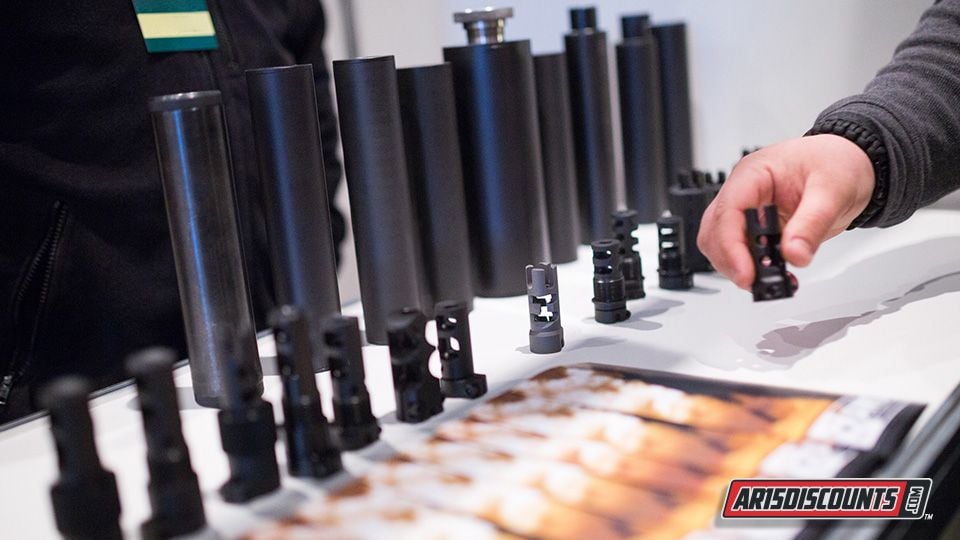
Suppressors have become essential accessories for many firearm owners, offering significant advantages in noise reduction and hearing protection. At AR15Discounts.com, we specialize in AR-15 parts and accessories, including a wide selection of suppressors designed to enhance your shooting experience. This comprehensive guide provides an accurate overview of suppressor laws as of early 2026, covering federal regulations, state variations, and compliance essentials. Whether you are a first-time buyer or an experienced enthusiast, understanding these rules ensures safe and legal ownership. Suppressors are legal to buy in the United States for civilians in most states, provided you follow the required processes.

Understanding Suppressors: Function and Benefits
A suppressor, often called a silencer, is a muzzle device attached to a firearm to reduce the noise and muzzle flash produced when firing. Contrary to Hollywood depictions, suppressors do not make gunshots completely silent; they typically lower the sound level by 20 to 35 decibels, bringing it closer to the threshold of hearing safety. This reduction helps prevent hearing damage, which is a common issue among shooters without proper ear protection.
Beyond noise control, suppressors offer several benefits. They minimize recoil, improve accuracy by stabilizing the barrel, and reduce disturbance to wildlife during hunting. For home defense, a suppressor can preserve situational awareness by lessening the disorienting blast in confined spaces. Suppressors are constructed from durable materials like titanium or aluminum, and they come in various calibers to fit rifles, pistols, and shotguns. Modern designs are user-serviceable, allowing easy cleaning to maintain performance. Despite these advantages, suppressors remain heavily regulated due to historical misconceptions about their use in crime.
Historical Context of Suppressor Regulation
The regulation of suppressors dates back to the National Firearms Act of 1934, enacted amid concerns over organized crime during the Prohibition era. Originally, the NFA imposed a $200 transfer tax on suppressors, equivalent to about $4,700 in today’s dollars, to discourage ownership. This tax remained unchanged for nearly a century. Over time, amendments in 1968 and 1986 refined definitions and addressed constitutional issues, but the core framework persisted.
In recent years, advocacy from groups like the American Suppressor Association pushed for reforms. A pivotal change occurred with the passage of H.R. 1, the One Big Beautiful Bill, signed into law on July 4, 2025. Effective January 1, 2026, this legislation eliminated the $200 federal transfer tax for suppressors, short-barreled rifles, short-barreled shotguns, and any other weapons. However, suppressors are still classified as Title II items under the NFA, requiring federal registration and approval. This reform has made suppressors more accessible, leading to a surge in purchases, but it has not fully deregulated them.
Federal Regulations in 2026
Under federal law, suppressors are regulated by the Bureau of Alcohol, Tobacco, Firearms and Explosives. To legally purchase or possess a suppressor, you must meet specific requirements. First, you need to be at least 21 years old if buying from a dealer, or 18 for certain private transfers. You must be a U.S. citizen or legal resident, not prohibited from owning firearms under federal law, and pass an enhanced background check.
The process involves submitting an ATF Form 4 for transfers or purchases from a dealer, or Form 1 if manufacturing your own. Applications require fingerprints, two passport-style photos, and detailed information about the suppressor. All suppressors must be registered in the National Firearms Registration and Transfer Record. No special license beyond ATF approval is needed, but the transfer must occur through a Class 3 Federal Firearms Licensee with a Special Occupational Tax.
A key update in 2026 is the removal of the $200 tax stamp payment. Previously a financial hurdle, this elimination simplifies the process without altering the registration or background check obligations. Federal law allows civilian ownership nationwide, except where state laws prohibit it. Violations of NFA rules can result in severe penalties, including fines up to $250,000 and imprisonment for up to 10 years.
The ATF Approval Process and Current Timelines
The ATF has streamlined approvals through its eForms system, replacing lengthy paper processes. To start, select a suppressor and work with a licensed dealer to initiate the Form 4. Submit your application electronically, including fingerprints and photos, often digitized at the dealer. The ATF conducts a thorough background check via the FBI.
As of early 2026, eForm 4 approval times for suppressors are remarkably quick, reflecting system improvements and increased staffing. For individual registrations, approvals typically range from 1 to 35 days, with a median of around 12 days. Trusts, which involve multiple responsible persons, take slightly longer, from 2 to 41 days, with a median of 25 days. These timelines are averages based on recent data; a post-tax-elimination surge in applications may cause minor delays, but most clear within weeks.
Paper forms, while still an option, take significantly longer, often months, and are discouraged. Once approved, you receive notification, and the suppressor can be transferred to you. ATF approval times for suppressors in 2026 represent a dramatic improvement over past years, making ownership more practical.
Purchasing a Suppressor Online from AR15Discounts.com
At AR15Discounts.com, we make acquiring a suppressor straightforward and compliant. You can buy a suppressor online from our site, selecting from top brands and models suited for AR-15 platforms and beyond. After purchase, we coordinate with your chosen Class 3 dealer for the transfer. You will need to submit your Form 4 electronically through the dealer, who handles the paperwork.
Once ATF approval is granted, the suppressor ships to your dealer for final pickup after an in-person background confirmation. Our team assists throughout, ensuring all federal and state requirements are met. This online process is efficient, especially with the tax elimination, and allows access to competitive pricing and expert guidance.
State Restrictions on Ownership
While federal law sets the foundation, states have authority over ownership, possession, and use. As of early 2026, civilian suppressor ownership is permitted in 42 states, provided you comply with NFA rules. These states generally align with federal standards, though some impose additional requirements like permits or transport notifications.
The states that do not allow civilian suppressor ownership are California, Delaware, Hawaii, Illinois, Massachusetts, New Jersey, New York, and Rhode Island. In these jurisdictions, suppressors are classified as prohibited devices, with possession often constituting a felony. The District of Columbia also bans them. No recent changes have lifted these bans, though advocacy continues.
Certain states stand out for unique regulations. For instance, Connecticut and Vermont allow ownership but prohibit suppressor use while hunting. In contrast, states like Texas and Florida have suppressor-friendly laws, with strong protections for owners and active promotion of their use for hearing safety. Many Western and Midwestern states, such as Arizona and Montana, permit suppressors for both ownership and hunting without extra hurdles. Always consult your state’s attorney general or wildlife agency for specifics, as local ordinances may apply.
Efforts are underway in some states to further align with potential federal deregulation. South Dakota, Georgia, and Alaska have passed or introduced bills in 2026 to remove state-level suppressor restrictions, anticipating possible NFA repeal. However, these do not yet change the current landscape.
Choosing Registration: Individual or Trust
When registering, you have options: as an individual or through a gun trust. Individual registration is simple and often faster, ideal for sole owners. It ties the suppressor to you personally, limiting sharing to supervised use.
A trust, typically a revocable living trust drafted by an attorney, allows multiple trustees to possess and use the suppressor legally. This is beneficial for families or groups, facilitating shared access and easier inheritance without additional transfers. Trusts no longer require chief law enforcement officer sign-off, and approval times are comparable to individuals. Deciding between individual or trust registration depends on your needs; consult a firearms attorney to ensure compliance.
Suppressor Use for Hunting and Home Defense
In states where suppressors are legal, they are widely used for hunting and home defense. For hunting, they reduce noise pollution, protect hearing, and minimize game disturbance, leading to more ethical pursuits. As of 2026, 40 of the 42 permissive states allow suppressor use while hunting, with exceptions in Connecticut and Vermont. Check your state’s game and fish department for species-specific rules or seasonal restrictions.
For home defense, they can be advantageous by lowering the indoor blast volume, preserving night vision, and reducing confusion during high-stress situations. No federal bans exist on their use for self-defense, and in legal states, standard firearm laws apply. You can use a suppressor for hunting or home defense in your state if ownership is permitted and local regulations allow.
Common Myths and Real Benefits of Suppressors
Myths persist, such as the idea they make firearms whisper-quiet or are primarily tools for criminals. In reality, suppressed shots remain audible, often around 130 to 140 decibels, louder than a jackhammer but safer than unprotected gunfire. Statistics show suppressors are rarely involved in crimes; most registered owners are law-abiding citizens.
The real benefits include enhanced safety and enjoyment. Suppressors promote responsible shooting by encouraging hearing protection, especially at ranges or during extended sessions. They also support conservation by reducing habitat disruption. With the tax removal, more Americans can access these tools affordably.
Looking Ahead: Potential Future Changes
The suppressor landscape continues to evolve. Ongoing lawsuits and bills like the Hearing Protection Act aim to remove suppressors from the NFA entirely, treating them like standard firearms with instant background checks. State-level reforms are accelerating, with initiatives to preempt federal changes. While full deregulation is uncertain, the 2026 tax elimination marks progress toward broader accessibility.
Final Thoughts on Compliance
Navigating suppressor laws requires diligence, but the rewards, better hearing protection, reduced recoil, and versatile use, make it worthwhile. At AR15Discounts.com, we offer quality suppressors and expert support to guide you through compliant purchases. Always verify current laws with the ATF, your state authorities, or a qualified attorney, as regulations can shift. By staying informed, you ensure safe, legal enjoyment of your firearms. Explore our suppressor inventory today and elevate your setup responsibly.