
Ammo, AR-15 Basics
Discover the Power and Versatility of .300 Blackout
Jan

TL;DR- Too Long Didn’t Read
The .300 Blackout is increasingly popular among AR-15 enthusiasts for its flexibility and performance in compact builds. Originating from a modified 5.56 NATO case, it supports both supersonic and subsonic loads, making it preferred for various shooting applications.
- Engineered for suppressed and short-barreled rifle setups without requiring major platform changes.
- Offers strong energy delivery and adaptability for various uses, including hunting and home defense.
- Compatible with AR-15 platforms but not interchangeable with 5.56 NATO rounds.
- Popular for its performance from short barrels and in close-quarter scenarios.
- .300 Blackout ammo is generally more expensive due to lower production volumes and specialized manufacturing.
The .300 Blackout (also known as .300 AAC Blackout or 300 BLK) has exploded in popularity among AR-15 enthusiasts, hunters, and tactical shooters for its unmatched flexibility. It delivers heavy-hitting .30-caliber performance in a compact package that works seamlessly with standard AR platforms.
Designed originally for short-barreled, suppressed setups, this cartridge bridges the gap between 5.56 NATO and heavier rounds like 7.62x39mm. Shooters can choose supersonic loads for range work or subsonic loads for quiet, suppressed use. Whether you’re building a suppressed SBR, a hog-hunting rig, or a home-defense setup, .300 BLK offers serious energy and adaptability without major platform changes.
Below are answers to the most common questions about .300 Blackout.
The .300 Blackout, officially designated as .300 AAC Blackout or 300 BLK, is a .30-caliber cartridge with a bullet diameter of approximately 0.308 inches (7.62mm). It is based on a shortened and necked-up 5.56 NATO case, allowing it to use .30-caliber bullets while remaining compatible with AR-15 platforms.
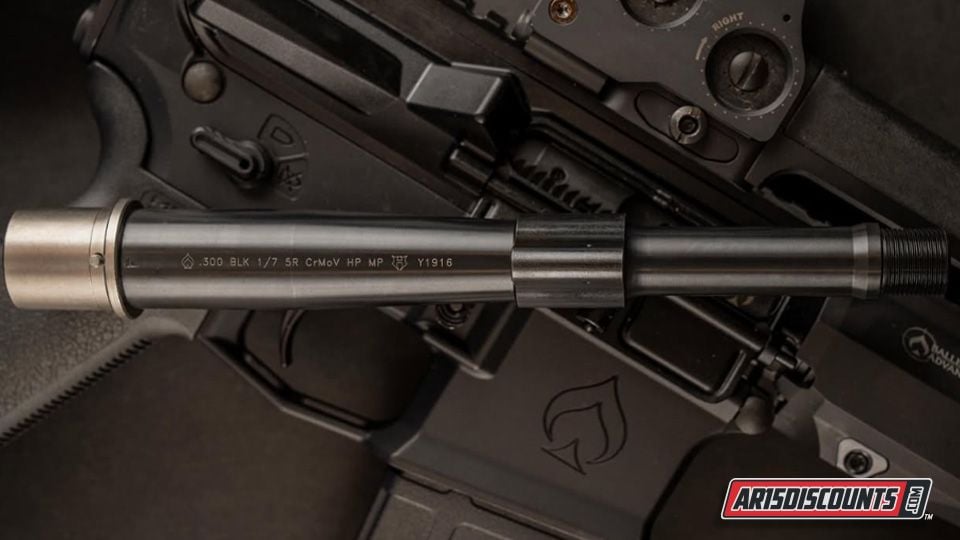
It is a compact, versatile intermediate cartridge introduced in 2011 by Advanced Armament Corporation and Remington. It was engineered for reliable performance in short-barreled rifles and suppressed applications, requiring only a barrel or complete upper change from 5.56 while using standard AR-15 lowers and magazines.
This is the standardized name for the .300 BLK cartridge, commonly abbreviated as 300 BLK. It delivers ballistics similar to 7.62x39mm but in a shorter case optimized for AR-15 compatibility, short barrels, and suppressor use.
This refers to the complete cartridge loaded with either supersonic or subsonic ammunition. Supersonic loads typically use 110–150 grain bullets traveling around 2,000–2,400 fps from a 16-inch barrel, while subsonic loads usually feature 180–220 grain bullets traveling under 1,050 fps for suppressed shooting.
It includes all factory-loaded ammunition for the cartridge, ranging from supersonic FMJ or expanding loads for training, hunting, and defense to specialized subsonic ammunition designed for quiet, suppressed use. Subsonic loads often rely on heavier bullets to maintain effective terminal performance at close range.
Whether .300 Blackout is better than 5.56 NATO depends on the application. .300 BLK excels with heavier bullets, stronger short-range energy, better performance from short barrels, and excellent suppressed operation, especially with subsonic loads. It is often preferred for close-quarters use, hunting, and suppressed shooting.
5.56 NATO offers flatter trajectories, higher velocities, lower recoil, significantly cheaper ammunition, and better performance at extended ranges beyond 500 yards. In short, .300 Blackout favors power and suppression at close to medium distances, while 5.56 remains the better general-purpose and long-range option.
It is not exclusively subsonic. It supports both supersonic and subsonic loads effectively. Subsonic ammunition is especially popular for suppressed use, but supersonic loads are widely used for hunting and general shooting.
It is is well-suited for suppressed home defense, short-barreled rifles, and close-quarters use where reduced noise and muzzle flash are priorities. It is also effective for hunting medium game such as deer and hogs at moderate distances and performs well in compact AR-15 setups with minimal velocity loss.
Yes, .300 Blackout is commonly used for hunting deer, hogs, coyotes, and similar game within 150–200 yards. Supersonic loads provide reliable expansion and energy, while subsonic loads are useful for close-range, suppressed hunts. Hunters should always verify state-specific caliber and energy requirements.
.300 Blackout is effective for deer hunting at typical woods distances of 150–200 yards. Its heavier bullets deliver strong energy transfer and terminal performance, often outperforming 5.56 in close-range hunting scenarios. The Barnes black-tipped TAC-TX 110 grain might be the perfect round for whitetail.
Yes. It uses a .30-caliber projectile weighing roughly 110–220 grains, while 5.56 NATO uses a smaller .224-inch bullet typically weighing 55–77 grains. The increased bullet diameter and mass contribute to greater short-range energy.
Yes, it will fit and function in standard 5.56/.223 AR-15 magazines, including PMAGs and GI-style mags. Many shooters use dedicated magazines or clearly label them to prevent dangerous mix-ups. That said, some companies make specific mags to ensure even better compatability and reliability.
No. Firing .223 Remington or 5.56 NATO in a .300 BLK chamber is unsafe and can result in serious firearm damage or injury. The cartridges are not dimensionally compatible.
No. A rifle chambered in .300 Blackout cannot safely chamber or fire 5.56 or .223 ammunition due to incompatible case dimensions and pressure risks.
Military use of .300 Blackout is limited and specialized. Certain special operations units use it for suppressed, short-barreled weapons and close-quarters applications, but it has not replaced 5.56 NATO as a standard-issue cartridge.
Effective range depends on the load. Supersonic ammunition is effective to roughly 200–300 yards, with some loads reaching farther. Subsonic ammunition is typically limited to about 150–200 yards due to significant bullet drop and lower velocity.
As of early 2026, .300 BLK ammo generally costs around $0.45–$0.60 per round for bulk supersonic loads. Subsonic and premium hunting or defensive ammunition often ranges from $0.60 to over $1.00 per round.
.300 BLK is more expensive than 5.56 because it is produced in lower volumes, uses heavier bullets, and often involves specialized subsonic or suppressor-optimized manufacturing. While prices have stabilized compared to earlier years, it typically remains 50–100 percent more expensive than comparable 5.56 ammunition.