
AR Rifle, AR-10, AR-10 Basics, AR-10 Parts, AR-15 Accessories, AR-15 Basics, AR-15 Parts
AR-10 Parts vs AR-15 Parts: What’s Different and What Interchanges
Mar
Table of contents
The AR-10 and AR-15 share the same direct impingement design and modular layout, but the larger .308 Winchester or 7.62×51 NATO cartridge used in the AR-10 requires significantly larger and stronger components than the 5.56 NATO or .223 Remington round used in the AR-15. Because of this, many parts do not interchange, while others can be shared to simplify builds and reduce spare parts costs.
Understanding exactly where compatibility exists (and where it doesn’t) is critical for reliability, safety, and long-term performance.

TL;DR- Too Long Didn’t Read
The AR-10 and AR-15 share similar designs but differ significantly in parts compatibility due to their cartridge sizes. Understanding these differences is crucial for building reliable rifles.
- AR-10 parts are generally larger and stronger due to using a .308 Winchester or 7.62×51 NATO cartridge.
- Major platform parts, such as receivers, barrels, and bolt carrier groups, are not interchangeable.
- Smaller components like triggers, springs, and grips can be used across both platforms.
- Standardizing shared components is efficient when running both platforms.
- Pay careful attention to AR-10 patterns (Armalite vs. DPMS) for compatibility.
Major Platform Differences
The AR-10 lower receiver is wider and deeper to accommodate a larger magazine well and increased operating pressure. This means complete uppers and lowers are not interchangeable between platforms. Attempting to mix them typically results in poor fitment or unsafe operation.
Core operating components are also platform-specific. Barrels, bolt carrier groups, bolts, charging handles, ejection port covers, and magazines must remain dedicated to their respective platforms. Even though the rifles look similar externally, the internal geometry and dimensions are fundamentally different.
This is especially important when sourcing parts from AR15Discounts, where both AR-15 and AR-10 components are available side by side.
Parts That Do Not Interchange
Several major assemblies must remain platform-specific:
- Stripped upper and lower receivers
- AR-10 barrels and barrel nuts
- AR-10 bolt carrier groups and bolts
- AR-10 magazines
- Muzzle devices (threading and caliber must match)
- Charging handles (in most cases)
- Ejection port covers
- Handguards and rail systems (generally not compatible)
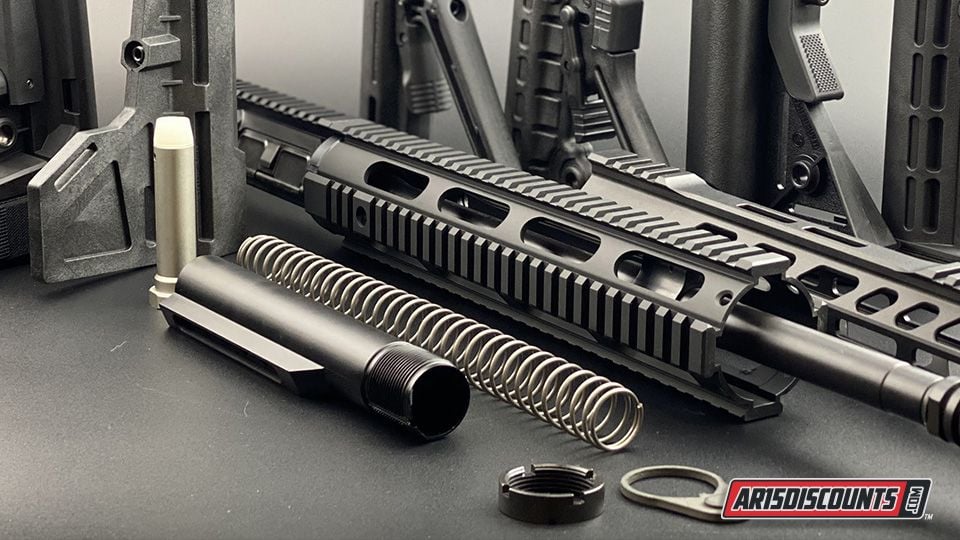
Buffer systems require special attention. While the buffer tube itself often crosses over, the AR-10 requires a heavier buffer and stronger spring to properly control recoil. Using incorrect components can lead to short stroking, excessive wear, or feeding issues.
Parts That Interchange
This is where builders can save money and simplify their setups.
A number of smaller components are interchangeable between the two platforms:
- Fire control group (AR-15 triggers, hammers, disconnectors, pins, and springs)
- Safety selectors, detents, and springs
- Magazine release buttons and springs
- Bolt catch springs and plungers
- Buffer retainers and springs
- Trigger guards
- Takedown and pivot pin detents and springs
On the upper receiver side:
- Forward assist assemblies
- Gas blocks
- Gas tubes and roll pins
- Most detachable iron sights
Additional crossover parts:
- Pistol grips (some AR-10 lowers may require a spacer)
- Buffer tubes
- Castle nuts and end plates
- Buttstocks (when paired with the correct buffer and spring)
Important Note on AR-10 Patterns
Unlike the AR-15, the AR-10 platform is not fully standardized. Two primary patterns dominate:
- Armalite-style
- DPMS-style (LR-308 pattern)
DPMS-pattern rifles are more common and generally offer better compatibility with standard AR-15 lower parts. Armalite-style rifles can have slight differences in areas like magazine catch geometry and buffer system dimensions.
Always confirm your pattern before purchasing components—this is one of the most common mistakes builders make.
Quick Compatibility Reference
Interchangeable Parts
- Forward assist assembly
- Gas blocks, gas tubes, and roll pins
- Detachable iron sights (most models)
- Fire control group and all associated pins/springs
- Safety selectors, detents, and springs
- Magazine release buttons and springs
- Bolt catch springs and plungers
- Buffer retainers and springs
- Trigger guards
- Takedown and pivot pin detents and springs
- Pistol grips (spacer may be required on AR-10)
- Buffer tubes, castle nuts, and end plates
- Many buttstocks
Platform-Specific Parts (Not Interchangeable)
- Upper and lower receivers
- Barrels and barrel nuts
- Bolt carrier groups and bolts
- Magazines
- Muzzle devices
- Charging handles (most cases)
- Ejection port covers
- Handguards and rail systems (generally)
Final Thoughts: Build Smarter, Not Harder
The key takeaway is simple: the big parts don’t interchange, but many of the small ones do.
If you’re running both platforms, it makes sense to standardize where possible—stock up on shared components like triggers, springs, grips, and controls. This keeps your parts bin lean and your builds more efficient without sacrificing reliability.
At the same time, never cut corners on platform-specific components. The AR-10 operates at higher pressures and demands properly matched parts to function safely and consistently.
Whether you’re building a precision AR-10 or a fast-handling AR-15, understanding these compatibility points helps you avoid costly mistakes, improve performance, and keep both rifles running at their best.