
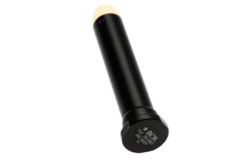
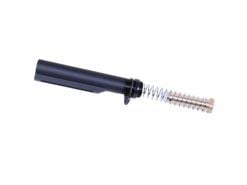
At AR15discounts, you’ll find AR-15 buffer tubes, complete buffer kits, springs, buffers, receiver extensions, and related components for a wide range of configurations. Options include standard mil-spec buffer tube assemblies, pistol buffer tube setups, rifle-length systems, and heavier H2 and H3 buffer combinations.
Builders can shop individual components or a complete AR-15 buffer tube kit with the parts needed to finish the rear of a lower receiver. You’ll also find options from popular manufacturers such as Geissele, Aero Precision, and Magpul, including configurations suited for customers searching for a Geissele buffer tube or Magpul buffer tube kit.
Choosing the Right Buffer Tube Setup
The correct setup depends on your firearm, stock or brace, gas system, and intended use. Carbine-length systems are common on adjustable-stock AR-15s, while fixed rifle stocks generally require a rifle-length receiver extension, spring, and buffer.
Also, understand commercial vs. mil-spec buffer tube dimensions when choosing a compatible stock. Mil-spec tubes are the most common choice for modern builds and work with a broad range of aftermarket stocks.
Buffer weight can also affect how the rifle cycles. An H2 buffer tube setup or a heavier H3 buffer may be useful in certain configurations where you want more reciprocating mass. AR-10 platforms may require different buffer and spring combinations, so always confirm compatibility before ordering AR-10 buffer tubes or related parts.
Buffer Tube FAQ
Here are answers to common questions about AR buffer systems and related components.
What is an AR-15 buffer tube?
A buffer tube, also called a receiver extension, attaches to the rear of the lower receiver and houses the buffer and buffer spring.
What does a buffer tube do on an AR-15?
The tube guides the buffer and spring as the bolt carrier cycles, allowing the action to return forward after firing.
How do you remove an AR-15 buffer tube?
Removal generally involves securing the firearm, loosening the castle nut on carbine systems, controlling the takedown pin spring and buffer retainer, and carefully unthreading the tube.
How do I know which buffer tube fits my AR-15?
Determine whether your build uses a carbine, rifle, or pistol-style system and verify compatibility with your stock, brace, buffer, and spring.
What is the difference between mil-spec and commercial buffer tubes?
Mil-spec and commercial tubes differ slightly in outside diameter and rear profile. Stocks must be matched to the correct tube type.
What is the difference between a carbine and rifle buffer tube?
Carbine tubes are shorter and typically designed for collapsible stocks. Rifle tubes are longer and generally used with fixed stocks.
What parts come in an AR-15 buffer tube kit?
A typical kit may include the receiver extension, buffer, buffer spring, castle nut, and end plate. Exact contents vary by manufacturer.
Are all AR-15 buffer springs the same?
No. Carbine and rifle systems use different spring dimensions, and specialty springs are also available for specific applications.
What does a heavier AR-15 buffer do?
A heavier buffer adds reciprocating mass to the operating system and can change cycling characteristics, felt recoil, and bolt speed.
When should you replace an AR-15 buffer or buffer spring?
Replace components when they show excessive wear, damage, loss of spring tension, or when reliability problems trace to the recoil system.