
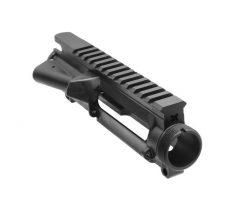
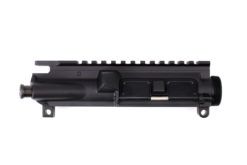
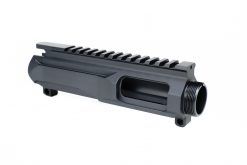
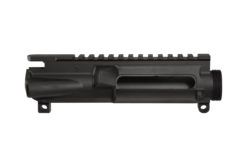
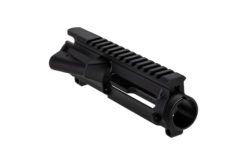
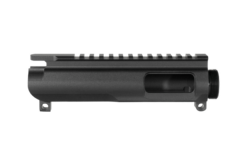
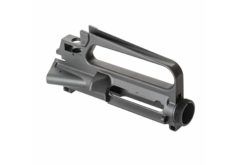
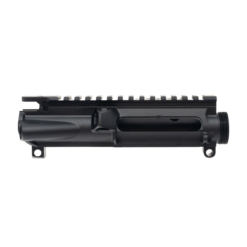
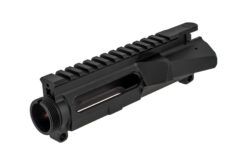
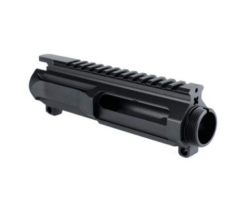
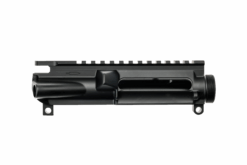
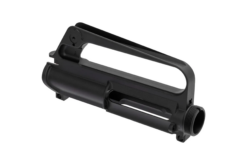
Shop AR-15 Upper Receivers for Different Configurations
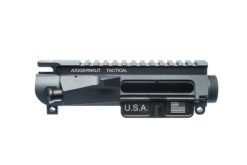
Choose an AR upper receiver based on caliber, receiver style, included components, operating system, and intended use. Options may include a standard AR-15 stripped upper receiver, an assembled receiver with small parts installed, or a complete upper with the barrel, gas system, and handguard already attached.
AR-15 Upper Receiver
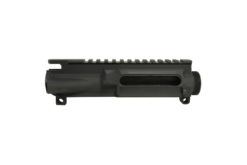
An AR-15 Upper Receiver houses or supports many of the rifle’s primary operating components. Although most receivers share a similar external shape, available models can differ in materials, machining, feed-ramp design, ejection-port configuration, charging system, forward-assist compatibility, and included hardware.
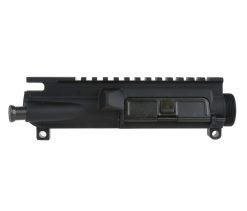
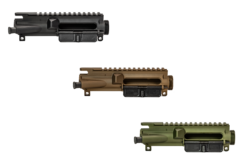
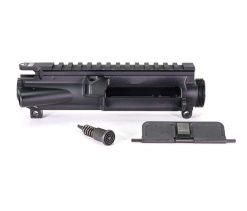
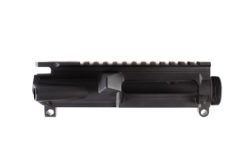
A stripped upper receiver is typically sold without the forward assist, ejection port cover, barrel, or internal components. It gives builders more control over individual part selection but requires additional assembly. An assembled receiver usually includes the forward assist and dust cover, although buyers should verify the exact package contents.
Complete upper receivers may include the receiver, barrel, gas system, handguard, muzzle device, and other components. An AR-15 complete upper receiver in a 5.56 mm configuration may or may not include the bolt carrier group and charging handle, so review the product specifications carefully.
Caliber-Specific AR-15 Upper Receivers
Different upper assemblies allow the AR platform to support multiple calibers. Common choices include a 300 Blackout upper receiver, 6mm ARC upper receiver, and 9mm upper receiver.
Caliber conversions may require more than changing the upper. Depending on the cartridge, the rifle may also need a compatible bolt, magazine, buffer system, or dedicated lower-receiver setup. A 9mm upper receiver, for example, may use a blowback operating system and require caliber-specific supporting components.
Receiver Styles and Features
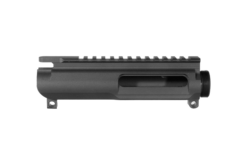
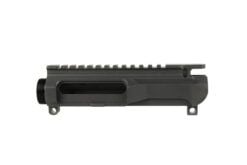
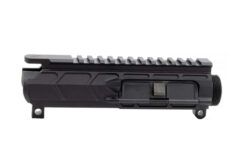
Standard receivers generally include a forward assist, dust cover, and rear charging-handle channel. Slick-side receivers remove one or more external features for a simpler profile, while side-charging models relocate the charging handle for different access and handling.
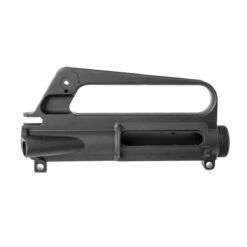
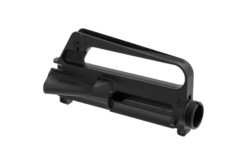
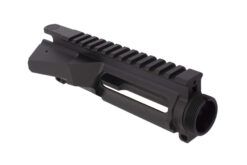
Most modern receivers use a flat-top Picatinny rail for mounting optics and sights. Carry-handle receivers provide a traditional appearance and integrated rear sight but offer less flexibility for modern optic placement.
Shooters may also encounter premium options such as a Geissele upper receiver or receivers with enhanced machining, reinforced areas, or proprietary features. The best upper receiver is one that fits the lower, barrel extension, handguard, caliber, and intended configuration.
Frequently Asked Questions About AR-15 Upper Receivers
The following answers address common questions about compatibility, assembly, and purchasing.
How do I choose the right AR-15 upper receiver for my build?
Match the receiver to the rifle’s caliber, barrel extension, handguard, charging system, lower receiver, and intended use.
Should I buy a stripped or assembled AR-15 upper receiver?
Choose a stripped receiver for maximum control over components. Choose an assembled model when you want the forward assist and ejection-port cover already installed.
What comes installed on an assembled AR-15 upper receiver?
Most include a forward assist and dust cover, but package contents vary by manufacturer.
How can I confirm an AR-15 upper receiver will fit my lower receiver?
Verify that both parts follow compatible AR-15 dimensions and check for proprietary features that may affect fitment.
Do the upper and lower receivers need to be from the same brand?
No. Many mil-spec-pattern receivers are cross-compatible, although cosmetic fit and tolerances may vary.
Can one AR-15 upper receiver be used for different calibers?
The receiver body may support multiple calibers, but the barrel, bolt, magazine, and other parts must match the selected cartridge.
What is the difference between standard, slick-side, and side-charging upper receivers?
Standard receivers use a rear charging handle and commonly include a forward assist. Slick-side models remove certain external controls, while side-charging receivers move the charging handle to the side.
Do I need an AR-15 upper receiver with a forward assist?
Not necessarily. Some shooters prefer having one, while others choose slick-side designs for reduced weight and fewer external components.
Should I choose a flat-top or carry-handle AR-15 upper receiver?
Flat-top receivers offer greater optic flexibility. Carry-handle models are better suited to traditional or retro-style builds.
What should left-handed shooters look for in an AR-15 upper receiver?
Look for left-side ejection, ambidextrous controls, reversible charging systems, or accessory placement that improves access.
What are M4 feed ramps, and does my upper receiver need them?
M4 feed ramps help guide cartridges from the magazine into the chamber. The receiver and barrel extension should use compatible feed-ramp geometry.
Are blemished AR-15 upper receivers reliable and worth buying?
Yes, when the blemish is cosmetic and the receiver has passed the manufacturer’s functional inspection.
Shop AR-15 upper receivers, complete uppers for sale, assembly components, and the AR-15 upper receiver vise block needed to support your next build at AR15Discounts.com.